The Driver Calls
Der Fahrer ruft an
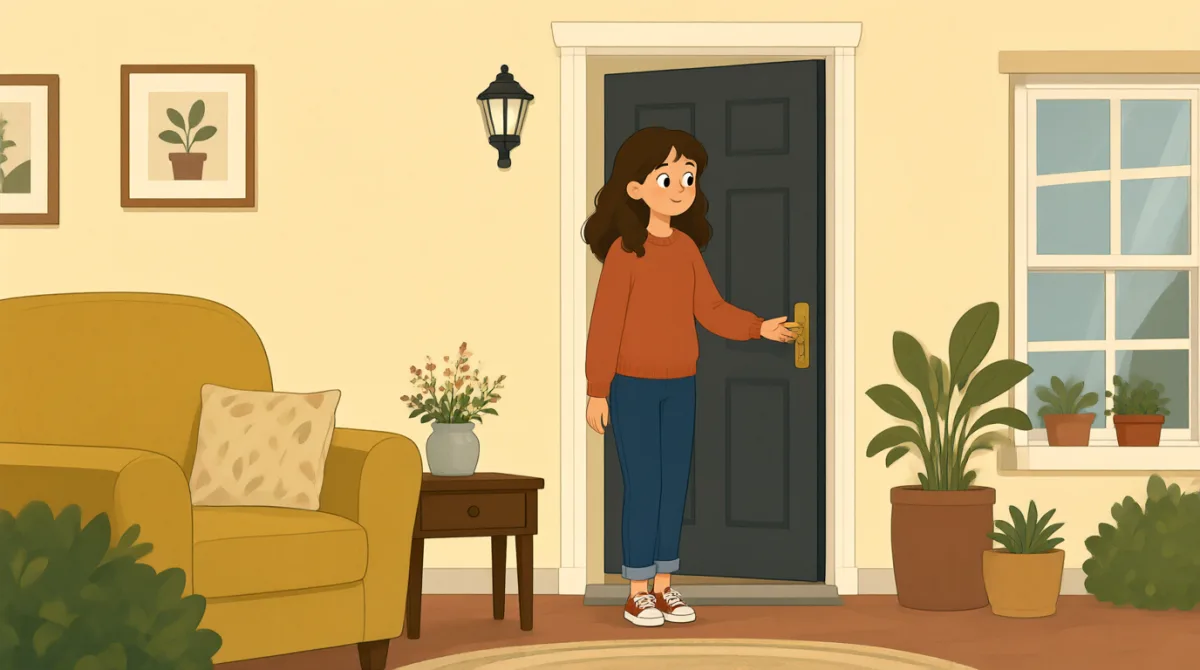
The driver calls Emma to say he is near her home. Emma gives him clear directions and asks him to leave the bags at her door.
Der Fahrer ruft Emma an und sagt ihr, dass er in der Nähe ihres Zuhauses ist. Emma gibt ihm eine genaue Wegbeschreibung und bittet ihn, die Tüten vor ihrer Haustür abzustellen.
Dialog9

Hi, this is Leo, your grocery delivery driver. I’m near your home now.
Hallo, hier ist Leo, Ihr Lebensmittellieferant. Ich bin jetzt in der Nähe Ihres Hauses.

Hi, Leo. I’m at 24 Oak Street, in the blue house.
Hallo, Leo. Ich bin in der Oak Street 24, in dem blauen Haus.
I see the street, but I’m not sure which house is yours.
Ich sehe die Straße, bin mir aber nicht sicher, welches Haus Ihres ist.
Go past the small park, then turn left at the corner.
Gehen Sie am kleinen Park vorbei und biegen Sie dann an der Ecke links ab.
Okay, I see a blue house. Should I leave the bags at the door?
Okay, ich sehe ein blaues Haus. Soll ich die Tüten vor der Tür abstellen?
Yes, please. Leave them by the front door, not on the steps.
Ja, bitte. Stellen Sie sie neben der Haustür ab, nicht auf die Stufen.
Got it. I’ll put them next to the door and send you a message.
Alles klar. Ich stelle sie neben die Tür und schicke Ihnen eine Nachricht.
Thanks! Please keep the cold items together in one bag.
Danke! Bitte packen Sie die gekühlten Sachen zusammen in eine Tüte.
Sure, I’ll do that now. Have a nice day!
Gerne, mache ich sofort. Ich wünsche Ihnen einen schönen Tag!
Wortschatz8
- delivery driverder Lieferfahrer
A delivery driver brings groceries or other items to your home. You can use this phrase when talking about a person delivering an order.
Ein Lieferfahrer bringt Lebensmittel oder andere Waren zu dir nach Hause. Diese Wendung kannst du verwenden, wenn du von einer Person sprichst, die eine Bestellung ausliefert.
- near your homein der Nähe deines Zuhauses
This means close to your home. You can say it to tell someone where you are.
Das bedeutet, dass sich jemand nicht weit von deinem Zuhause entfernt befindet. Du kannst das sagen, um jemandem mitzuteilen, wo du bist.
- go pastan etwas vorbeigehen
This means to continue beyond a place. Use it to give simple directions.
Das bedeutet, weiterzugehen und einen Ort zu passieren. Die Wendung eignet sich für einfache Wegbeschreibungen.
- turn leftlinks abbiegen
This means to change direction to the left. You can use it when guiding someone on a street.
Das bedeutet, die Richtung nach links zu ändern. Du kannst es verwenden, wenn du jemandem den Weg auf einer Straße erklärst.
- leave the bags at the doordie Tüten vor der Tür abstellen
This means to put the bags by the door and go without handing them to someone. Use this request for a delivery.
Das bedeutet, die Tüten neben der Tür abzustellen, ohne sie jemandem persönlich zu übergeben. Diese Bitte kannst du bei einer Lieferung verwenden.
- front doordie Haustür
This is the main door at the front of a house. You can use it to show where a delivery should be left.
Das ist der Haupteingang an der Vorderseite eines Hauses. Mit dieser Wendung kannst du sagen, wo eine Lieferung abgestellt werden soll.
- next to the doorneben der Tür
This means beside the door. Use it to give a clear place for someone to put something.
Das bedeutet, direkt neben der Tür. So kannst du genau angeben, wo jemand etwas abstellen soll.
- cold itemsgekühlte Sachen
These are groceries that need to stay cold, such as milk or frozen food. You can ask someone to keep them together.
Das sind Lebensmittel, die kühl bleiben müssen, zum Beispiel Milch oder Tiefkühlkost. Du kannst jemanden bitten, sie zusammenzupacken.
Wichtige Sätze8
- 1
I’m near your home now.
Ich bin jetzt in der Nähe Ihres Hauses.
This is a simple way to tell someone you are close to their home. You can replace “your home” with another place, such as “the store” or “the office.”
Mit „I’m near your home now.“ kannst du einfach sagen, dass du dich in der Nähe des Zuhauses einer Person befindest. Statt „your home“ kannst du auch einen anderen Ort einsetzen, zum Beispiel „the store“ oder „the office“.
- 2
I’m at 24 Oak Street, in the blue house.
Ich bin in der Oak Street 24, in dem blauen Haus.
Use this sentence to give your address and help someone identify your home. Replace the street address and house description with your own.
Mit „I’m at 24 Oak Street, in the blue house.“ nennst du deine Adresse und hilfst jemandem, dein Zuhause zu erkennen. Ersetze die Adresse und die Beschreibung des Hauses durch deine eigenen Angaben.
- 3
Go past the small park, then turn left at the corner.
Gehen Sie am kleinen Park vorbei und biegen Sie dann an der Ecke links ab.
This gives two clear steps for finding a place. You can use the same pattern with other landmarks and directions.
„Go past the small park, then turn left at the corner.“ enthält zwei klare Schritte, mit denen man einen Ort findet. Du kannst dasselbe Muster mit anderen Orientierungspunkten und Richtungsangaben verwenden.
- 4
Should I leave the bags at the door?
Soll ich die Tüten vor der Tür abstellen?
Use this question to check where someone wants a delivery left. Replace “the bags” with another item, such as “the package.”
Mit „Should I leave the bags at the door?“ fragst du nach, wo jemand eine Lieferung abgestellt haben möchte. Ersetze „the bags“ durch einen anderen Gegenstand, zum Beispiel „the package“.
- 5
Yes, please.
Ja, bitte.
This is a polite way to agree to a request or answer a question. You can use it in many everyday situations.
„Yes, please.“ ist eine höfliche Art, einer Bitte zuzustimmen oder eine Frage zu beantworten. Die Wendung passt zu vielen Alltagssituationen.
- 6
Leave them by the front door, not on the steps.
Stellen Sie sie neben der Haustür ab, nicht auf die Stufen.
This sentence gives a clear instruction and says where not to put something. Replace “them” with the items you mean.
„Leave them by the front door, not on the steps.“ ist eine klare Anweisung und sagt auch, wo etwas nicht hingestellt werden soll. Ersetze „them“ durch die Gegenstände, die du meinst.
- 7
I’ll put them next to the door and send you a message.
Ich stelle sie neben die Tür und schicke Ihnen eine Nachricht.
Use “I’ll” to say what you plan to do. You can reuse this structure to describe two actions you will take.
Mit „I’ll“ sagst du, was du vorhast. Diese Satzstruktur kannst du wiederverwenden, um zwei Dinge zu nennen, die du tun wirst.
- 8
Please keep the cold items together in one bag.
Bitte packen Sie die gekühlten Sachen zusammen in eine Tüte.
This is a polite request about how groceries should be packed. Replace “cold items” with other things you want kept together.
„Please keep the cold items together in one bag.“ ist eine höfliche Bitte, wie Lebensmittel eingepackt werden sollen. Ersetze „cold items“ durch andere Dinge, die zusammenbleiben sollen.