The Driver Calls
Kierowca dzwoni
The driver calls Emma to say he is near her home. Emma gives him clear directions and asks him to leave the bags at her door.
Kierowca dzwoni do Emmy, żeby powiedzieć, że jest niedaleko jej domu. Emma dokładnie tłumaczy mu, jak dojechać, i prosi, żeby zostawił torby pod drzwiami.
Dialog9
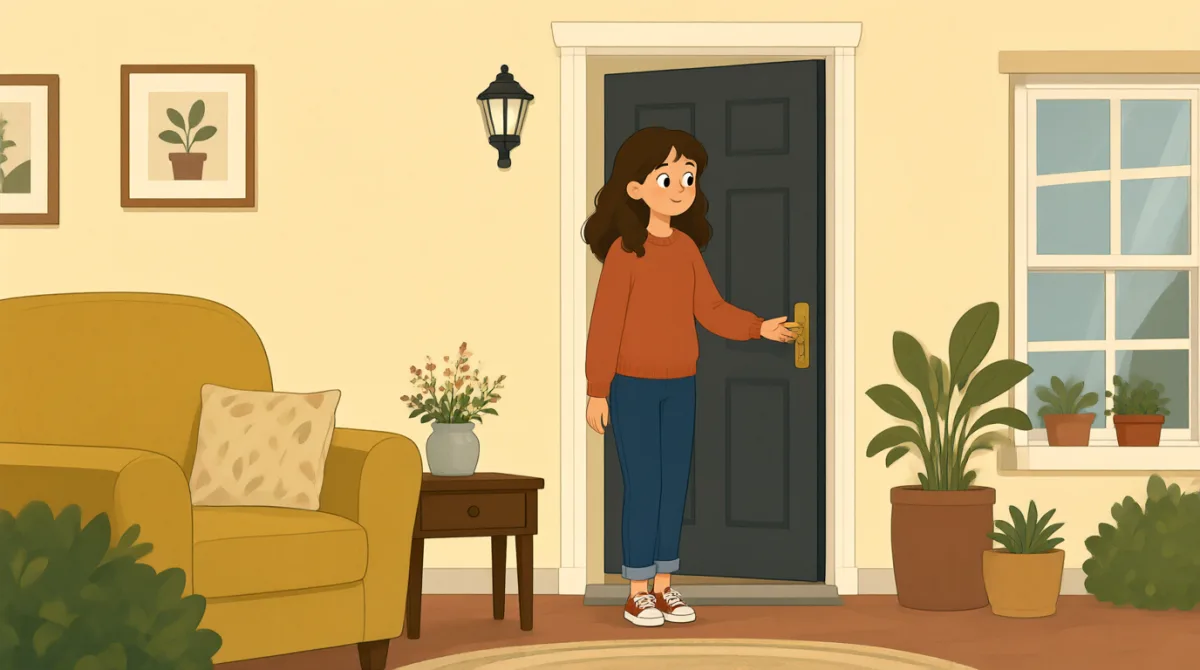

Hi, this is Leo, your grocery delivery driver. I’m near your home now.
Cześć, tu Leo, kierowca dostarczający zakupy. Jestem teraz niedaleko twojego domu.

Hi, Leo. I’m at 24 Oak Street, in the blue house.
Cześć, Leo. Jestem pod adresem Oak Street 24, w niebieskim domu.
I see the street, but I’m not sure which house is yours.
Widzę tę ulicę, ale nie wiem, który dom jest twój.
Go past the small park, then turn left at the corner.
Miniesz mały park, a potem skręć w lewo na rogu.
Okay, I see a blue house. Should I leave the bags at the door?
Dobrze, widzę niebieski dom. Zostawić torby pod drzwiami?
Yes, please. Leave them by the front door, not on the steps.
Tak, proszę. Zostaw je przy drzwiach wejściowych, nie na schodkach.
Got it. I’ll put them next to the door and send you a message.
Jasne. Położę je obok drzwi i wyślę ci wiadomość.
Thanks! Please keep the cold items together in one bag.
Dzięki! Włóż proszę wszystkie chłodzone produkty do jednej torby.
Sure, I’ll do that now. Have a nice day!
Jasne, zaraz to zrobię. Miłego dnia!
Słownictwo8
- delivery driverkierowca dostawca
A delivery driver brings groceries or other items to your home. You can use this phrase when talking about a person delivering an order.
Kierowca dostawca przywozi zakupy lub inne rzeczy do twojego domu. Tego wyrażenia możesz użyć, mówiąc o osobie, która dostarcza zamówienie.
- near your homeniedaleko twojego domu
This means close to your home. You can say it to tell someone where you are.
To znaczy, że ktoś jest blisko twojego domu. Możesz tak powiedzieć, żeby poinformować kogoś, gdzie jesteś.
- go pastminąć
This means to continue beyond a place. Use it to give simple directions.
To znaczy przejść lub przejechać obok jakiegoś miejsca i je wyprzedzić. Użyj tego wyrażenia, podając proste wskazówki dojazdu.
- turn leftskręcić w lewo
This means to change direction to the left. You can use it when guiding someone on a street.
To znaczy zmienić kierunek i skierować się w lewo. Możesz użyć tego wyrażenia, prowadząc kogoś przez ulicę.
- leave the bags at the doorzostawić torby pod drzwiami
This means to put the bags by the door and go without handing them to someone. Use this request for a delivery.
To znaczy położyć torby przy drzwiach i odejść, zamiast przekazywać je komuś do ręki. Możesz tak poprosić przy dostawie.
- front doordrzwi wejściowe
This is the main door at the front of a house. You can use it to show where a delivery should be left.
To główne drzwi z przodu domu. Możesz wskazać w ten sposób miejsce, w którym należy zostawić dostawę.
- next to the doorobok drzwi
This means beside the door. Use it to give a clear place for someone to put something.
To znaczy przy drzwiach, z ich boku. Użyj tego wyrażenia, żeby dokładnie wskazać, gdzie ktoś ma coś położyć.
- cold itemsprodukty wymagające przechowywania w chłodzie
These are groceries that need to stay cold, such as milk or frozen food. You can ask someone to keep them together.
To produkty spożywcze, które muszą być przechowywane w chłodzie, na przykład mleko lub mrożonki. Możesz poprosić, żeby zostały spakowane razem.
Kluczowe zdania8
- 1
I’m near your home now.
Jestem teraz niedaleko twojego domu.
This is a simple way to tell someone you are close to their home. You can replace “your home” with another place, such as “the store” or “the office.”
To prosty sposób, żeby powiedzieć komuś, że jesteś blisko jego domu. Zamiast “your home” możesz podać inne miejsce, na przykład “the store” albo “the office”.
- 2
I’m at 24 Oak Street, in the blue house.
Jestem pod adresem Oak Street 24, w niebieskim domu.
Use this sentence to give your address and help someone identify your home. Replace the street address and house description with your own.
Użyj tego zdania, żeby podać swój adres i pomóc komuś rozpoznać twój dom. Zastąp adres ulicy i opis domu własnymi danymi.
- 3
Go past the small park, then turn left at the corner.
Miniesz mały park, a potem skręć w lewo na rogu.
This gives two clear steps for finding a place. You can use the same pattern with other landmarks and directions.
To dwie jasne wskazówki, które pomogą komuś znaleźć dane miejsce. Możesz użyć tego samego schematu, podając inne punkty orientacyjne i kierunki.
- 4
Should I leave the bags at the door?
Zostawić torby pod drzwiami?
Use this question to check where someone wants a delivery left. Replace “the bags” with another item, such as “the package.”
Użyj tego pytania, żeby sprawdzić, gdzie ktoś chce, by zostawiono dostawę. Zamiast “the bags” możesz powiedzieć na przykład “the package”.
- 5
Yes, please.
Tak, proszę.
This is a polite way to agree to a request or answer a question. You can use it in many everyday situations.
To uprzejmy sposób, żeby zgodzić się na prośbę lub odpowiedzieć na pytanie. Możesz go używać w wielu codziennych sytuacjach.
- 6
Leave them by the front door, not on the steps.
Zostaw je przy drzwiach wejściowych, nie na schodkach.
This sentence gives a clear instruction and says where not to put something. Replace “them” with the items you mean.
To zdanie zawiera jasną instrukcję i mówi, gdzie czegoś nie kłaść. Zamiast “them” możesz wymienić rzeczy, o które chodzi.
- 7
I’ll put them next to the door and send you a message.
Położę je obok drzwi i wyślę ci wiadomość.
Use “I’ll” to say what you plan to do. You can reuse this structure to describe two actions you will take.
Użyj “I’ll”, żeby powiedzieć, co zamierzasz zrobić. Ten schemat możesz wykorzystać ponownie, opisując dwie czynności, które wykonasz.
- 8
Please keep the cold items together in one bag.
Włóż proszę wszystkie chłodzone produkty do jednej torby.
This is a polite request about how groceries should be packed. Replace “cold items” with other things you want kept together.
To uprzejma prośba dotycząca sposobu pakowania zakupów. Zamiast “cold items” możesz wymienić inne rzeczy, które mają być spakowane razem.