Reaching the Top
Llegar a la cima
Emma and Jack reach the top and take in the wide view. They celebrate their hike, then check the time and plan to head back before it gets late.
Emma y Jack llegan a la cima y contemplan el amplio paisaje. Celebran la caminata, luego miran la hora y planean regresar antes de que se haga tarde.
Diálogo8
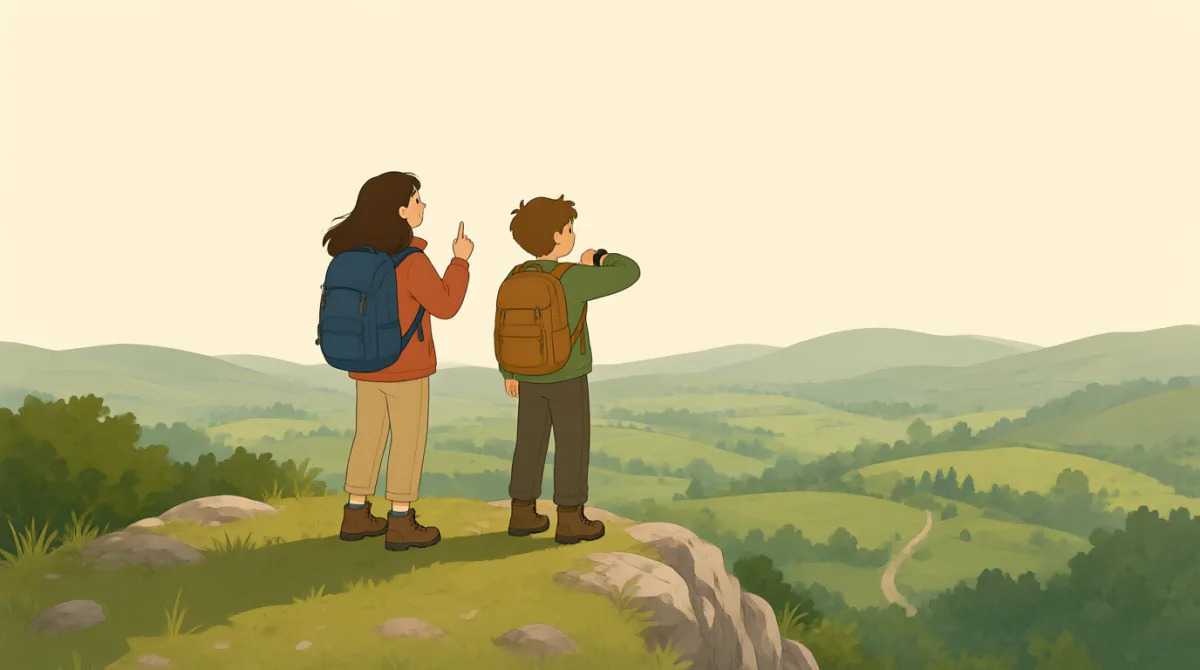

We made it to the top! The view is even better than I expected.
¡Llegamos a la cima! La vista es aún mejor de lo que esperaba.

Look at those hills and the lake. You can see so far from here.
Mira esas colinas y el lago. Desde aquí se ve muy lejos.
I’m glad we chose this trail. That last part was hard, but worth it.
Me alegro de que hayamos elegido este sendero. El último tramo fue difícil, pero valió la pena.
Me too. Let’s take a quick photo and have a snack.
Yo también. Saquémonos una foto rápida y comamos algo.
Good idea. I’m glad we brought plenty of water, too.
Buena idea. También me alegro de que hayamos traído bastante agua.
Let’s check the time. We should head back before it gets late.
Miremos la hora. Deberíamos regresar antes de que se haga tarde.
It’s almost three. The walk down should take about an hour, right?
Son casi las tres. La bajada debería durar más o menos una hora, ¿no?
That’s right. Let’s follow the trail markers and stay together.
Así es. Sigamos las señales del sendero y no nos separemos.
Vocabulario7
- made it to the topllegar a la cima
This means we reached the highest point of a hill or mountain. You can also say, “We made it to the station.”
Significa que llegamos al punto más alto de una colina o montaña. También puedes decir: “We made it to the station” (Llegamos a la estación).
- take a quick photosacarse una foto rápida
This means to take a photograph without spending much time. Use it when you want to capture a moment.
Significa hacer una foto sin dedicarle mucho tiempo. Úsalo cuando quieras captar un momento.
- have a snackcomer algo
This means to eat a small amount of food between meals. You can say this when you want a little food during a trip.
Significa comer una pequeña cantidad entre comidas. Puedes decirlo cuando quieras comer un poco durante un viaje.
- check the timemirar la hora
This means to look at a clock or watch. It is useful when you need to know how much time you have.
Significa mirar un reloj. Es útil cuando necesitas saber cuánto tiempo tienes.
- head backregresar
This means to start going back to a place you came from. You can say, “Let’s head back home.”
Significa empezar a volver al lugar de donde viniste. Puedes decir: “Let’s head back home” (Volvamos a casa).
- gets latese hace tarde
This means the time becomes late in the day or evening. People often use it when they want to leave before night.
Significa que avanza el día y se hace tarde. La gente suele usar esta expresión cuando quiere irse antes de que anochezca.
- stay togetherno separarse
This means to remain with the other people in your group. It is useful when giving safety advice on a walk or trip.
Significa permanecer junto a las otras personas del grupo. Es útil para dar consejos de seguridad durante una caminata o un viaje.
Frases clave7
- 1
We made it to the top!
¡Llegamos a la cima!
Use this to celebrate reaching a high or difficult place. You can change the place, as in, “We made it to the hotel!”
Usa esta frase para celebrar que llegaste a un lugar elevado o difícil. Puedes cambiar el lugar, como en “We made it to the hotel!” (¡Llegamos al hotel!).
- 2
The view is even better than I expected.
La vista es aún mejor de lo que esperaba.
This is a useful way to say something is better than you thought it would be. You can use it for a view, a meal, or an event.
Esta es una forma útil de decir que algo es mejor de lo que pensabas. Puedes usarla para hablar de una vista, una comida o un evento.
- 3
That last part was hard, but worth it.
El último tramo fue difícil, pero valió la pena.
Use this to say something was difficult but had a good result. You can reuse the pattern: “The trip was long, but worth it.”
Usa esta frase para decir que algo fue difícil, pero tuvo un buen resultado. Puedes reutilizar el patrón: “The trip was long, but worth it” (El viaje fue largo, pero valió la pena).
- 4
Let’s take a quick photo and have a snack.
Saquémonos una foto rápida y comamos algo.
This sentence suggests two simple activities. Use “Let’s” to make a friendly suggestion to someone.
Esta frase propone dos actividades sencillas. Usa “Let’s” para hacerle una sugerencia amistosa a alguien.
- 5
We should head back before it gets late.
Deberíamos regresar antes de que se haga tarde.
Use this to suggest returning before the day becomes too late. You can replace “head back” with another action, such as “We should leave before it gets late.”
Usa esta frase para sugerir que vuelvan antes de que se haga muy tarde. Puedes sustituir “head back” por otra acción, como en “We should leave before it gets late” (Deberíamos irnos antes de que se haga tarde).
- 6
The walk down should take about an hour, right?
La bajada debería durar más o menos una hora, ¿no?
This asks someone to confirm an estimate of how long something will take. You can use the pattern for other activities: “The drive should take about 20 minutes, right?”
Esta pregunta sirve para confirmar una estimación de cuánto tardará algo. Puedes usar el patrón para otras actividades: “The drive should take about 20 minutes, right?” (El trayecto en auto debería durar unos 20 minutos, ¿no?).
- 7
Let’s follow the trail markers and stay together.
Sigamos las señales del sendero y no nos separemos.
This is a practical suggestion for staying on the correct path and keeping the group safe. Replace “trail markers” with directions or signs in another situation.
Esta es una sugerencia práctica para seguir el camino correcto y mantener al grupo seguro. En otra situación, puedes sustituir “trail markers” por indicaciones o señales.