Reaching the Top
Chegando ao topo
Emma and Jack reach the top and take in the wide view. They celebrate their hike, then check the time and plan to head back before it gets late.
Emma e Jack chegam ao topo e admiram a vista ampla. Eles comemoram a caminhada, depois olham as horas e planejam voltar antes que fique tarde.
Diálogo8
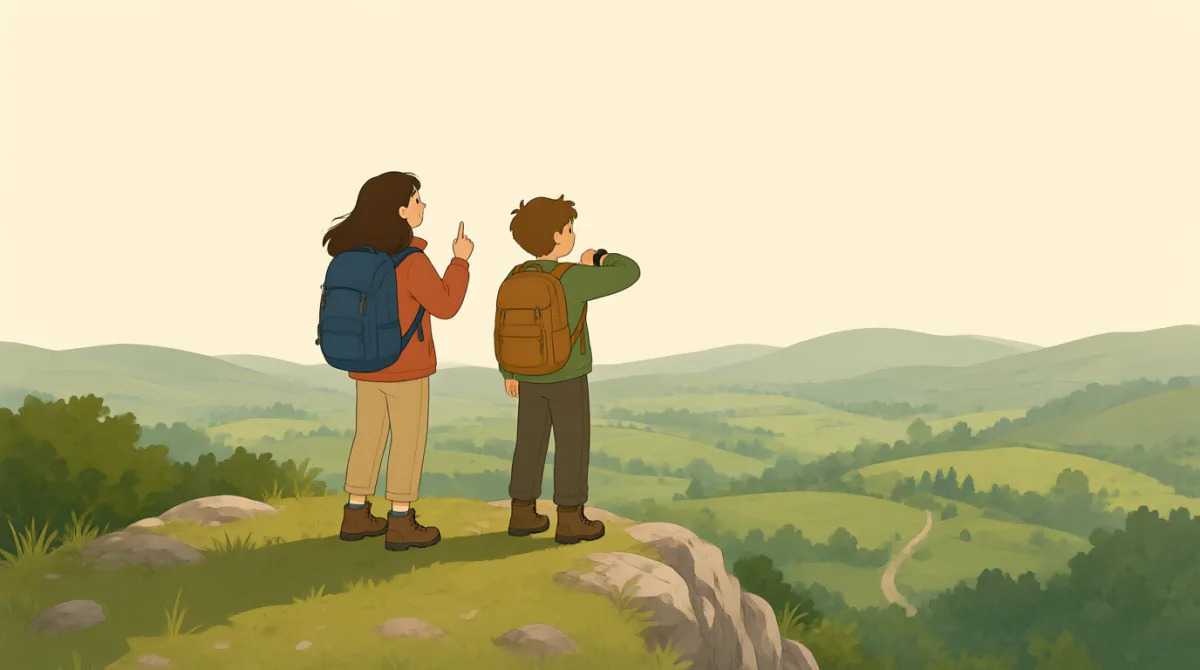

We made it to the top! The view is even better than I expected.
Conseguimos chegar ao topo! A vista é ainda melhor do que eu esperava.

Look at those hills and the lake. You can see so far from here.
Olha aquelas colinas e o lago. Dá para ver tão longe daqui.
I’m glad we chose this trail. That last part was hard, but worth it.
Ainda bem que escolhemos essa trilha. O último trecho foi difícil, mas valeu a pena.
Me too. Let’s take a quick photo and have a snack.
Eu também. Vamos tirar uma foto rapidinho e fazer um lanche.
Good idea. I’m glad we brought plenty of water, too.
Boa ideia. Ainda bem que também trouxemos bastante água.
Let’s check the time. We should head back before it gets late.
Vamos ver que horas são. É melhor voltarmos antes que fique tarde.
It’s almost three. The walk down should take about an hour, right?
Quase três horas. A descida deve levar mais ou menos uma hora, né?
That’s right. Let’s follow the trail markers and stay together.
Isso mesmo. Vamos seguir as placas da trilha e ficar juntos.
Vocabulário7
- made it to the topchegar ao topo
This means we reached the highest point of a hill or mountain. You can also say, “We made it to the station.”
Essa expressão quer dizer que chegamos ao ponto mais alto de uma colina ou montanha. Você também pode dizer: “We made it to the station.” (Conseguimos chegar à estação.)
- take a quick phototirar uma foto rapidinho
This means to take a photograph without spending much time. Use it when you want to capture a moment.
Essa expressão quer dizer tirar uma foto sem demorar muito. Use-a quando quiser registrar um momento.
- have a snackfazer um lanche
This means to eat a small amount of food between meals. You can say this when you want a little food during a trip.
Essa expressão quer dizer comer um pouco entre as refeições. Você pode usá-la quando quiser comer alguma coisinha durante um passeio.
- check the timever que horas são
This means to look at a clock or watch. It is useful when you need to know how much time you have.
Essa expressão quer dizer olhar para um relógio. Ela é útil quando você precisa saber quanto tempo ainda tem.
- head backvoltar
This means to start going back to a place you came from. You can say, “Let’s head back home.”
Essa expressão quer dizer começar a voltar para um lugar de onde você veio. Você pode dizer: “Let’s head back home.” (Vamos voltar para casa.)
- gets lateficar tarde
This means the time becomes late in the day or evening. People often use it when they want to leave before night.
Essa expressão quer dizer que o dia ou a noite está ficando avançado. As pessoas costumam usá-la quando querem ir embora antes de anoitecer.
- stay togetherficar juntos
This means to remain with the other people in your group. It is useful when giving safety advice on a walk or trip.
Essa expressão quer dizer permanecer perto das outras pessoas do grupo. Ela é útil para dar conselhos de segurança durante uma caminhada ou um passeio.
Frases-chave7
- 1
We made it to the top!
Conseguimos chegar ao topo!
Use this to celebrate reaching a high or difficult place. You can change the place, as in, “We made it to the hotel!”
Use essa frase para comemorar que vocês chegaram a um lugar alto ou difícil de alcançar. Você pode trocar o lugar, como em: “We made it to the hotel!” (Conseguimos chegar ao hotel!)
- 2
The view is even better than I expected.
A vista é ainda melhor do que eu esperava.
This is a useful way to say something is better than you thought it would be. You can use it for a view, a meal, or an event.
Essa é uma forma útil de dizer que algo é melhor do que você imaginava. Você pode usá-la para falar de uma vista, uma refeição ou um evento.
- 3
That last part was hard, but worth it.
O último trecho foi difícil, mas valeu a pena.
Use this to say something was difficult but had a good result. You can reuse the pattern: “The trip was long, but worth it.”
Use essa frase para dizer que algo foi difícil, mas teve um bom resultado. Você pode reutilizar o padrão: “The trip was long, but worth it.” (A viagem foi longa, mas valeu a pena.)
- 4
Let’s take a quick photo and have a snack.
Vamos tirar uma foto rapidinho e fazer um lanche.
This sentence suggests two simple activities. Use “Let’s” to make a friendly suggestion to someone.
Essa frase sugere duas atividades simples. Use “Let’s” para fazer uma sugestão amigável a alguém.
- 5
We should head back before it gets late.
É melhor voltarmos antes que fique tarde.
Use this to suggest returning before the day becomes too late. You can replace “head back” with another action, such as “We should leave before it gets late.”
Use essa frase para sugerir que vocês voltem antes que fique muito tarde. Você pode substituir “head back” por outra ação, como em: “We should leave before it gets late.” (É melhor irmos embora antes que fique tarde.)
- 6
The walk down should take about an hour, right?
A descida deve levar mais ou menos uma hora, né?
This asks someone to confirm an estimate of how long something will take. You can use the pattern for other activities: “The drive should take about 20 minutes, right?”
Essa pergunta pede que alguém confirme uma estimativa de quanto tempo algo vai levar. Você pode usar esse padrão para outras atividades: “The drive should take about 20 minutes, right?” (A viagem de carro deve levar uns 20 minutos, né?)
- 7
Let’s follow the trail markers and stay together.
Vamos seguir as placas da trilha e ficar juntos.
This is a practical suggestion for staying on the correct path and keeping the group safe. Replace “trail markers” with directions or signs in another situation.
Essa é uma sugestão prática para continuar no caminho certo e manter o grupo seguro. Em outra situação, você pode substituir “trail markers” por indicações ou placas.