A Taste of Home
Un sabor de casa
Mia tells Emma about a famous local dish and where people like to eat it. Emma asks what it tastes like.
Mia le cuenta a Emma sobre un plato local famoso y dónde le gusta comerlo a la gente. Emma pregunta a qué sabe.
Diálogo9
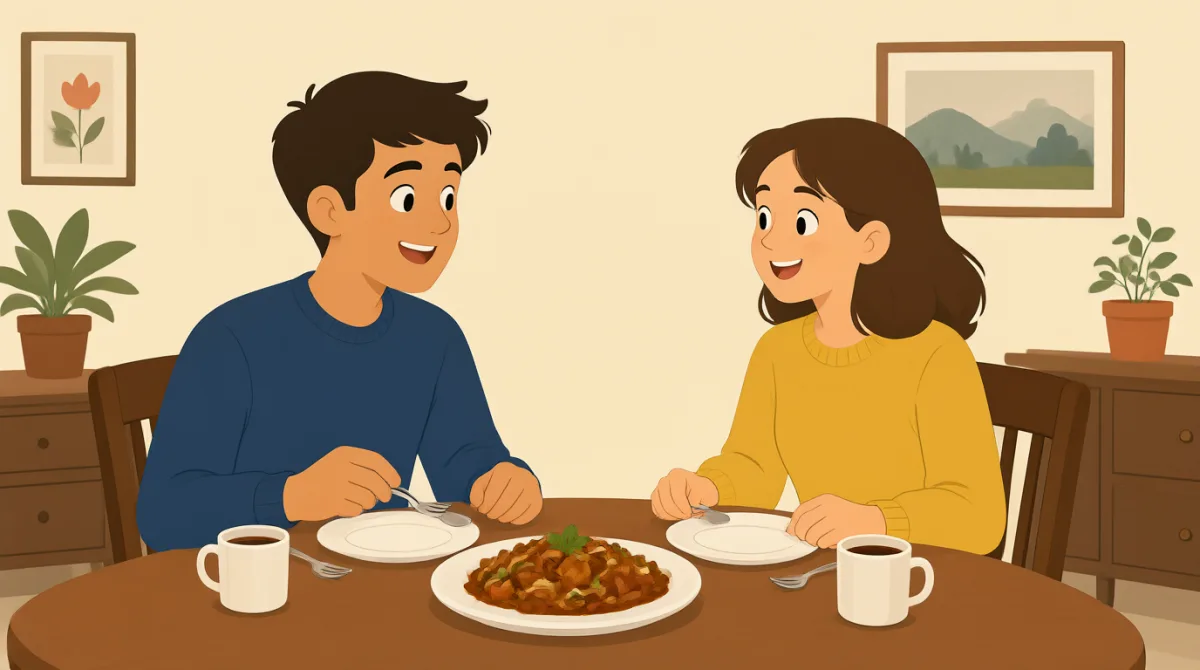

You said your hometown has great food. What local dish should I try?
Dijiste que en tu ciudad natal se come muy bien. ¿Qué plato local debería probar?

You should try fish cakes. They’re a popular snack in my hometown.
Deberías probar los pasteles de pescado. Son un aperitivo muy popular en mi ciudad natal.
Fish cakes sound good! What are they made of?
¡Los pasteles de pescado suenan ricos! ¿De qué están hechos?
They’re made with fresh fish and a few simple spices. They’re usually fried.
Se hacen con pescado fresco y unas cuantas especias sencillas. Normalmente se fríen.
Where do people like to eat them?
¿Dónde le gusta comerlos a la gente?
Many people get them at the old market. There are small food shops there.
Mucha gente los compra en el mercado antiguo. Allí hay pequeños puestos de comida.
What do they taste like? Are they spicy?
¿A qué saben? ¿Son picantes?
They’re a little crispy outside and soft inside. They’re not very spicy.
Son un poco crujientes por fuera y blandos por dentro. No son muy picantes.
I’d love to try them when I visit your hometown!
¡Me encantaría probarlos cuando visite tu ciudad natal!
Vocabulario8
- local dishplato local
A local dish is a kind of food that is popular in a particular place. Use it to ask about or describe food from a town or region.
Un “local dish” es un tipo de comida popular en un lugar concreto. Usa esta expresión para preguntar por la comida de una ciudad o región, o para describirla.
- popular snackaperitivo popular
A popular snack is a small food that many people like to eat between meals. You can use this phrase to describe a well-liked local food.
Un “popular snack” es algo pequeño que a mucha gente le gusta comer entre comidas. Puedes usar esta expresión para describir una comida local que gusta mucho.
- made withhecho con
“Made with” tells you which ingredients are used in a food. You can use it to ask about or explain what a dish contains.
“Made with” indica qué ingredientes se usan en una comida. Puedes usar esta expresión para preguntar de qué está hecho un plato o para explicar qué contiene.
- simple spicesespecias sencillas
Simple spices are a few basic seasonings used to add flavor. Use this phrase when describing how a dish is seasoned.
“Simple spices” son unas cuantas especias básicas que se usan para dar sabor. Usa esta expresión al describir cómo se sazona un plato.
- friedfrito
Fried food is cooked in hot oil. You can use this word to describe how food is prepared.
La comida “fried” se cocina en aceite caliente. Puedes usar esta palabra para describir cómo se prepara la comida.
- food shopspuestos de comida
Food shops are small places where people can buy food. Use this phrase to talk about places to eat or get snacks.
Los “food shops” son lugares pequeños donde la gente puede comprar comida. Usa esta expresión para hablar de sitios donde comer o comprar algo para picar.
- crispy outsidecrujiente por fuera
“Crispy outside” describes food that is crunchy on its outer part. You can use it to describe the texture of cooked food.
“Crispy outside” describe una comida crujiente por la parte exterior. Puedes usar esta expresión para describir la textura de un alimento cocinado.
- soft insideblando por dentro
“Soft inside” describes food that is tender in the middle. It is often used with “crispy outside” to explain a food’s texture.
“Soft inside” describe una comida tierna en el centro. Suele usarse junto con “crispy outside” para explicar la textura de un alimento.
Frases clave8
- 1
What local dish should I try?
¿Qué plato local debería probar?
Use this question to ask someone for a food recommendation from their area. You can replace “local dish” with a type of food, such as “local dessert.”
Usa esta pregunta para pedirle a alguien una recomendación de comida de su zona. Puedes sustituir “local dish” por un tipo de comida, como “local dessert”.
- 2
What are they made of?
¿De qué están hechos?
Use this question to ask about the ingredients in something. Replace “they” with the food you want to ask about.
Usa esta pregunta para preguntar qué ingredientes lleva algo. Sustituye “they” por el alimento del que quieras preguntar.
- 3
They’re usually fried.
Normalmente se fríen.
This sentence explains how a food is normally cooked. You can replace “fried” with another cooking method, such as “baked” or “boiled.”
Esta frase explica cómo se cocina normalmente un alimento. Puedes sustituir “fried” por otro método de cocción, como “baked” o “boiled”.
- 4
Where do people like to eat them?
¿Dónde le gusta comerlos a la gente?
Use this question to ask where a food is popular or where people usually get it. Replace “them” with the food you are asking about.
Usa esta pregunta para preguntar dónde es popular un alimento o dónde suele comprarlo la gente. Sustituye “them” por el alimento del que quieras preguntar.
- 5
What do they taste like?
¿A qué saben?
Use this question to ask someone to describe the flavor of a food. You can replace “they” with a singular food and ask, “What does it taste like?”
Usa esta pregunta para pedirle a alguien que describa el sabor de una comida. Puedes sustituir “they” por un alimento singular y preguntar: “What does it taste like?”.
- 6
Are they spicy?
¿Son picantes?
Use this short question to check whether a food has a hot, strong flavor. Replace “spicy” with another description, such as “sweet” or “salty.”
Usa esta pregunta breve para comprobar si una comida tiene un sabor fuerte y picante. Sustituye “spicy” por otra descripción, como “sweet” o “salty”.
- 7
They’re a little crispy outside and soft inside.
Son un poco crujientes por fuera y blandos por dentro.
This sentence describes two different textures in one food. You can use the same pattern to explain how other foods feel when you eat them.
Esta frase describe dos texturas distintas de un mismo alimento. Puedes usar el mismo patrón para explicar qué textura tienen otros alimentos al comerlos.
- 8
I’d love to try them when I visit your hometown!
¡Me encantaría probarlos cuando visite tu ciudad natal!
Use this friendly sentence to show that you are excited to try a food in the future. Replace “them” with the food you want to try.
Usa esta frase amistosa para mostrar que te entusiasma probar una comida más adelante. Sustituye “them” por el alimento que quieras probar.