A Big City or a Small Town?
¿Una gran ciudad o un pueblo pequeño?
Emma asks Mia whether her hometown is a big city or a small town. Mia describes its size and what daily life is like there.
Emma le pregunta a Mia si su ciudad natal es una gran ciudad o un pueblo pequeño. Mia describe su tamaño y cómo es la vida cotidiana allí.
Diálogo8
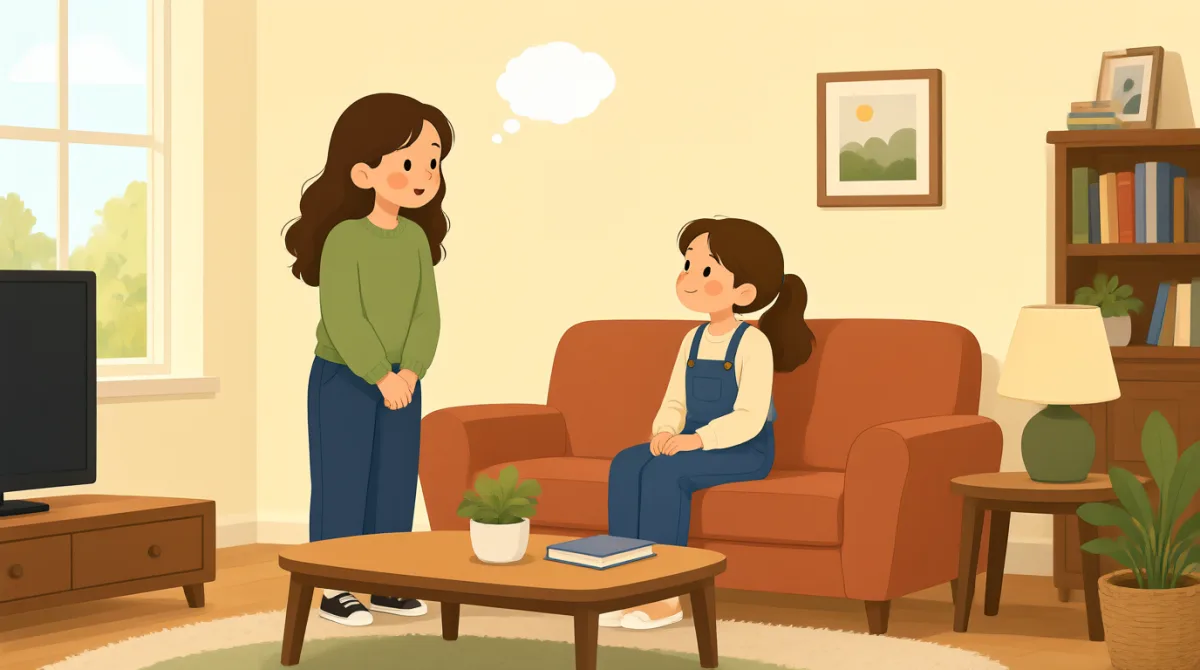

Is your hometown a big city or a small town, Mia?
¿Tu ciudad natal es una gran ciudad o un pueblo pequeño, Mia?

It’s a small city, but it’s bigger than a town.
Es una ciudad pequeña, pero es más grande que un pueblo.
How many people live there?
¿Cuántas personas viven allí?
About two hundred thousand. It’s not too crowded, and most places are easy to reach.
Unas doscientas mil. No está demasiado abarrotada y se puede llegar fácilmente a la mayoría de los lugares.
That sounds nice. What’s daily life like there?
Suena bien. ¿Cómo es la vida cotidiana allí?
It’s quiet and friendly. People often walk to the shops or take the bus.
Es tranquila y agradable. La gente suele ir caminando a las tiendas o tomar el autobús.
Do you have busy areas, too?
¿También hay zonas concurridas?
Yes, the town center gets busy on weekends, but it’s calm on weekdays.
Sí, el centro se llena los fines de semana, pero entre semana es tranquilo.
Vocabulario8
- hometownciudad natal
The town or city where you grew up or where your family is from. Use it when talking about where you are from.
La ciudad o el pueblo donde creciste o de donde es tu familia. Usa esta expresión cuando hables de dónde eres.
- small cityciudad pequeña
A city that is not very large. You can use this phrase to describe the size of a place.
Una ciudad que no es muy grande. Puedes usar esta expresión para describir el tamaño de un lugar.
- crowdedabarrotado
Full of many people, so there is little space. Use it to describe a busy place.
Lleno de mucha gente, con poco espacio disponible. Usa esta palabra para describir un lugar concurrido.
- easy to reachfácil de llegar
Not difficult to get to. You can use this phrase when places are close or transport is convenient.
Que no cuesta llegar. Puedes usar esta expresión cuando los lugares están cerca o el transporte es cómodo.
- daily lifevida cotidiana
The usual things people do every day. Ask “What’s daily life like?” to learn about someone’s everyday experience.
Las cosas que la gente suele hacer cada día. Pregunta “What’s daily life like?” (¿Cómo es la vida cotidiana?) para conocer la experiencia diaria de alguien.
- take the bustomar el autobús
To travel somewhere by bus. Use “take the” with other forms of transport, such as “take the train.”
Ir a algún lugar en autobús. Usa “take the” con otros medios de transporte, como en “take the train” (tomar el tren).
- town centercentro del pueblo
The main area in a town, often with shops and other places to visit. You can use it when describing where people go.
La zona principal de un pueblo, donde suele haber tiendas y otros lugares para visitar. Puedes usar esta expresión para describir adónde va la gente.
- on weekdaysentre semana
During the days from Monday to Friday. Use it to say when something usually happens.
Durante los días de lunes a viernes. Usa esta expresión para decir cuándo suele ocurrir algo.
Frases clave7
- 1
Is your hometown a big city or a small town, Mia?
¿Tu ciudad natal es una gran ciudad o un pueblo pequeño, Mia?
This is a useful way to ask someone what kind of place their hometown is. You can replace “a big city” and “a small town” with other choices.
Esta es una forma útil de preguntarle a alguien qué tipo de lugar es su ciudad natal. Puedes sustituir “a big city” y “a small town” por otras opciones.
- 2
It’s a small city, but it’s bigger than a town.
Es una ciudad pequeña, pero es más grande que un pueblo.
This sentence describes a place by comparing its size. Use “bigger than” to compare two places or things.
Esta oración describe un lugar comparando su tamaño. Usa “bigger than” para comparar dos lugares o cosas.
- 3
About two hundred thousand.
Unas doscientas mil.
This is a short, natural answer to a question about how many people live somewhere. Use “about” when you are giving an approximate number.
Esta es una respuesta breve y natural a una pregunta sobre cuántas personas viven en un lugar. Usa “about” cuando des una cifra aproximada.
- 4
It’s not too crowded, and most places are easy to reach.
No está demasiado abarrotada y se puede llegar fácilmente a la mayoría de los lugares.
This sentence describes how busy a place is and how convenient it is to get around. You can change “not too crowded” and “easy to reach” to describe another location.
Esta oración describe cuánta gente hay en un lugar y lo fácil que es desplazarse por él. Puedes cambiar “not too crowded” y “easy to reach” para describir otro lugar.
- 5
What’s daily life like there?
¿Cómo es la vida cotidiana allí?
This is a natural way to ask what everyday life is like in a place. You can replace “there” with the name of a town or city.
Esta es una forma natural de preguntar cómo es la vida diaria en un lugar. Puedes sustituir “there” por el nombre de un pueblo o una ciudad.
- 6
People often walk to the shops or take the bus.
La gente suele ir caminando a las tiendas o tomar el autobús.
This sentence describes common ways people travel locally. Use “often” to talk about something people do regularly.
Esta oración describe formas habituales de desplazarse por la zona. Usa “often” para hablar de algo que la gente hace con regularidad.
- 7
The town center gets busy on weekends, but it’s calm on weekdays.
El centro del pueblo se llena los fines de semana, pero entre semana es tranquilo.
This sentence compares how a place feels at different times. You can use “gets busy” and “is calm” to describe other places and days.
Esta oración compara cómo se siente un lugar en distintos momentos. Puedes usar “gets busy” y “is calm” para describir otros lugares y días.