Bringing a Thank-You Gift
Ein Dankeschön in Form eines Geschenks
Emma brings Mia a small thank-you gift and tells her how much she appreciates the help. Mia warmly accepts it.
Emma bringt Mia eine kleine Aufmerksamkeit als Dankeschön mit und sagt ihr, wie sehr sie ihre Hilfe zu schätzen weiß. Mia nimmt das Geschenk herzlich an.
Dialog8
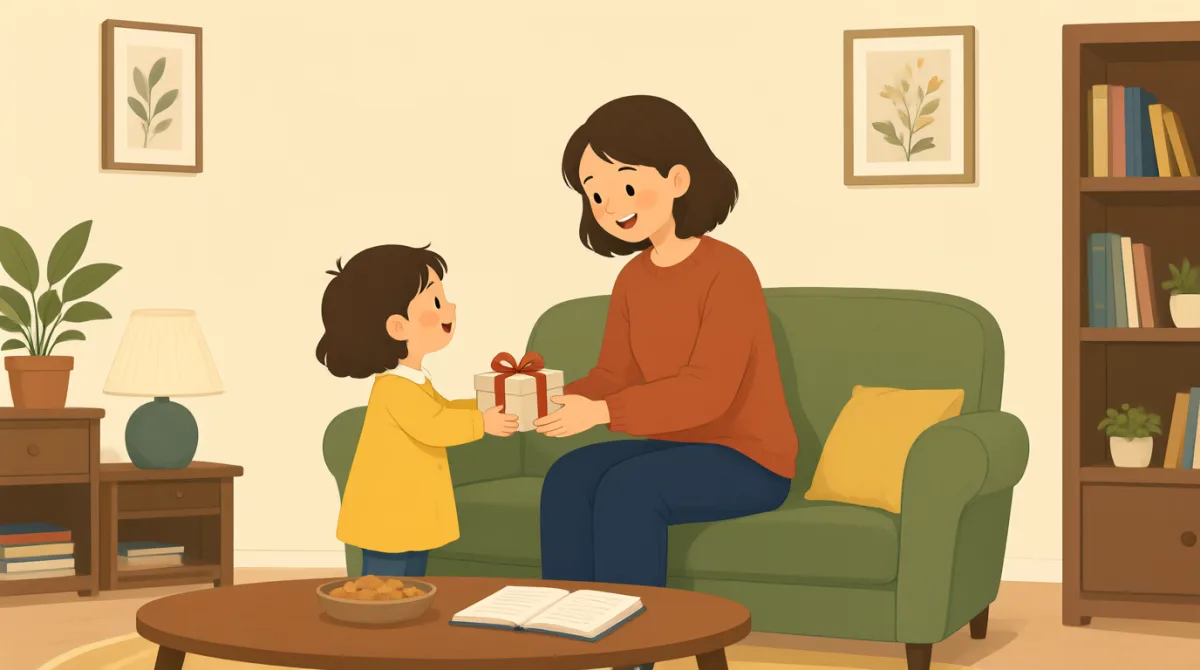

Hi, Mia. I brought you a small box of chocolates to say thank you.
Hallo, Mia. Ich habe dir eine kleine Schachtel Pralinen als Dankeschön mitgebracht.

Oh, you didn't have to! That’s so kind of you.
Ach, das wäre doch nicht nötig gewesen! Das ist sehr lieb von dir.
You helped me so much while I was away. I really appreciate it.
Du hast mir so sehr geholfen, während ich weg war. Das weiß ich wirklich zu schätzen.
I was happy to help. It was no trouble at all.
Ich habe gern geholfen. Das war überhaupt kein Problem.
Still, I wanted to bring you something. I hope you like chocolate.
Trotzdem wollte ich dir etwas mitbringen. Ich hoffe, du magst Schokolade.
I love chocolate! Thank you, Emma. I’ll enjoy it with a cup of tea.
Ich liebe Schokolade! Danke, Emma. Ich genieße sie zu einer Tasse Tee.
You’re welcome. And please let me know if you ever need help.
Gern geschehen. Und sag mir bitte Bescheid, wenn du irgendwann Hilfe brauchst.
I will. Thanks again for the lovely gift!
Mach ich. Danke noch mal für das schöne Geschenk!
Wortschatz7
- to say thank youals Dankeschön
This means to show that you are grateful. You can use it to explain why you are giving someone a gift.
Das bedeutet, jemandem zu zeigen, dass du dankbar bist. Du kannst damit erklären, warum du jemandem ein Geschenk machst.
- You didn’t have to!Das wäre doch nicht nötig gewesen!
This is a friendly way to say that a gift or favor was not necessary. People often say it when someone does something kind for them.
Das ist eine freundliche Art zu sagen, dass ein Geschenk oder eine Gefälligkeit nicht nötig war. Man sagt das oft, wenn jemand etwas Nettes für einen tut.
- I really appreciate it.Das weiß ich wirklich zu schätzen.
This means you are very thankful for someone’s help. You can use it to show that their help matters to you.
Damit sagst du, dass du jemandem für seine Hilfe sehr dankbar bist. So kannst du zeigen, wie viel dir die Hilfe bedeutet.
- no trouble at allüberhaupt kein Problem
This means something was not difficult or inconvenient. You can say it when someone thanks you for helping.
Das bedeutet, dass etwas weder schwierig noch umständlich war. Du kannst das sagen, wenn sich jemand für deine Hilfe bedankt.
- Still,Trotzdem,
Here, this word introduces a reason to do something even after someone says it was not necessary. You can use it to gently explain your choice.
Hier leitet dieses Wort einen Grund ein, etwas zu tun, obwohl jemand gesagt hat, es sei nicht nötig gewesen. Damit kannst du deine Entscheidung freundlich erklären.
- let me knowjemandem Bescheid sagen
This means to tell me or give me information. Use it when asking someone to contact you if something happens.
Das bedeutet, jemandem etwas mitzuteilen oder Informationen zu geben. Verwende die Wendung, wenn du jemanden bittest, dich zu kontaktieren, falls etwas passiert.
- Thanks againDanke noch mal
This is a way to thank someone one more time. You can use it at the end of a conversation or message.
Damit bedankst du dich ein weiteres Mal. Du kannst es am Ende eines Gesprächs oder einer Nachricht sagen.
Wichtige Sätze7
- 1
I brought you a small box of chocolates to say thank you.
Ich habe dir eine kleine Schachtel Pralinen als Dankeschön mitgebracht.
This is a warm way to give someone a gift and explain why you brought it. You can change “a small box of chocolates” to another gift.
So kannst du jemandem herzlich ein Geschenk überreichen und erklären, warum du es mitgebracht hast. Du kannst “a small box of chocolates” durch ein anderes Geschenk ersetzen.
- 2
You helped me so much while I was away.
Du hast mir so sehr geholfen, während ich weg war.
This sentence explains what the other person did for you. You can use “while I was away” to talk about help you received during a trip or absence.
Dieser Satz erklärt, was die andere Person für dich getan hat. Mit “while I was away” kannst du von Hilfe erzählen, die du während einer Reise oder Abwesenheit bekommen hast.
- 3
I really appreciate it.
Das weiß ich wirklich zu schätzen.
This is a simple, sincere way to express gratitude. Use it after someone has helped you or done something kind.
Das ist eine einfache und aufrichtige Art, Dankbarkeit auszudrücken. Verwende den Satz, nachdem dir jemand geholfen oder etwas Nettes für dich getan hat.
- 4
It was no trouble at all.
Das war überhaupt kein Problem.
This is a friendly response when someone thanks you for helping. You can use it to reassure them that helping was easy.
Das ist eine freundliche Antwort, wenn sich jemand für deine Hilfe bedankt. Damit kannst du der Person versichern, dass es ganz einfach war zu helfen.
- 5
Still, I wanted to bring you something.
Trotzdem wollte ich dir etwas mitbringen.
This lets you explain that you chose to give a gift even though it was not necessary. You can replace “bring you something” with another kind gesture.
Damit erklärst du, dass du dich für ein Geschenk entschieden hast, obwohl es nicht nötig war. Du kannst “bring you something” durch eine andere nette Geste ersetzen.
- 6
I’ll enjoy it with a cup of tea.
Ich genieße sie zu einer Tasse Tee.
This sentence shows how you plan to enjoy a gift. You can use “I’ll enjoy it with…” to mention something you will have alongside food or a drink.
Dieser Satz zeigt, wie du ein Geschenk genießen möchtest. Mit “I’ll enjoy it with…” kannst du etwas erwähnen, das du zusammen mit einer Speise oder einem Getränk zu dir nehmen wirst.
- 7
And please let me know if you ever need help.
Und sag mir bitte Bescheid, wenn du irgendwann Hilfe brauchst.
This is a kind offer of future help. You can use “please let me know if you ever need…” to offer support.
Das ist ein freundliches Angebot, auch in Zukunft zu helfen. Mit “please let me know if you ever need…” kannst du Unterstützung anbieten.