A Book Is Late
Ein Buch ist überfällig
Grace tells Emma that one book is late. Emma asks if she has to pay a late fee.
Grace sagt Emma, dass ein Buch überfällig ist. Emma fragt, ob sie eine Verspätungsgebühr zahlen muss.
Dialog6
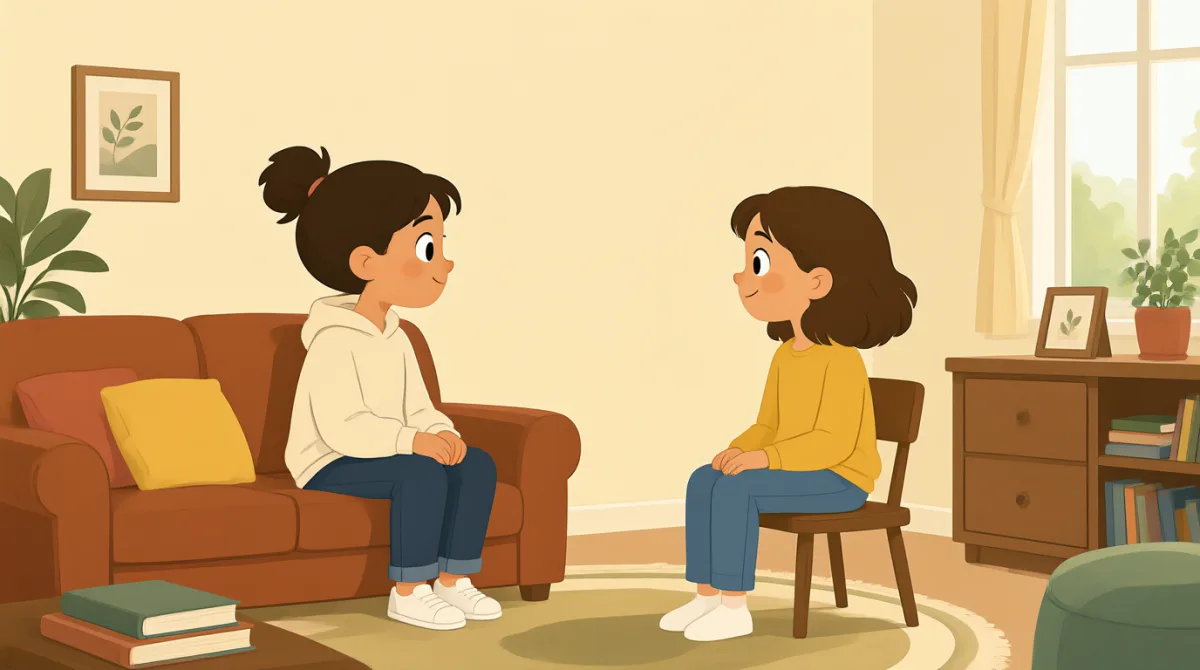

One book is late, Emma. It was due yesterday.
Ein Buch ist überfällig, Emma. Es war gestern fällig.

Oh, I’m sorry. Do I have to pay a late fee?
Oh, tut mir leid. Muss ich eine Verspätungsgebühr zahlen?
Let me check. Yes, the fee is one dollar.
Ich sehe kurz nach. Ja, die Gebühr beträgt einen Dollar.
Okay. Can I pay by card?
Okay. Kann ich mit Karte zahlen?
Yes, you can. Please tap your card here.
Ja, das geht. Halten Sie Ihre Karte bitte hier dran.
Done. Thank you for your help.
Fertig. Danke für Ihre Hilfe.
Wortschatz8
- lateüberfällig
Here, it means the book was returned after the day it was due. You can say, “My book is late.”
Hier bedeutet es, dass das Buch nach dem Rückgabedatum zurückgegeben wurde. Du kannst sagen: “My book is late.”
- due yesterdaygestern fällig
This means the book should have been returned yesterday. You can say, “The book is due today.”
Das bedeutet, dass das Buch gestern hätte zurückgegeben werden müssen. Du kannst sagen: “The book is due today.”
- late feeVerspätungsgebühr
A late fee is money you pay when you return something after its due date. You can ask, “Is there a late fee?”
Eine Verspätungsgebühr ist ein Betrag, den du zahlen musst, wenn du etwas nach dem Fälligkeitsdatum zurückgibst. Du kannst fragen: “Is there a late fee?”
- Let me check.Ich sehe kurz nach.
Use this when you need to look for information before you answer. You can say it at a library or a store.
Das sagst du, wenn du erst etwas nachschauen musst, bevor du antwortest. Der Satz passt zum Beispiel in einer Bibliothek oder einem Geschäft.
- one dollarein Dollar
This tells the amount of money the fee costs. You can use the same pattern to say other prices, such as “five dollars.”
Damit wird angegeben, wie viel die Gebühr kostet. Mit dem gleichen Muster kannst du auch andere Preise nennen, zum Beispiel “five dollars.”
- by cardmit Karte
This means using a bank card to pay. You can ask, “Can I pay by card?”
Das bedeutet, mit einer Bankkarte zu bezahlen. Du kannst fragen: “Can I pay by card?”
- tap your carddie Karte dranhalten
This means touching your card to the payment machine to pay. You may hear this instruction in a shop or library.
Das bedeutet, die Karte zum Bezahlen an das Kartenlesegerät zu halten. Diese Aufforderung hörst du vielleicht in einem Geschäft oder einer Bibliothek.
- Thank you for your help.Danke für Ihre Hilfe.
Use this polite sentence to thank someone who helped you. You can say it at the end of a conversation.
Mit diesem höflichen Satz bedankst du dich bei jemandem, der dir geholfen hat. Du kannst ihn am Ende eines Gesprächs sagen.
Wichtige Sätze8
- 1
One book is late, Emma.
Ein Buch ist überfällig, Emma.
This is a simple way to tell someone that a book is overdue. You can replace “book” with another item, such as “Your payment is late.”
So kannst du jemandem einfach sagen, dass ein Buch nicht rechtzeitig zurückgegeben wurde. Du kannst “book” durch einen anderen Gegenstand ersetzen, zum Beispiel in “Your payment is late.”
- 2
It was due yesterday.
Es war gestern fällig.
Use this to say when something should have been returned or finished. Replace “yesterday” with another time, such as “It was due today.”
Das sagst du, um mitzuteilen, wann etwas hätte zurückgegeben oder erledigt werden sollen. Ersetze “yesterday” durch einen anderen Zeitpunkt, zum Beispiel in “It was due today.”
- 3
Do I have to pay a late fee?
Muss ich eine Verspätungsgebühr zahlen?
This is a useful question when you want to know if you must pay extra money. You can change “late fee” to another cost, such as “a service fee.”
Diese Frage ist nützlich, wenn du wissen möchtest, ob du zusätzlich etwas bezahlen musst. Du kannst “late fee” durch andere Kosten ersetzen, zum Beispiel durch “a service fee.”
- 4
Let me check.
Ich sehe kurz nach.
Use this when you want a moment to find out the answer. It is a natural, polite reply in everyday situations.
Das sagst du, wenn du kurz nach der Antwort suchen möchtest. Im Alltag ist das eine natürliche und höfliche Antwort.
- 5
Yes, the fee is one dollar.
Ja, die Gebühr beträgt einen Dollar.
This sentence gives a clear answer and tells the price. You can replace “one dollar” with the correct amount.
Dieser Satz gibt eine klare Antwort und nennt den Preis. Du kannst “one dollar” durch den passenden Betrag ersetzen.
- 6
Can I pay by card?
Kann ich mit Karte zahlen?
Use this to ask if a card is an accepted way to pay. You can replace “by card” with “in cash.”
Damit fragst du, ob du mit Karte bezahlen kannst. Du kannst “by card” durch “in cash” ersetzen.
- 7
Please tap your card here.
Halten Sie Ihre Karte bitte hier dran.
This is a polite instruction for making a contactless payment. You can use it to tell someone where to tap their card.
Das ist eine höfliche Aufforderung für eine kontaktlose Zahlung. Du kannst den Satz verwenden, um jemandem zu sagen, wo die Karte hingehalten werden soll.
- 8
Thank you for your help.
Danke für Ihre Hilfe.
This is a polite way to thank someone after they assist you. Use it at the end of a service conversation.
So bedankst du dich höflich bei jemandem, der dir geholfen hat. Verwende den Satz am Ende eines Gesprächs, in dem du bedient oder unterstützt wurdest.