Being Offered a Seat
আসন নেওয়ার আমন্ত্রণ
Someone at a partially occupied table notices you looking for a seat and kindly offers you the empty chair at their table.
আংশিক ভরা একটি টেবিলে বসে থাকা কেউ আপনাকে আসন খুঁজতে দেখে নিজের টেবিলের খালি চেয়ারটিতে বসার জন্য আন্তরিকভাবে আমন্ত্রণ জানায়।
সংলাপ6
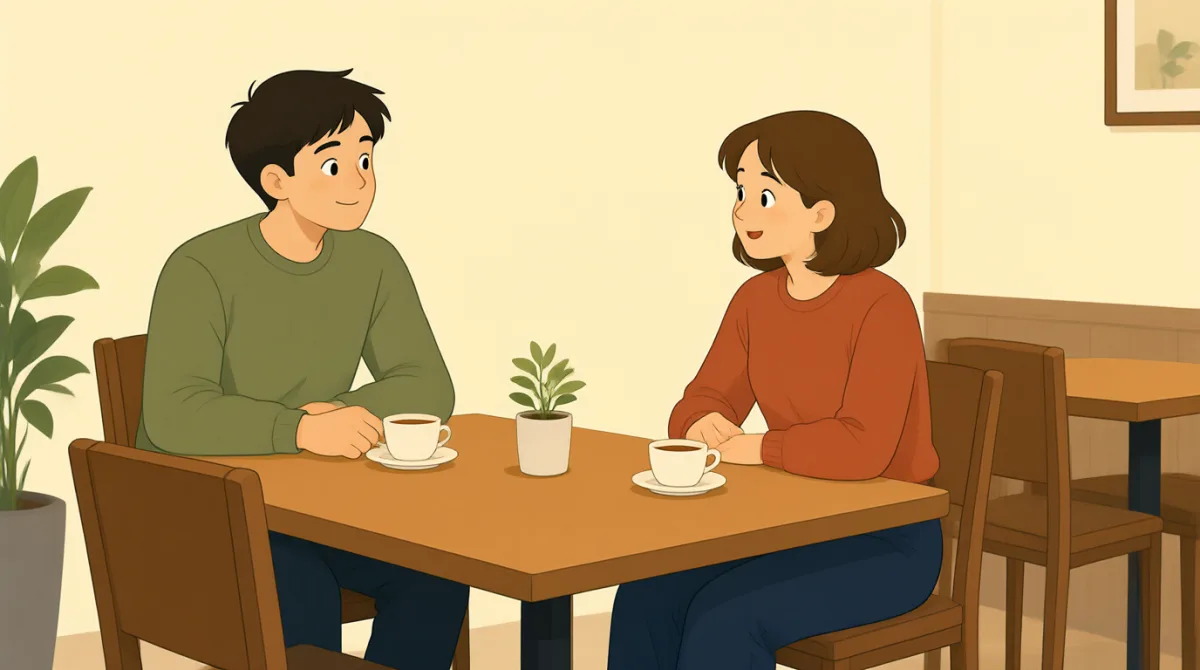

Excuse me, I don't suppose this chair is free, is it?
মাফ করবেন, এই চেয়ারটা কি খালি আছে?

Oh, actually, that one is taken. But this one right here is free if you'd like to sit down.
ওহ, আসলে ওই চেয়ারটায় কেউ বসবে। তবে এই যে, এই চেয়ারটা খালি—আপনি চাইলে বসতে পারেন।
Oh, really? That's so kind of you! Thank you.
ওহ, সত্যি? আপনি খুব ভালো করলেন! ধন্যবাদ।
No problem at all. It's tough to find a spot here sometimes. Just move those books for a second.
কোনো সমস্যা নেই। এখানে মাঝে মাঝে বসার জায়গা পাওয়া কঠিন। একটু এই বইগুলো সরিয়ে নিন।
Yes, it really is. I've been looking for a few minutes now. Thanks again.
হ্যাঁ, সত্যিই তাই। কয়েক মিনিট ধরে জায়গা খুঁজছি। আবারও ধন্যবাদ।
You're welcome. Make yourself comfortable.
স্বাগতম। আরাম করে বসুন।
শব্দভান্ডার6
- freeখালি; অব্যবহৃত
In this context, 'free' means available or not being used by anyone, like an empty seat.
এখানে 'free' মানে খালি বা কারও ব্যবহার না করা—যেমন একটি খালি আসন।
- takenদখল করা; কেউ বসেছে
'Taken' means already occupied or in use by someone else, such as a seat that has a person sitting there.
'Taken' মানে কোনো কিছু ইতিমধ্যে অন্য কেউ ব্যবহার করছে বা দখল করে আছে—যেমন যে আসনে কেউ বসে আছে।
- kindদয়ালু; সদয়
'Kind' describes someone who is thoughtful, helpful, and considerate towards others.
'Kind' এমন কাউকে বোঝায়, যিনি অন্যদের কথা ভাবেন, সাহায্য করেন এবং তাঁদের প্রতি বিবেচনাশীল।
- toughকঠিন
'Tough' means difficult or challenging, often used for situations like finding a seat in a crowded place.
'Tough' মানে কঠিন বা চ্যালেঞ্জিং। ভিড়ের জায়গায় বসার আসন খুঁজে পাওয়ার মতো পরিস্থিতিতে শব্দটি প্রায়ই ব্যবহার করা হয়।
- spotজায়গা; আসন
'Spot' here refers to a place or seat, especially in informal situations like a cafe.
এখানে 'spot' বলতে কোনো জায়গা বা বসার আসন বোঝায়, বিশেষ করে ক্যাফের মতো অনানুষ্ঠানিক পরিবেশে।
- comfortableআরামদায়ক
'Comfortable' means feeling relaxed and at ease, like settling into a seat without worry.
'Comfortable' মানে স্বচ্ছন্দ ও আরামে বোধ করা—যেমন নিশ্চিন্তে আসনে বসে থাকা।
গুরুত্বপূর্ণ বাক্য5
- 1
Excuse me, I don't suppose this chair is free, is it?
মাফ করবেন, এই চেয়ারটা কি খালি আছে?
This is a polite way to ask if a seat is available. The phrase 'I don't suppose' softens the question, making it less direct, and the tag 'is it?' seeks confirmation. Use it in social situations to avoid seeming rude.
কোনো আসন খালি আছে কি না, তা জানতে এটি একটি ভদ্র উপায়। 'I don't suppose' প্রশ্নটিকে নরম করে, ফলে কথাটি কম সরাসরি শোনায়; আর 'is it?' দিয়ে নিশ্চিত হওয়ার চেষ্টা করা হয়। অভদ্র শোনানো এড়াতে সামাজিক পরিস্থিতিতে এটি ব্যবহার করুন।
- 2
Oh, actually, that one is taken. But this one right here is free if you'd like to sit down.
ওহ, আসলে ওই চেয়ারটায় কেউ বসবে। তবে এই যে, এই চেয়ারটা খালি—আপনি চাইলে বসতে পারেন।
This sentence politely corrects and offers an alternative. 'Actually' introduces new information, and 'if you'd like' shows consideration for the other person's preference. It's useful for offering help in crowded places.
এই বাক্যে ভদ্রভাবে ভুলটি শুধরে দিয়ে অন্য একটি বিকল্প দেওয়া হয়। 'Actually' নতুন তথ্য জানায়, আর 'if you'd like' অন্য ব্যক্তির পছন্দের প্রতি বিবেচনা প্রকাশ করে। ভিড়ের জায়গায় কাউকে সাহায্যের প্রস্তাব দিতে এটি কাজে লাগে।
- 3
Oh, really? That's so kind of you! Thank you.
ওহ, সত্যি? আপনি খুব ভালো করলেন! ধন্যবাদ।
This expresses surprise and gratitude. 'That's so kind of you' compliments the helpfulness, which is a common way to respond positively. Use it to show appreciation in everyday interactions.
এতে বিস্ময় ও কৃতজ্ঞতা প্রকাশ পায়। 'That's so kind of you' বলে সাহায্যকারী ব্যক্তির প্রশংসা করা হয়—ইতিবাচকভাবে সাড়া দেওয়ার এটি একটি প্রচলিত উপায়। দৈনন্দিন কথাবার্তায় কৃতজ্ঞতা দেখাতে এটি ব্যবহার করুন।
- 4
No problem at all. It's tough to find a spot here sometimes.
কোনো সমস্যা নেই। এখানে মাঝে মাঝে বসার জায়গা পাওয়া কঠিন।
This is a casual response to thanks, meaning it's not a bother. 'Tough to find a spot' empathizes with the difficulty. It's practical for building rapport in shared spaces like cafes.
ধন্যবাদের জবাবে এটি অনানুষ্ঠানিকভাবে বলা হয়; এর মানে, এতে কোনো অসুবিধা হয়নি। 'Tough to find a spot' বলে জায়গা খুঁজে পাওয়ার অসুবিধার সঙ্গে সহমর্মিতা প্রকাশ করা হয়। ক্যাফের মতো সবার সঙ্গে ভাগ করে নেওয়া জায়গায় আন্তরিক সম্পর্ক গড়তে এটি কাজে লাগে।
- 5
You're welcome. Make yourself comfortable.
স্বাগতম। আরাম করে বসুন।
'You're welcome' is the standard reply to 'thank you,' and 'make yourself comfortable' invites relaxation. This phrase uses imperative form politely and is great for hosting or sharing a table.
'You're welcome' হলো 'thank you'-এর প্রচলিত জবাব, আর 'make yourself comfortable' কাউকে স্বচ্ছন্দে থাকার আমন্ত্রণ জানায়। এখানে ভদ্রভাবে নির্দেশ দেওয়ার রূপ ব্যবহার করা হয়েছে; কাউকে আপ্যায়ন করার সময় বা টেবিল ভাগ করে নেওয়ার সময় কথাটি মানানসই।