Asking About Their Health
السؤال عن صحتهما
Emma asks how her grandparents have been feeling. They talk about a recent checkup and their daily walks.
تسأل إيما جدّيها عن حالهما مؤخرًا. ويتحدثان عن فحص طبي أجرياه مؤخرًا وعن نزهاتهما اليومية.
حوار9
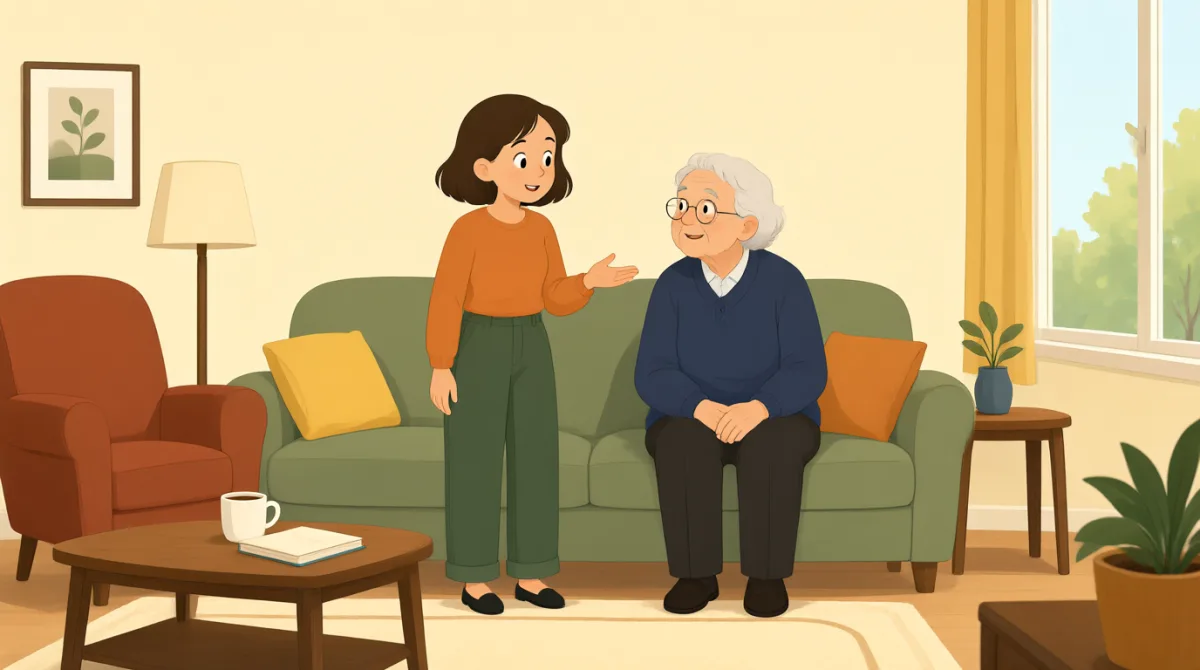

How have you both been feeling lately? Are you getting enough rest?
كيف كان شعوركما في الآونة الأخيرة؟ هل تحصلان على قسط كافٍ من الراحة؟

I’ve been feeling well, thank you. I went for a checkup last week.
أشعر أنني بخير، شكرًا لكِ. ذهبت لإجراء فحص طبي الأسبوع الماضي.
That’s good. What did the doctor say?
هذا جيد. ماذا قال الطبيب؟
Everything looked fine. I just need to drink more water and keep walking.
بدا كل شيء على ما يرام. أحتاج فقط إلى شرب المزيد من الماء ومواصلة المشي.

We walk around the park every morning, unless it rains.
نتنزه في الحديقة كل صباح، ما لم تمطر.
How far do you walk? Does it make you tired?
كم تقطعان من مسافة؟ وهل يتعبكما ذلك؟
Not too far. We take our time and sit down if we need to.
لا نمشي مسافة طويلة. نتمهل ونجلس إذا احتجنا إلى ذلك.
Walking helps us feel strong. You should come with us tomorrow.
المشي يساعدنا على الشعور بالقوة. ينبغي أن تأتي معنا غدًا.
I’d love to! I’ll bring my walking shoes.
يسعدني ذلك! سأحضر حذائي المخصص للمشي.
المفردات8
- feeling wellبصحة جيدة
This means being in good health. Use it to tell someone how you are doing.
تعني هذه العبارة أن الشخص يتمتع بصحة جيدة. استخدمها لتخبر أحدًا عن حالك.
- checkupفحص طبي
A checkup is a visit to the doctor to see if you are healthy. You can say, “I have a checkup next week.”
الفحص الطبي هو زيارة الطبيب للتأكد من أنك بصحة جيدة. يمكنك أن تقول: “I have a checkup next week.” (لديّ فحص طبي الأسبوع المقبل.)
- everything looked fineبدا كل شيء على ما يرام
This means the doctor did not find a problem. Use it to share reassuring news after a visit or test.
تعني هذه العبارة أن الطبيب لم يجد أي مشكلة. استخدمها لنقل خبر مطمئن بعد زيارة الطبيب أو إجراء فحص.
- keep walkingمواصلة المشي
This means to continue walking regularly. Use “keep” with an -ing verb to encourage someone to continue an activity.
تعني هذه العبارة الاستمرار في المشي بانتظام. استخدم “keep” مع فعل ينتهي بـ -ing لتشجيع شخص على مواصلة نشاط ما.
- unless it rainsما لم تمطر
This means something will happen if it does not rain. Use “unless” to describe an exception to a plan.
تعني هذه العبارة أن شيئًا ما سيحدث إذا لم تمطر. استخدم “unless” لذكر استثناء من خطة.
- take our timeنتمهل
This means to do something slowly and without rushing. You can use it when you want to go at a comfortable pace.
تعني هذه العبارة القيام بشيء ببطء ومن دون استعجال. يمكنك استخدامها عندما تريد أن تسير بوتيرة مريحة.
- sit downيجلس
This means to move into a sitting position. Use it when you need to rest.
تعني هذه العبارة الانتقال إلى وضع الجلوس. استخدمها عندما تحتاج إلى الراحة.
- walking shoesحذاء مخصص للمشي
These are comfortable shoes for walking. You can use this phrase when talking about what to wear for a walk.
هو حذاء مريح للمشي. يمكنك استخدام هذه العبارة عند الحديث عما ترتديه في نزهة مشيًا.
الجمل الأساسية8
- 1
How have you both been feeling lately?
كيف كان شعوركما في الآونة الأخيرة؟
This is a friendly way to ask two people about their health recently. You can change “both” to “you” when speaking to one person.
هذه طريقة ودودة للسؤال عن صحة شخصين في الفترة الأخيرة. يمكنك تغيير “both” إلى “you” عند التحدث إلى شخص واحد.
- 2
I went for a checkup last week.
ذهبت لإجراء فحص طبي الأسبوع الماضي.
Use this sentence to say that you visited a doctor for a health check. Change “last week” to another time phrase to say when it happened.
استخدم هذه الجملة لتقول إنك زرت الطبيب للاطمئنان على صحتك. غيّر “last week” إلى عبارة زمنية أخرى لتوضيح متى حدث ذلك.
- 3
What did the doctor say?
ماذا قال الطبيب؟
This is a simple way to ask about the results or advice from a doctor. You can also use it to ask what another person said.
هذه طريقة بسيطة للسؤال عن نتائج الطبيب أو نصيحته. ويمكنك استخدامها أيضًا للسؤال عما قاله شخص آخر.
- 4
Everything looked fine.
بدا كل شيء على ما يرام.
Use this to say that there did not seem to be a problem. It is a reassuring reply after a checkup or test.
استخدم هذه العبارة لتقول إنه لم تظهر أي مشكلة. وهي إجابة مطمئنة بعد فحص طبي أو اختبار.
- 5
We walk around the park every morning, unless it rains.
نتنزه في الحديقة كل صباح، ما لم تمطر.
This sentence describes a regular routine and an exception to it. Use “unless” to explain when a routine may not happen.
تصف هذه الجملة روتينًا منتظمًا واستثناءً منه. استخدم “unless” لتوضيح متى قد لا يحدث الروتين.
- 6
We take our time and sit down if we need to.
نتمهل ونجلس إذا احتجنا إلى ذلك.
This explains how the speakers walk at a comfortable pace and rest when needed. You can reuse “if we need to” to talk about doing something only when necessary.
توضح هذه الجملة أن المتحدثين يمشيان بوتيرة مريحة ويستريحان عند الحاجة. يمكنك إعادة استخدام “if we need to” للحديث عن فعل شيء عند الضرورة فقط.
- 7
You should come with us tomorrow.
ينبغي أن تأتي معنا غدًا.
This is a friendly way to invite someone to join an activity. Change “tomorrow” to say when you want them to come.
هذه طريقة ودودة لدعوة شخص إلى المشاركة في نشاط. غيّر “tomorrow” لتوضح متى تريده أن يأتي.
- 8
I’ll bring my walking shoes.
سأحضر حذائي المخصص للمشي.
Use “I’ll bring…” to say what you plan to take with you. You can replace “walking shoes” with another useful item.
استخدم “I’ll bring…” لتقول ما تخطط لإحضاره معك. يمكنك استبدال “walking shoes” بغرض آخر مفيد.