Acknowledging & Entering
تقديم الشكر والدخول
You are the person being waited for. After someone holds the door, you quickly step in, offering a more immediate or slightly more elaborate 'thank you' upon entering.
أنت الشخص الذي ينتظره الآخر. بعد أن يمسك شخص ما الباب مفتوحًا، تدخل بسرعة وتقدم له شكرًا فوريًا أو أكثر تفصيلًا قليلًا عند دخولك.
حوار6
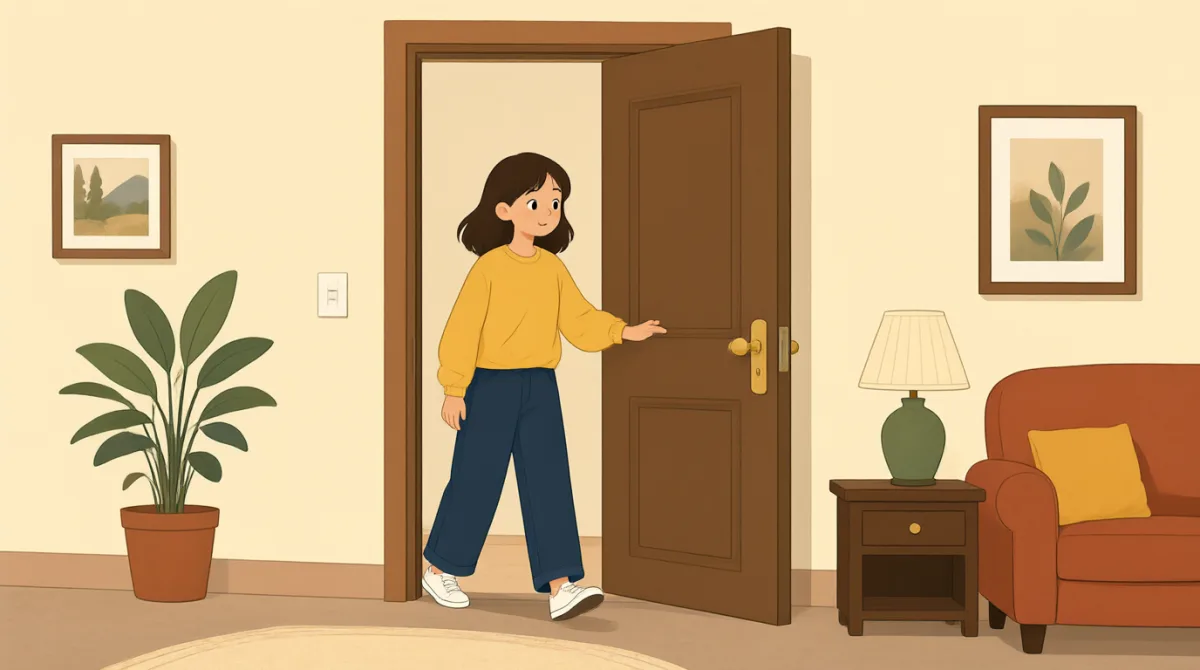

Hold on! It's closing.
انتظر! الباب يُغلق.

Oh, thank you so much! I really appreciate that.
أوه، شكرًا جزيلًا لك! أنا ممتنة لك حقًا.
No problem at all. Just made it!
لا مشكلة إطلاقًا. لقد لحقتِ به في اللحظة الأخيرة!
You're a lifesaver. I thought I was going to miss it.
لقد أنقذتني! ظننت أنني سأفوّته.
Glad I could help. Which floor are you heading to?
يسرّني أنني استطعت المساعدة. إلى أي طابق أنتِ ذاهبة؟
The third, please. Thanks again!
إلى الطابق الثالث، من فضلك. شكرًا مرة أخرى!
المفردات6
- hold onانتظر لحظة
A polite way to say 'wait a moment' or 'don't close yet', often used when you need someone to pause an action like closing an elevator door.
طريقة مهذبة لقول «انتظر لحظة» أو «لا تُغلق الباب بعد». تُستخدم غالبًا عندما تريد من شخص أن يتوقف عن فعل شيء مؤقتًا، مثل إغلاق باب المصعد.
- appreciateيُقدّر
To feel grateful for someone's help or kindness; it's a more formal way to express thanks than just 'thank you'.
أن تشعر بالامتنان لمساعدة شخص أو لطفه. وهي طريقة أكثر رسمية للتعبير عن الشكر من قول 'thank you'.
- no problemلا مشكلة
A casual response to 'thank you', meaning it's not a big deal or you're welcome; very common in everyday conversations.
ردّ غير رسمي على 'thank you'، بمعنى أن الأمر ليس مشكلة أو على الرحب والسعة. وهو شائع جدًا في المحادثات اليومية.
- lifesaverمنقذ
An informal expression for someone who helps you out of a difficult situation, like saving time by holding a door; used to show strong gratitude.
تعبير غير رسمي يُقال عن شخص يساعدك على الخروج من موقف صعب، مثل توفير الوقت بإمساك الباب مفتوحًا. ويُستخدم للتعبير عن امتنان كبير.
- heading toمتجه إلى
Means 'going to' or 'on the way to' a place; useful for asking about someone's destination in polite small talk.
تعني 'ذهاب إلى' مكان ما أو 'في الطريق إلى' مكان ما. وهي مفيدة للسؤال عن وجهة شخص في حديث مهذب وعابر.
- floorطابق
A level or story in a building, like the ground floor or third floor; essential for directions in elevators or buildings.
مستوى أو طبقة في مبنى، مثل الطابق الأرضي أو الطابق الثالث. وهي كلمة أساسية عند السؤال عن الاتجاهات في المصاعد أو المباني.
الجمل الأساسية6
- 1
Hold on! It's closing.
انتظر! الباب يُغلق.
This is a quick, urgent request to stop something from happening, like a door closing. 'Hold on' is an imperative for 'wait', and 'it's closing' describes the present continuous action. Use it in situations where you need immediate help to catch something.
هذا طلب سريع وعاجل لإيقاف شيء على وشك الحدوث، مثل إغلاق الباب. عبارة 'Hold on' أمر بمعنى «انتظر»، وعبارة 'it's closing' تصف فعلًا مستمرًا في الوقت الحاضر. استخدمها عندما تحتاج إلى مساعدة فورية للحاق بشيء.
- 2
Oh, thank you so much! I really appreciate that.
أوه، شكرًا جزيلًا لك! أنا ممتنة لك حقًا.
A polite and enthusiastic way to express gratitude. 'Thank you so much' intensifies thanks, and 'I really appreciate that' adds sincerity using the verb 'appreciate' in simple present. Useful after someone does a small favor to make the interaction warmer.
طريقة مهذبة ومفعمة بالحماس للتعبير عن الامتنان. عبارة 'Thank you so much' تزيد من قوة الشكر، أما 'I really appreciate that' فتضيف إحساسًا بالصدق باستخدام الفعل 'appreciate' في المضارع البسيط. وهي مفيدة بعد أن يقدم لك شخص معروفًا بسيطًا لتجعل التفاعل أكثر ودًا.
- 3
No problem at all. Just made it!
لا مشكلة إطلاقًا. لقد لحقتِ به في اللحظة الأخيرة!
A friendly response to thanks, meaning it's easy and no trouble. 'No problem at all' is idiomatic for 'you're welcome', and 'just made it' uses past tense to describe narrowly succeeding. Great for casual, reassuring replies in daily encounters.
رد ودود على الشكر، معناه أن الأمر كان سهلًا ولم يسبب أي إزعاج. عبارة 'No problem at all' تعبير اصطلاحي بمعنى «على الرحب والسعة»، وعبارة 'just made it' تستخدم الماضي لوصف النجاح بفارق ضئيل. إنها مناسبة للردود الودية المطمئنة في المواقف اليومية.
- 4
You're a lifesaver. I thought I was going to miss it.
لقد أنقذتني! ظننت أنني سأفوّته.
An exaggerated compliment for help that avoids inconvenience. 'You're a lifesaver' is a fixed expression, and 'I thought I was going to miss it' uses past continuous for unrealized expectation with 'going to' for future in the past. Use it to show relief and build rapport.
مجاملة مبالغ فيها قليلًا للتعبير عن الامتنان للمساعدة التي جنّبتك الإزعاج. عبارة 'You're a lifesaver' تعبير ثابت، وعبارة 'I thought I was going to miss it' تستخدم الماضي المستمر للتعبير عن توقع لم يتحقق، مع 'going to' للتعبير عن المستقبل من وجهة نظر الماضي. استخدمها للتعبير عن الارتياح وتقوية الألفة.
- 5
Glad I could help. Which floor are you heading to?
يسرّني أنني استطعت المساعدة. إلى أي طابق أنتِ ذاهبة؟
Shows happiness in assisting and shifts to practical help. 'Glad I could help' uses 'glad' with modal 'could' for ability, and the question uses 'which' for choices and 'heading to' preposition phrase. Ideal for continuing polite conversation in shared spaces like elevators.
تعبر العبارة عن السرور بتقديم المساعدة، ثم تنتقل إلى عرض مساعدة عملية. في 'Glad I could help' تأتي 'glad' مع الفعل الناقص 'could' للتعبير عن القدرة، وفي السؤال تُستخدم 'which' للاختيار من بين عدة خيارات، أما 'heading to' فهي عبارة تتضمن حرف جر. وهي مثالية لمواصلة حديث مهذب في الأماكن المشتركة مثل المصاعد.
- 6
The third, please. Thanks again!
إلى الطابق الثالث، من فضلك. شكرًا مرة أخرى!
A direct request for a specific floor with politeness. 'The third' specifies using ordinal number, 'please' softens the request, and 'thanks again' reinforces gratitude. Commonly used when entering elevators to ask for button pressing.
طلب مباشر ومهذب للوصول إلى طابق محدد. تحدد عبارة 'The third' الطابق باستخدام عدد ترتيبي، وتلطّف كلمة 'please' الطلب، أما 'thanks again' فتؤكد الامتنان. ويشيع استخدامها عند دخول المصعد لطلب الضغط على زر الطابق.