Realizing It Is the Wrong Stop
发现下错站
Emma gets off the train and sees that this is not her stop. She asks Jack if they are in the wrong place.
艾玛下了火车,发现这里不是她要去的站。她问杰克他们是不是下错站了。
对话6
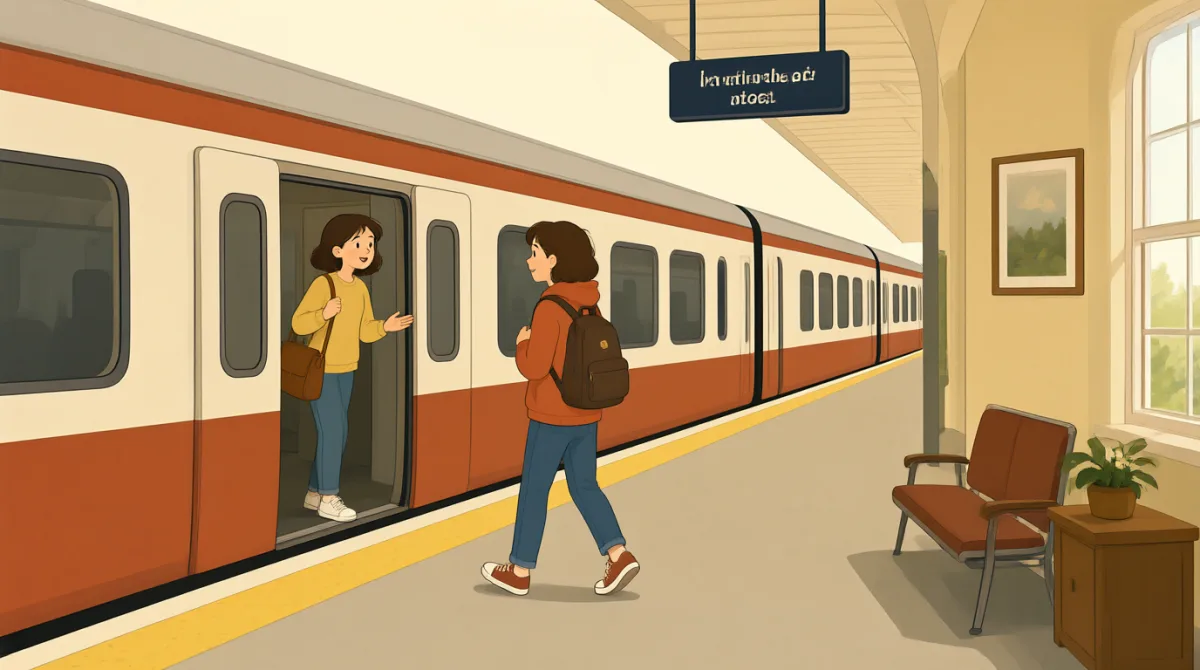

Jack, is this our stop?
杰克,这是我们要下的站吗?

I don't think so. This looks wrong.
我觉得不是。这里看起来不对。
Oh no. We got off at the wrong stop.
糟了。我们下错站了。
Let's check the station sign.
我们看看车站的标牌吧。
I don't see our stop on it.
我在上面没看到我们要去的站。
You're right. This isn't our stop.
你说得对。这里不是我们要下的站。
词汇7
- our stop我们要下的站
This means the train station where we want to get off. Use it to check whether you are at the right station.
意思是我们想下车的火车站。可以用它来确认自己是不是到了正确的站。
- I don't think so.我觉得不是。
Use this phrase to say that you think something is not true. It is a polite way to disagree or answer no.
用这个说法表示你认为某件事不是真的。这是一种礼貌地表示不同意或回答“不”的方式。
- looks wrong看起来不对
This means something does not seem right. Use it when a place or thing seems different from what you expect.
意思是某件事看起来不太对。觉得某个地方或东西和预想的不一样时,可以这样说。
- got off下了车
This means left a train or bus. Use it to say that you left public transport.
意思是离开火车或公交车。可以用它来表示你已经从公共交通工具上下来了。
- wrong stop下错站
This means a train or bus stop that is not the one you want. You can say this when you leave at the wrong place.
指的不是你想去的火车站或公交车站。下错地方时可以这样说。
- Let's check the station sign.我们看看车站的标牌吧。
Use this sentence to suggest looking at the sign for information. You can also say, “Let's check the map.”
用这句话提议看看标牌上的信息。你也可以说:“我们看看地图吧。”
- You're right.你说得对。
Use this phrase to agree with someone. It means that what they said is correct.
用这个说法表示同意某人,意思是对方说得没错。
重点句子8
- 1
Jack, is this our stop?
杰克,这是我们要下的站吗?
Use this question to check if you should get off here. Replace “our stop” with a place or station name when needed.
用这个问题确认是不是该在这里下车。需要时,可以把“our stop”换成地点或车站的名称。
- 2
I don't think so.
我觉得不是。
This is a simple way to say you do not think something is true. You can use it to answer questions or politely disagree.
这是表示你认为某件事不是真的一种简单说法。可以用它回答问题,也可以礼貌地表示不同意。
- 3
This looks wrong.
这里看起来不对。
Use this sentence when something does not seem correct. Replace “this” with a place or thing, such as “That sign looks wrong.”
觉得某件事不太对时,可以用这句话。可以把“this”换成某个地方或东西,比如“That sign looks wrong.”
- 4
We got off at the wrong stop.
我们下错站了。
Use this sentence to explain that you left the train or bus at the wrong place. You can replace “stop” with “station” or “bus stop.”
用这句话说明你们在不对的地方下了火车或公交车。可以把“stop”换成“station”或“bus stop”。
- 5
Let's check the station sign.
我们看看车站的标牌吧。
Use this sentence to suggest looking at a sign together. Replace “station sign” with another source of information, such as “the map.”
用这句话提议一起看看标牌。可以把“station sign”换成其他信息来源,比如“the map”。
- 6
I don't see our stop on it.
我在上面没看到我们要去的站。
Use this sentence when you cannot find a place or name on a sign or map. Replace “our stop” with the information you are looking for.
在标牌或地图上找不到某个地方或名称时,可以用这句话。可以把“our stop”换成你正在寻找的信息。
- 7
You're right.
你说得对。
Use this short phrase to agree with someone. You can follow it with more information, such as “You're right. This is the wrong station.”
用这个简短的说法表示同意某人。后面还可以补充信息,比如“You're right. This is the wrong station.”
- 8
This isn't our stop.
这里不是我们要下的站。
Use this sentence to say that you are not at the place where you need to get off. Replace “our stop” with another place, such as “our station.”
用这句话表示你们现在不在该下车的地方。可以把“our stop”换成其他地点,比如“our station”。