Reporting a Lost Item
報告物品丟失
A person needs to report a lost personal item (e.g., wallet, phone, keys) to a security guard or information desk.
一個人需要向保安或問訊處報告丟失的個人物品(例如錢包、手機、鑰匙)。
對話10
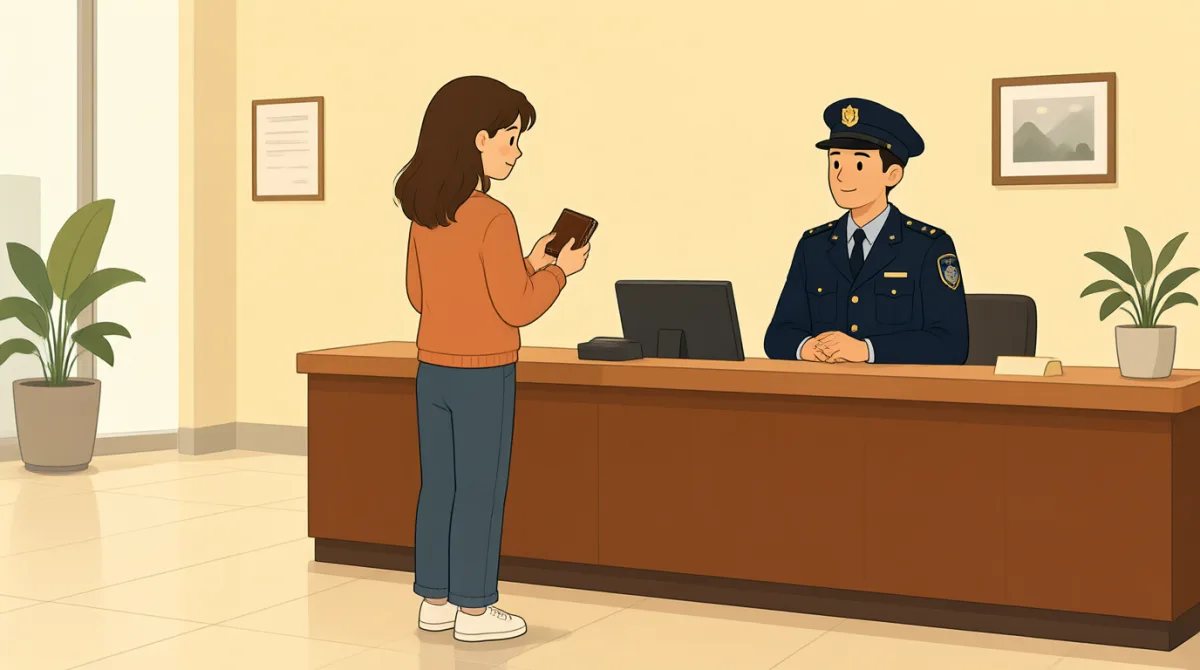

Excuse me, I think I've lost my wallet. Is there a lost and found here?
打擾一下,我好像把錢包弄丟了。這裡有失物招領處嗎?

Yes, you've come to the right place. I manage the lost and found. Can you tell me when and where you think you lost it?
是的,您來對地方了。我負責失物招領。您能告訴我大約什麼時候、在哪裡丟的嗎?
I was at the café on the second floor about an hour ago, and I think that's where I might have left it. It's a small black leather wallet.
我大約一小時前在二樓的咖啡館,我想我可能把它落在那裡了。它是一個黑色的皮質小錢包。
Okay, a small black leather wallet. Did it have any specific identifying features, like a logo or anything inside?
好的,一個黑色的小皮錢包。它有沒有什麼特殊的識別特徵,比如標誌或者裡面有什麼東西?
Yes, it has my ID card and a few credit cards inside. There's also a small golden charm attached to the zipper.
是的,裡面有我的身份證和幾張信用卡。拉鍊上還有一個小金吊墜。
Got it. Let me check our recent entries. What name is on the ID card?
明白了。我來查一下我們最近的記錄。身份證上是什麼名字?
Emma Carter.
艾瑪·卡特。
Ah, yes! We did have one turned in from the café that matches your description. Small black leather, a golden charm, and the ID belongs to Emma Carter. Here it is.
啊,對了!我們確實有一個是從咖啡館送來的,和您的描述相符。黑色小皮,一個金色吊墜,身份證是艾瑪·卡特。就是這個。
Oh, thank goodness! That's it! Thank you so much!
哦,謝天謝地!就是它!太謝謝您了!
You're very welcome. Please make sure everything is in order before you leave. Have a good day!
不客氣。您走之前請確認一下所有東西都在,沒問題。祝您一天愉快!
詞彙10
- lost丟失的
Past participle of 'lose', meaning something is missing or cannot be found. Use it like 'I lost my keys' to report missing items in emergencies.
'lost' 是 'lose' 的過去分詞,表示某樣東西不見了或找不到了。報告物品丟失時,可以說 'I lost my keys'。
- wallet錢包
A small case for carrying money, cards, and ID. Common in daily life; say 'I lost my wallet' when reporting to security.
用來裝錢、卡和身份證件的小包。日常生活中很常見;向保安報告時可以說 'I lost my wallet'。
- lost and found失物招領處
A place or office where lost items are kept until claimed. Useful phrase for asking about missing things in public places like malls or offices.
存放遺失物品、等待失主認領的地方或辦公室。在商場、辦公樓等公共場所詢問丟失物品時很實用。
- café咖啡館
A small restaurant serving coffee and light meals. Pronounced 'caf-ay'; mention it when describing where you lost something.
供應咖啡和簡餐的小餐館。提到丟東西的地點時,可以用這個詞來描述。
- leather皮質的;皮革
Material made from animal skin, often used for bags or wallets. Describe items like 'black leather wallet' to help identify them.
由動物皮製成的材料,常用於製作包或錢包。可以用 'black leather wallet' 來描述物品,幫助別人辨認。
- ID card身份證;身份證件
Short for identification card, like a driver's license or student ID. Important for proving ownership in lost item reports.
'identification card' 的簡稱,比如駕照或學生證。在報告物品丟失時,它可以幫助證明物品歸屬。
- credit cards信用卡
Plastic cards for paying without cash. List them when describing contents of a lost wallet to aid recovery.
不用現金就能付款的塑膠卡。描述丟失的錢包裡有什麼時,可以提到信用卡,幫助工作人員尋找。
- charm小掛飾
A small decorative object, like a pendant. Use it to describe unique features, e.g., 'a golden charm on the zipper'.
一種小型裝飾物,比如吊墜。可以用它來描述物品的獨特特徵,例如 'a golden charm on the zipper'。
- turned in上交;交到失物招領處
Phrasal verb meaning handed over to authorities, like lost items given to lost and found. Common in security contexts.
這個短語動詞表示把東西交給相關人員,比如把撿到的物品交到失物招領處。在安保場景中很常見。
- thank goodness謝天謝地
An expression of relief when something good happens, like finding a lost item. Use it to show gratitude in positive outcomes.
遇到好事時表達如釋重負,比如找回丟失的物品。事情有了好結果時,可以用它來表達欣慰。
關鍵句8
- 1
Excuse me, I think I've lost my wallet. Is there a lost and found here?
打擾一下,我好像把錢包弄丟了。這裡有失物招領處嗎?
This polite way to start reporting a loss uses 'Excuse me' for attention, 'I think I've lost' for uncertainty, and a question about facilities. Useful for initiating help in public places; practice the question form for seeking information.
這是一種禮貌的求助開場方式:用 'Excuse me' 引起對方注意,用 'I think I've lost' 表達不太確定,再詢問有沒有相關服務。在公共場所需要幫助時很實用;可以練習這個疑問句來詢問資訊。
- 2
Yes, you've come to the right place. I manage the lost and found.
是的,您來對地方了。我負責失物招領。
Reassuring response with 'come to the right place' idiom for correct location, and 'manage' meaning to be in charge. Good for customer service; shows possession with 'the lost and found'.
這句回應先用 'come to the right place' 表示對方找對了地方,再用 'manage' 表示負責管理。適合服務場合;'the lost and found' 指失物招領處。
- 3
Can you tell me when and where you think you lost it?
您能告訴我大概是什麼時候、在哪裡丟的嗎?
Polite request using 'Can you tell me' for information, with 'when and where' questions. 'You think' adds speculation. Essential for gathering details in reports; note the wh-questions structure.
用 'Can you tell me' 禮貌地詢問資訊,並用 'when and where' 詢問時間和地點。'you think' 表示推測。在瞭解失物情況時很實用;注意疑問詞引導的問句結構。
- 4
I was at the café on the second floor about an hour ago, and I think that's where I might have left it.
大約一小時前我在二樓的咖啡館,我想我可能把它落在那裡了。
Describes location and time with past continuous 'I was at', approximate time 'about an hour ago', and speculation 'I think...might have left'. Useful for explaining incidents; includes conjunction 'and' for adding details.
這句話用過去進行時 'I was at' 描述所在地點,用 'about an hour ago' 表示大約的時間,並用 'I think...might have left' 表達推測。解釋事情經過時很實用;還用 'and' 補充了資訊。
- 5
Did it have any specific identifying features, like a logo or anything inside?
它有沒有什麼特殊的識別特徵,比如標誌或者裡面有什麼東西?
Yes/no question with 'Did it have' for past possession, 'specific identifying features' for unique details, and examples 'like a logo'. Helpful for describing items; uses 'or anything' for openness.
用 'Did it have' 詢問過去是否有某樣東西,用 'specific identifying features' 表示獨特的識別特徵,並用 'like a logo' 舉例。描述物品時很有幫助;'or anything' 讓問題更開放。
- 6
Ah, yes! We did have one turned in from the café that matches your description.
啊,對了!我們確實有一個是從咖啡館送來的,和您的描述相符。
Exclamation 'Ah, yes!' for realization, emphasis 'did have' in affirmative, and 'matches your description' for agreement. Practical for confirming found items; past perfect 'turned in' implies completion.
'Ah, yes!' 表示想起來了,肯定句中的強調結構 'did have' 用來加強語氣,'matches your description' 表示與您的描述相符。確認找到了物品時很實用;'turned in' 表示東西已經被交了過來。
- 7
Oh, thank goodness! That's it! Thank you so much!
哦,謝天謝地!就是它!太謝謝您了!
Expressions of relief with 'Oh, thank goodness' and confirmation 'That's it!', plus gratitude 'Thank you so much!'. Use in happy resolutions; note exclamations for emotion and intensifier 'so much'.
'Oh, thank goodness' 表達如釋重負,'That's it!' 用來確認物品,最後用 'Thank you so much!' 表達感謝。事情圓滿解決時可以這樣說;注意感嘆句表達情緒,'so much' 用來加強語氣。
- 8
You're very welcome. Please make sure everything is in order before you leave.
不客氣。您離開前請確認一下所有東西都齊全。
Standard reply 'You're very welcome' to thanks, polite request 'Please make sure' with 'in order' meaning correct/complete. Useful for service endings; imperative form for advice.
'You're very welcome' 是回應感謝的常用說法;禮貌請求 'Please make sure' 後面接 'in order',表示一切齊全、沒有問題。適合服務對話的結尾;這裡用祈使句提出提醒。