Reporting a Lost Item
खोई हुई वस्तु की रिपोर्ट करना
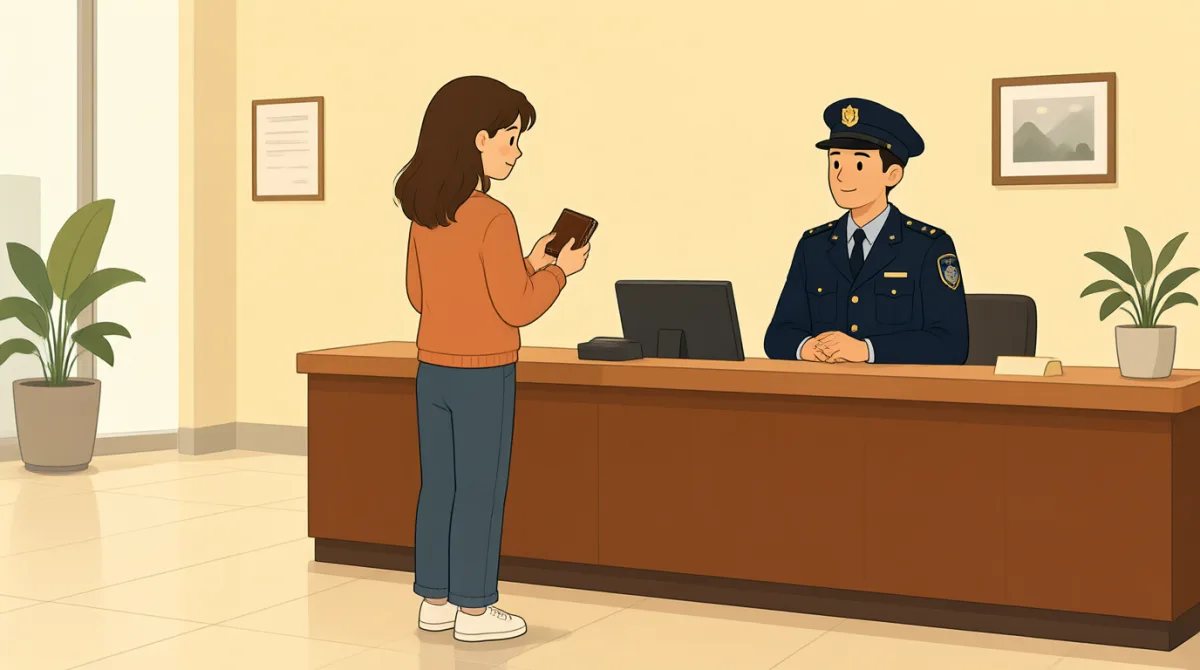
A person needs to report a lost personal item (e.g., wallet, phone, keys) to a security guard or information desk.
किसी व्यक्ति को अपना खोया हुआ सामान (जैसे बटुआ, फ़ोन या चाबियाँ) सुरक्षा गार्ड या सूचना काउंटर पर रिपोर्ट करना है।
संवाद10

Excuse me, I think I've lost my wallet. Is there a lost and found here?
माफ़ कीजिए, लगता है मेरा बटुआ खो गया है। क्या यहाँ खोया-पाया केंद्र है?

Yes, you've come to the right place. I manage the lost and found. Can you tell me when and where you think you lost it?
जी हाँ, आप सही जगह पर आए हैं। मैं खोया-पाया केंद्र संभालता हूँ। आप बता सकते हैं कि आपको कब और कहाँ लगता है कि यह खोया?
I was at the café on the second floor about an hour ago, and I think that's where I might have left it. It's a small black leather wallet.
मैं करीब एक घंटे पहले दूसरी मंज़िल पर कैफ़े में थी, और मुझे लगता है कि शायद वहीं इसे छोड़ आई। यह छोटा, काले चमड़े का बटुआ है।
Okay, a small black leather wallet. Did it have any specific identifying features, like a logo or anything inside?
ठीक है, छोटा, काले चमड़े का बटुआ। क्या उसमें पहचानने की कोई खास चीज़ थी, जैसे कोई लोगो या अंदर कुछ?
Yes, it has my ID card and a few credit cards inside. There's also a small golden charm attached to the zipper.
जी हाँ, उसमें मेरा पहचान पत्र और कुछ क्रेडिट कार्ड हैं। ज़िपर से एक छोटा सुनहरा लॉकेट भी जुड़ा है।
Got it. Let me check our recent entries. What name is on the ID card?
समझ गया। मैं हाल की प्रविष्टियाँ देखता हूँ। पहचान पत्र पर किसका नाम है?
Emma Carter.
एमा कार्टर।
Ah, yes! We did have one turned in from the café that matches your description. Small black leather, a golden charm, and the ID belongs to Emma Carter. Here it is.
अरे, हाँ! कैफ़े से एक बटुआ जमा कराया गया था, जो आपके बताए विवरण से मेल खाता है। छोटा, काले चमड़े का, सुनहरा लॉकेट लगा हुआ, और पहचान पत्र एमा कार्टर के नाम पर है। यह लीजिए।
Oh, thank goodness! That's it! Thank you so much!
ओह, शुक्र है! यही है! आपका बहुत-बहुत धन्यवाद!
You're very welcome. Please make sure everything is in order before you leave. Have a good day!
आपका स्वागत है। जाने से पहले कृपया देख लें कि सब कुछ ठीक है। आपका दिन शुभ हो!
शब्दावली10
- lostखोया हुआ
Past participle of 'lose', meaning something is missing or cannot be found. Use it like 'I lost my keys' to report missing items in emergencies.
'lose' का भूतकालिक कृदंत, जिसका अर्थ है कि कोई चीज़ गुम है या मिल नहीं रही। आपात स्थिति में खोई हुई चीज़ की सूचना देने के लिए कहें, 'I lost my keys'।
- walletबटुआ
A small case for carrying money, cards, and ID. Common in daily life; say 'I lost my wallet' when reporting to security.
पैसे, कार्ड और पहचान पत्र रखने का छोटा-सा केस। रोज़मर्रा में इस्तेमाल होने वाली इस चीज़ के खोने की सूचना सुरक्षा कर्मियों को देते समय कहें, 'I lost my wallet'।
- lost and foundखोया-पाया केंद्र
A place or office where lost items are kept until claimed. Useful phrase for asking about missing things in public places like malls or offices.
वह जगह या कार्यालय जहाँ खोई हुई चीज़ें मिलने और उनके मालिक के दावा करने तक रखी जाती हैं। मॉल या दफ़्तर जैसी सार्वजनिक जगहों पर गुम हुई चीज़ के बारे में पूछने के लिए यह काम का वाक्यांश है।
- caféकैफ़े
A small restaurant serving coffee and light meals. Pronounced 'caf-ay'; mention it when describing where you lost something.
कॉफ़ी और हल्का खाना परोसने वाला छोटा रेस्तराँ। इसका उच्चारण 'caf-ay' है। कोई चीज़ कहाँ खोई, यह बताते समय कैफ़े का ज़िक्र करें।
- leatherचमड़ा
Material made from animal skin, often used for bags or wallets. Describe items like 'black leather wallet' to help identify them.
जानवरों की खाल से बनी सामग्री, जिसका इस्तेमाल अक्सर बैग या बटुए बनाने में होता है। चीज़ की पहचान में मदद के लिए उसका वर्णन करें, जैसे 'black leather wallet'।
- ID cardपहचान पत्र
Short for identification card, like a driver's license or student ID. Important for proving ownership in lost item reports.
पहचान बताने वाले कार्ड का संक्षिप्त नाम, जैसे ड्राइविंग लाइसेंस या छात्र पहचान पत्र। खोई हुई वस्तु की रिपोर्ट में यह साबित करने के लिए ज़रूरी हो सकता है कि वह आपकी है।
- credit cardsक्रेडिट कार्ड
Plastic cards for paying without cash. List them when describing contents of a lost wallet to aid recovery.
नकद पैसे दिए बिना भुगतान करने के लिए इस्तेमाल होने वाले प्लास्टिक के कार्ड। खोए हुए बटुए में क्या-क्या था, यह बताते समय इनके बारे में बताने से बटुआ ढूँढ़ने में मदद मिलती है।
- charmसजावटी लॉकेट
A small decorative object, like a pendant. Use it to describe unique features, e.g., 'a golden charm on the zipper'.
लटकन जैसी छोटी सजावटी चीज़। किसी वस्तु की खास पहचान बताने के लिए इसका इस्तेमाल करें, जैसे 'a golden charm on the zipper'।
- turned inजमा कराया गया
Phrasal verb meaning handed over to authorities, like lost items given to lost and found. Common in security contexts.
यह क्रिया-समूह किसी चीज़ को अधिकारियों या संबंधित लोगों को सौंपने के लिए इस्तेमाल होता है। जैसे, खोई हुई चीज़ को खोया-पाया केंद्र में जमा कराना। सुरक्षा से जुड़े संदर्भों में यह आम है।
- thank goodnessशुक्र है
An expression of relief when something good happens, like finding a lost item. Use it to show gratitude in positive outcomes.
कुछ अच्छा होने पर राहत जताने का वाक्यांश, जैसे खोई हुई चीज़ मिल जाने पर। अच्छा नतीजा मिलने पर खुशी और राहत दिखाने के लिए इसका इस्तेमाल करें।
मुख्य वाक्य8
- 1
Excuse me, I think I've lost my wallet. Is there a lost and found here?
माफ़ कीजिए, लगता है मेरा बटुआ खो गया है। क्या यहाँ खोया-पाया केंद्र है?
This polite way to start reporting a loss uses 'Excuse me' for attention, 'I think I've lost' for uncertainty, and a question about facilities. Useful for initiating help in public places; practice the question form for seeking information.
किसी चीज़ के खोने की सूचना देने की यह विनम्र शुरुआत है। ध्यान खींचने के लिए 'Excuse me', अनिश्चितता बताने के लिए 'I think I've lost' और सुविधा के बारे में पूछने के लिए एक सवाल इस्तेमाल किया गया है। सार्वजनिक जगहों पर मदद माँगने के लिए यह उपयोगी है। जानकारी पूछने वाले सवाल के ढाँचे का अभ्यास करें।
- 2
Yes, you've come to the right place. I manage the lost and found.
जी हाँ, आप सही जगह पर आए हैं। मैं खोया-पाया केंद्र संभालता हूँ।
Reassuring response with 'come to the right place' idiom for correct location, and 'manage' meaning to be in charge. Good for customer service; shows possession with 'the lost and found'.
'come to the right place' का मतलब है सही जगह पर आना, और 'manage' का मतलब है किसी चीज़ की ज़िम्मेदारी संभालना। यह आश्वस्त करने वाला जवाब ग्राहक सेवा में काम आता है। 'the lost and found' के साथ 'the' का इस्तेमाल भी ध्यान दें।
- 3
Can you tell me when and where you think you lost it?
आप बता सकते हैं कि आपको कब और कहाँ लगता है कि यह खोया?
Polite request using 'Can you tell me' for information, with 'when and where' questions. 'You think' adds speculation. Essential for gathering details in reports; note the wh-questions structure.
'Can you tell me' जानकारी माँगने का विनम्र तरीका है। इसके बाद 'when and where' से समय और जगह के बारे में पूछा जाता है। 'You think' से अनिश्चितता ज़ाहिर होती है। रिपोर्ट के लिए जानकारी जुटाते समय यह ज़रूरी है; wh-प्रश्नों का ढाँचा ध्यान से देखें।
- 4
I was at the café on the second floor about an hour ago, and I think that's where I might have left it.
मैं करीब एक घंटे पहले दूसरी मंज़िल पर कैफ़े में थी, और मुझे लगता है कि शायद वहीं इसे छोड़ आई।
Describes location and time with past continuous 'I was at', approximate time 'about an hour ago', and speculation 'I think...might have left'. Useful for explaining incidents; includes conjunction 'and' for adding details.
इस वाक्य में 'I was at' से बीती हुई जगह, 'about an hour ago' से अनुमानित समय और 'I think...might have left' से अनिश्चितता बताई गई है। घटना समझाने में यह उपयोगी है। अतिरिक्त जानकारी जोड़ने के लिए 'and' का इस्तेमाल हुआ है।
- 5
Did it have any specific identifying features, like a logo or anything inside?
क्या उसमें पहचानने की कोई खास चीज़ थी, जैसे कोई लोगो या अंदर कुछ?
Yes/no question with 'Did it have' for past possession, 'specific identifying features' for unique details, and examples 'like a logo'. Helpful for describing items; uses 'or anything' for openness.
'Did it have' से पूछा जाता है कि पहले उसमें कुछ था या नहीं। 'Specific identifying features' का मतलब है पहचानने में मदद करने वाली खास बातें, और 'like a logo' उसका एक उदाहरण है। चीज़ का वर्णन करते समय यह उपयोगी है। 'Or anything' सवाल को खुला रखता है।
- 6
Ah, yes! We did have one turned in from the café that matches your description.
अरे, हाँ! कैफ़े से एक बटुआ जमा कराया गया था, जो आपके बताए विवरण से मेल खाता है।
Exclamation 'Ah, yes!' for realization, emphasis 'did have' in affirmative, and 'matches your description' for agreement. Practical for confirming found items; past perfect 'turned in' implies completion.
'Ah, yes!' से कुछ याद आने का भाव ज़ाहिर होता है। सकारात्मक वाक्य में 'did have' पर ज़ोर दिया गया है, और 'matches your description' का मतलब है कि चीज़ आपके बताए विवरण से मेल खाती है। मिली हुई वस्तु की पुष्टि करते समय यह काम आता है। 'Turned in' बताता है कि वस्तु जमा करा दी गई थी।
- 7
Oh, thank goodness! That's it! Thank you so much!
ओह, शुक्र है! यही है! आपका बहुत-बहुत धन्यवाद!
Expressions of relief with 'Oh, thank goodness' and confirmation 'That's it!', plus gratitude 'Thank you so much!'. Use in happy resolutions; note exclamations for emotion and intensifier 'so much'.
'Oh, thank goodness' से राहत, 'That's it!' से पुष्टि और 'Thank you so much!' से आभार जताया जाता है। सुखद नतीजे पर इनका इस्तेमाल करें। भाव दिखाने वाले विस्मयादिबोधक और ज़ोर देने वाले 'so much' पर ध्यान दें।
- 8
You're very welcome. Please make sure everything is in order before you leave.
आपका बहुत स्वागत है। जाने से पहले कृपया देख लें कि सब कुछ ठीक है।
Standard reply 'You're very welcome' to thanks, polite request 'Please make sure' with 'in order' meaning correct/complete. Useful for service endings; imperative form for advice.
'You're very welcome' धन्यवाद के जवाब में कहा जाता है। 'Please make sure' एक विनम्र अनुरोध है, और 'in order' का मतलब है कि सब कुछ ठीक और पूरा है। सेवा के अंत में यह उपयोगी है; सलाह देने के लिए आज्ञार्थक रूप इस्तेमाल हुआ है।