Identifying Emergency Exits
識別緊急出口
Someone at a new location (e.g., a building, a mall) is looking for and asking about the location of emergency exits and safety procedures.
某人在新地點(例如建築物、商場)尋找並詢問緊急出口的位置和安全程式。
對話8
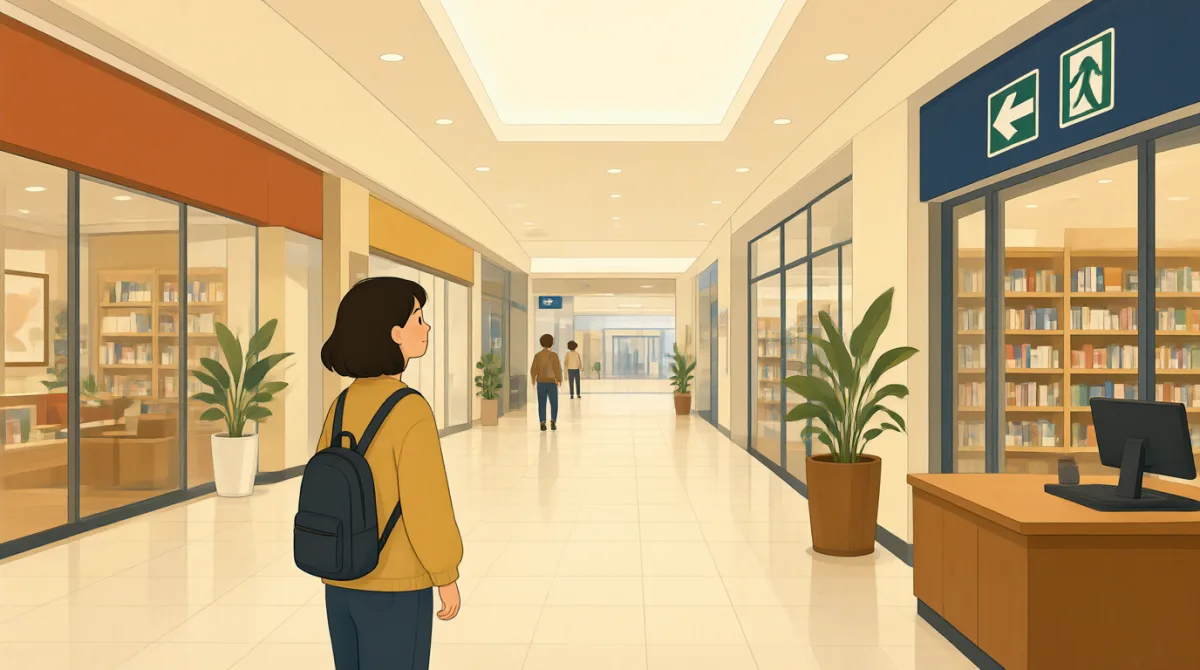

Excuse me, I'm new to this building. Could you point me towards the nearest emergency exit?
打擾一下,我是這棟樓的新人。能告訴我最近的緊急出口在哪裡嗎?

Certainly! If you go straight down this hallway and turn right, you'll see a green 'EXIT' sign. That's one of them.
當然!你沿著這條走廊往前走,然後右轉,會看到一個綠色的“出口”標誌。那是其中一個。
Thanks! And are there any other emergency exits on this floor, just in case?
謝謝!那這一層還有其他緊急出口嗎,以防萬一?
Yes, there's another one at the far end of the building, near the main staircase. All exits are clearly marked.
有的,大樓的另一邊,主樓梯附近還有一個。所有出口都有清晰的標識。
Good to know. Are there any specific safety procedures I should be aware of, like evacuation routes or muster points?
知道了。我還需要注意什麼特定的安全程式嗎,比如疏散路線或集合點?
Absolutely. There's a safety information board by the main elevator bank on each floor. It shows the evacuation routes and the primary muster point in the parking lot.
當然。每層樓的主電梯旁都有一個安全資訊板。上面顯示了疏散路線和停車場的主要集合點。
Perfect. I'll check that out. Thanks for your help!
太好了。我去看一下。謝謝你的幫助!
You're welcome! Stay safe.
不客氣!注意安全。
詞彙7
- emergency exit緊急出口
A special door or path used to leave a building quickly and safely during an emergency like a fire. It's important to know where these are in public places.
指發生火災等緊急情況時,人們用來快速、安全離開建築物的專用門或通道。在公共場所,記住緊急出口的位置很重要。
- hallway走廊
A long, narrow passage inside a building that connects rooms or areas. Use this word when giving or asking for directions indoors.
建築物內部連線房間或不同區域的狹長通道。在室內問路或指路時可以用這個詞。
- evacuation routes疏散路線
The planned paths people follow to leave a building safely during an emergency. These are often shown on maps or signs for quick escape.
發生緊急情況時,人們按照規劃離開建築物的安全路線。這些路線通常會標在地圖或指示牌上,方便大家迅速撤離。
- muster point集合點
A safe gathering spot outside a building where people go after evacuating. It's where officials check if everyone is safe.
撤離後人們在建築物外安全集合的地點。工作人員會在這裡確認大家是否安全。
- just in case以防萬一
A phrase meaning 'to be prepared for a possible problem.' It's useful for asking extra information to feel more secure.
這個短語表示“為可能發生的問題做好準備”。詢問額外資訊時用它,可以讓自己更安心。
- clearly marked標識清晰
Something that is easy to see and understand, like signs with bright colors or big letters. In safety contexts, it means exits are easy to find.
指容易看見和看懂,比如顏色醒目或字型較大的指示牌。在安全場景中,它表示出口很容易找到。
- stay safe注意安全
A friendly way to say 'be careful and protect yourself.' It's a common goodbye in safety-related conversations.
一種友好的說法,意思是“小心一點,保護好自己”。在與安全相關的對話中,這也是常見的道別語。
關鍵句6
- 1
Excuse me, I'm new to this building. Could you point me towards the nearest emergency exit?
打擾一下,我是這棟樓的新人。您能告訴我最近的緊急出口在哪裡嗎?
This is a polite way to ask for directions in an unfamiliar place. 'Excuse me' gets attention, 'I'm new to' explains your situation, and 'point me towards' means show the direction. Use it when you're lost and need safety info.
這是在不熟悉的地方禮貌問路的說法。“Excuse me”用來引起對方注意,“I'm new to”說明你的情況,“point me towards”表示給你指個方向。迷路並想了解安全資訊時可以這樣問。
- 2
If you go straight down this hallway and turn right, you'll see a green 'EXIT' sign.
沿著這條走廊直走,然後右轉,您會看到一個綠色的“EXIT”標誌。
This gives clear step-by-step directions. 'Go straight down' and 'turn right' are common directional phrases; 'you'll see' predicts what happens next. It's useful for helping others find locations.
這句話按步驟清楚地指路。“Go straight down”和“turn right”是常見的方向表達;“you'll see”表示接下來會看到什麼。幫別人找地方時很實用。
- 3
And are there any other emergency exits on this floor, just in case?
以防萬一,這一層還有其他緊急出口嗎?
This follows up for more details using 'just in case' for precaution. The question structure with 'are there any other' asks about alternatives. Use it to ensure you have backup plans in emergencies.
這句話用“just in case”表示防備萬一,並接著詢問更多資訊。“are there any other”用於詢問是否還有其他選擇。瞭解緊急情況下的備用方案時可以這樣問。
- 4
Are there any specific safety procedures I should be aware of, like evacuation routes or muster points?
我需要了解哪些具體的安全程式嗎?比如疏散路線或集合點。
This asks about important rules using 'be aware of' meaning 'know about.' 'Like' introduces examples. It's practical for learning safety in new places; the grammar is a yes/no question with specifics.
這句話是在詢問重要的規定。“be aware of”表示“瞭解”,“like”用來引出例子。這種問法適合瞭解新地點的安全資訊;它是一個帶有具體內容的一般疑問句。
- 5
There's a safety information board by the main elevator bank on each floor.
每層樓的主電梯區旁邊都有一塊安全資訊板。
This describes where to find info using 'by' for location and 'on each floor' for repetition. It's helpful for pointing out resources; use it to guide someone to visual aids like maps.
這句話用“by”表示位置,用“on each floor”表示每一層都有。告訴別人去哪裡找地圖等視覺資料時,這種表達很有用。
- 6
You're welcome! Stay safe.
不客氣!請注意安全。
A polite response to thanks, followed by a safety wish. 'You're welcome' is standard after help; 'stay safe' adds care. Use this to end conversations positively in safety topics.
這是對感謝的禮貌回應,後面還加上了安全祝願。“You're welcome”是別人道謝後常用的回答;“stay safe”則表達關心。在安全話題的對話中,可以用它友好地結束交談。