Offering Help to Someone Else
主動幫助他人清理
You witness someone else spilling coffee. You want to offer practical help, such as getting napkins or alerting staff, without being intrusive.
你目睹了別人打翻咖啡。你希望提供實際幫助,例如拿紙巾或通知工作人員,而不是打擾對方。
對話8
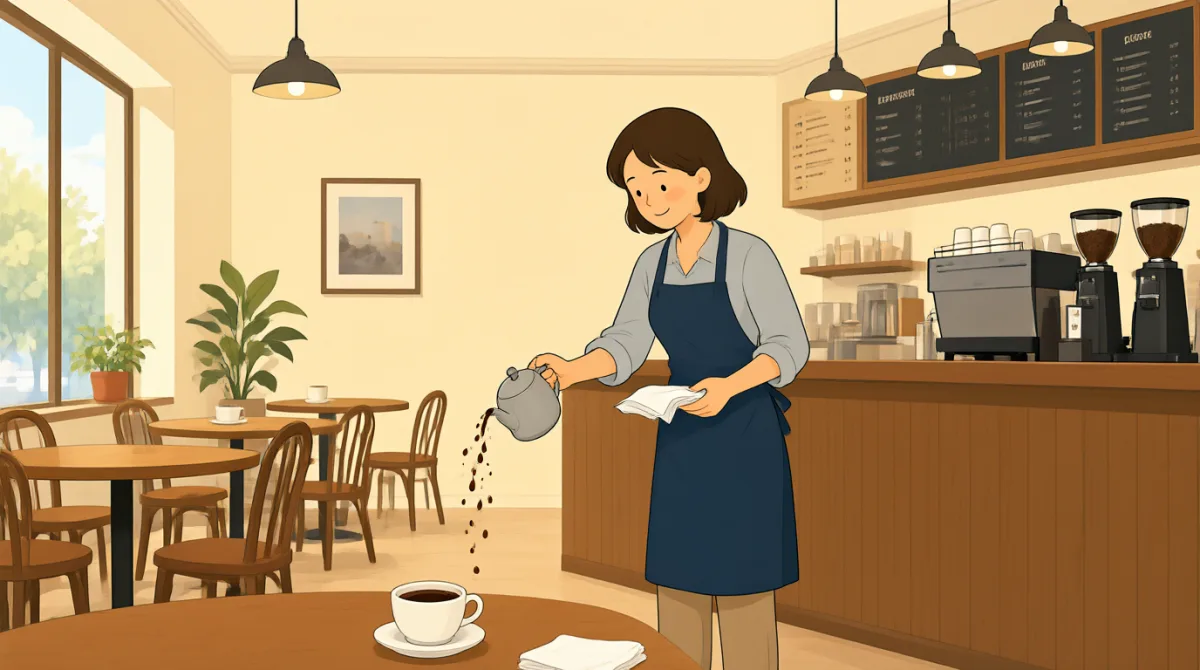

Oh, no! Are you okay? Looks like you've spilled your coffee!
哦,不!你還好嗎?你好像把咖啡打翻了!

Ugh, yeah, completely soaked it. My hand just slipped. What a mess!
啊,是啊,全溼了。手滑了一下。真是一團糟!
Don't worry about it. Happens to the best of us. Do you need a hand with anything? I could grab some napkins, or maybe alert the staff if you want?
別擔心。這種事常有發生。你需要幫忙嗎?我可以去拿些紙巾,或者如果你需要的話,我可以告訴工作人員?
That would be so helpful, thank you! If you could just point me to where the napkins are, I can probably manage. Don't want to bother the staff too much.
那真是太有幫助了,謝謝你!如果你能告訴我紙巾在哪兒,我大概就能搞定。不想太麻煩工作人員。
No bother at all. They're usually by the counter, right next to the sugar station. I'll go fetch them for you. Don't move, I'll be right back.
一點也不麻煩。它們通常在櫃檯旁邊,就在糖包站旁邊。我去幫你拿。別動,我馬上回來。
Oh, you don't have to! I can go.
哦,你不必!我可以自己去。
It's no trouble, really. You stay put and deal with the immediate spill. I'll be quick.
真的,不麻煩。你待著處理眼前的溢位物。我很快回來。
Okay, thank you so much! That's really kind of you.
好的,太謝謝你了!你真好。
詞彙10
- spilled打翻了
Past tense of 'spill', meaning to accidentally pour liquid out of a container, like coffee on the floor or clothes. Use it to describe accidents: 'I spilled my drink.'
“spill”的過去式,意思是不小心把容器裡的液體倒出來,比如把咖啡灑在地板或衣服上。可以用它來描述意外:“I spilled my drink.”(我把飲料灑了。)
- soaked溼透的
Covered or filled with liquid, often completely wet. In this context, it describes clothes or items after spilling: 'My shirt is soaked with water.' It's useful for everyday accidents.
被液體浸溼,通常是完全溼透了。在這裡,它形容東西灑上液體後的狀態:“My shirt is soaked with water.”(我的襯衫溼透了。)日常生活中遇到意外時很實用。
- slipped滑了一下
Past tense of 'slip', meaning to slide or lose control accidentally. Common in accidents: 'The cup slipped from my hand.' Helps explain why something fell.
“slip”的過去式,意思是滑動或不小心失去控制。它常用於描述意外:“The cup slipped from my hand.”(杯子從我手裡滑落了。)可以用來說明東西為什麼掉了。
- mess一團糟
A dirty or disordered situation, often from an accident. Use it to express frustration: 'What a mess!' It's casual and common in informal English.
指髒亂的狀況,常由意外造成。可以用來表達懊惱:“What a mess!”(真是一團糟!)這是英語口語中常見的隨意說法。
- grab拿;取
To quickly take or get something. Informal and practical: 'Grab some napkins' means to fetch them fast. Good for offering quick help in daily life.
快速拿到某樣東西。“Grab some napkins”意思是趕緊拿些紙巾。這個詞比較隨意,也很實用,適合在日常生活中主動提出幫忙。
- alert通知;提醒
To warn or inform someone about a problem. Here, 'alert the staff' means to tell workers about the spill. Useful in public places like cafes.
告訴別人有問題,或提醒他們注意。“alert the staff”在這裡是指把灑了東西的情況告訴工作人員。在咖啡館等公共場所很實用。
- bother麻煩;打擾
To cause trouble or inconvenience. 'No bother' means it's not a problem at all. Polite way to reassure someone when helping: 'It's no bother to help you.'
給別人添麻煩或帶來不便。“No bother”表示完全不麻煩。這是一種禮貌的安慰說法,可以在幫忙時說:“It's no bother to help you.”(幫你一點也不麻煩。)
- fetch去拿來
To go and bring back something. Similar to 'get', but implies going to retrieve: 'I'll fetch the napkins.' Kind and helpful in offering assistance.
去某處把東西取回來。它和“get”相近,但更強調先去取:“I'll fetch the napkins.”(我去拿些紙巾。)主動提出幫忙時,這樣說顯得體貼又熱心。
- stay put待在原地
An idiom meaning to remain in place, don't move. Casual advice: 'Stay put and I'll help.' Useful for keeping someone safe during cleanup.
一個習語,意思是留在原地不要動。這是一種隨意的提醒:“Stay put and I'll help.”(待在原地,我來幫你。)在清理時可以用它提醒別人注意安全。
- kind體貼的;熱心的
Nice or helpful in a gentle way. 'That's really kind of you' expresses gratitude for someone's help. Common in polite responses to favors.
形容一個人友善、願意溫和地幫助別人。“That's really kind of you”用來感謝別人的幫助。接受別人好意時,這是一種常見又禮貌的回應。
關鍵句7
- 1
Oh, no! Are you okay? Looks like you've spilled your coffee!
哎呀!你沒事吧?你好像把咖啡打翻了!
This is a concerned reaction to an accident. 'Oh, no!' shows surprise and worry. 'Are you okay?' checks for injury first. Useful for starting a helpful conversation; the present perfect 'you've spilled' describes a recent action.
這是看到意外時表達關心的回應。“Oh, no!”表示驚訝和擔心。“Are you okay?”先詢問對方有沒有受傷。可以用這句話開啟一段主動幫忙的對話;現在完成時“you've spilled”描述剛剛發生的事情。
- 2
Don't worry about it. Happens to the best of us.
別擔心。這種事誰都會遇到。
Reassures someone after a mistake. 'Don't worry about it' means no need to feel bad. 'Happens to the best of us' is an idiom saying accidents happen to everyone, even good people. Great for comforting friends casually.
這句話用來安慰犯了錯的人。“Don't worry about it”表示不用放在心上。“Happens to the best of us”是一個習語,意思是人人都會遇到意外,哪怕是最優秀的人也不例外。用在輕鬆的對話中安慰別人很合適。
- 3
Do you need a hand with anything? I could grab some napkins, or maybe alert the staff if you want?
有什麼需要我幫忙的嗎?我可以去拿些紙巾,或者你願意的話,我也可以通知工作人員?
Offers help politely. 'Need a hand' is an idiom for assistance. The conditional 'I could' suggests options without pressure. Useful pattern for volunteering help in situations like spills; shows specific actions.
這是一種禮貌的幫忙提議。“Need a hand”是表示“需要幫忙嗎”的習語。用“I could”提出可選的幫忙方式,聽起來不會給對方壓力。遇到灑東西這類情況時,可以用這個句型主動幫忙,並具體說明能做什麼。
- 4
That would be so helpful, thank you!
那真是太有幫助了,謝謝你!
Accepts an offer gratefully. 'That would be' is conditional for future help. Adds 'so' for emphasis on helpfulness. Essential for polite responses when someone assists you; builds positive interactions.
這句話用來感激地接受別人的幫助。“That would be”用條件句表達對即將得到的幫助的回應。加上“so”可以強調這份幫助有多重要。別人主動幫忙時,這樣禮貌地回應能讓交流更愉快。
- 5
No bother at all. They're usually by the counter, right next to the sugar station.
一點也不麻煩。它們通常在櫃檯旁邊,就在糖包放置處旁邊。
Downplays the effort of helping. 'No bother at all' reassures it's easy. Gives directions with 'by' and 'next to' for location. Practical for guiding someone in a cafe; uses simple prepositions for everyday navigation.
這句話表示幫忙不費事。“No bother at all”是在安慰對方,告訴他們這很容易。用“by”和“next to”說明東西在哪裡。在咖啡館裡指路時很實用,也能幫你熟悉日常英語中表示位置的簡單介詞。
- 6
You stay put and deal with the immediate spill. I'll be quick.
你先待在原地處理眼前灑出來的咖啡。我很快就回來。
Instructs someone to stay still while offering to act. 'Stay put' is an idiom for not moving. 'Immediate' means right now. 'I'll be quick' promises speed. Useful for managing accidents safely; imperative form for directions.
這句話讓對方先別動,同時表示自己會去幫忙。“Stay put”是表示待在原地別動的習語。“Immediate”表示眼下、立刻。“I'll be quick”則是在保證很快回來。遇到需要清理的意外時,可以用祈使句這樣提醒對方。
- 7
Okay, thank you so much! That's really kind of you.
好的,太謝謝你了!你真是太好了。
Shows appreciation. 'Thank you so much' emphasizes gratitude. 'That's really kind of you' compliments the helper. Perfect ending phrase for accepting favors; 'so much' and 'really' intensify politeness in English.
這句話用來表達感謝。“Thank you so much”加強了感激之情。“That's really kind of you”則是在稱讚對方很熱心。接受別人幫助時,這是一句很合適的收尾表達;“so much”和“really”都能加強語氣,讓感謝聽起來更真誠。