Explaining What Happened
Olanları Açıklamak
Mia and David meet with the patient's daughter, Grace Wilson, to explain that a medication was administered incorrectly. They describe what is known about the error and its effects, while acknowledging the limits of what they can say so far.
Mia ve David, hastanın kızı Grace Wilson’la görüşerek bir ilacın yanlış dozda verildiğini açıklar. Hata ve etkileri hakkında bilinenleri anlatırken, şu ana kadar söyleyebileceklerinin sınırlarını da kabul ederler.
Diyalog12
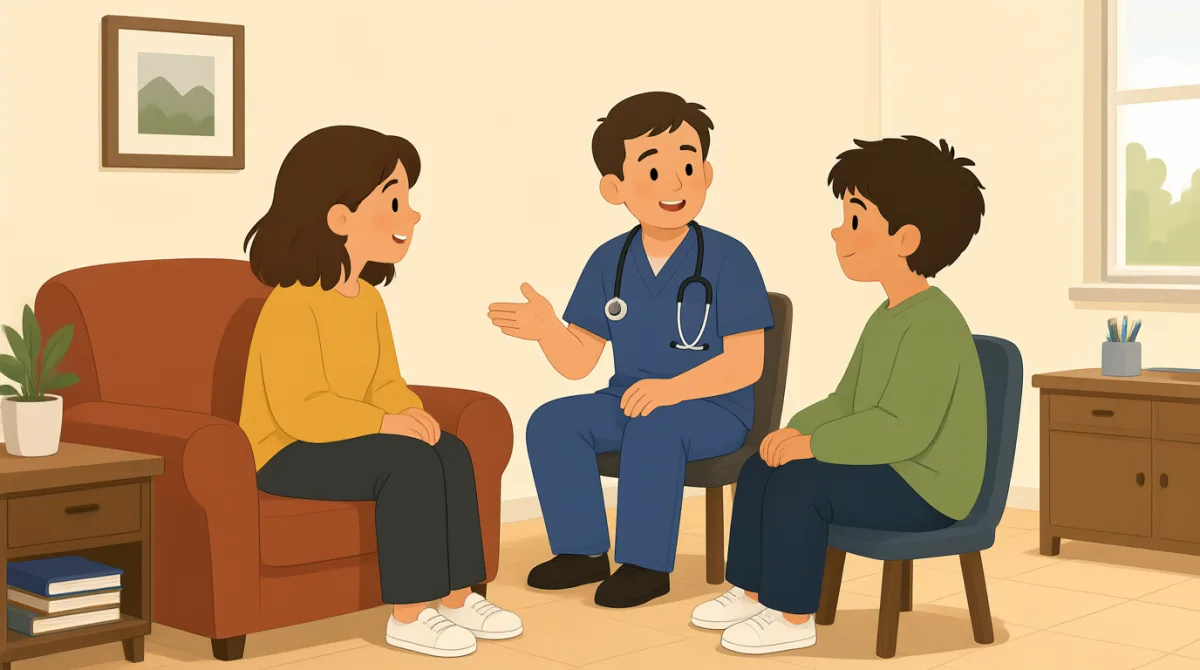

Grace, thank you for meeting with us. I’m Dr. Patel, and this is David Chen, our risk manager. We want to explain what we know about your father’s medication and answer your questions.
Grace, bizimle görüştüğünüz için teşekkür ederim. Ben Dr. Patel, bu da risk yöneticimiz David Chen. Babanızın kullandığı ilaçla ilgili bildiklerimizi açıklamak ve sorularınızı yanıtlamak istiyoruz.

I appreciate that, but I need you to be direct. What happened to my father? I was told there may have been a medication error, and I don’t want a softened version.
Bunu takdir ediyorum ama bana açıkça anlatmanızı istiyorum. Babama ne oldu? Bir ilaç hatası yapılmış olabileceği söylendi. Bana gerçeği yumuşatarak anlatmanızı istemiyorum.
You’re right to ask for a clear account. A medication was administered to your father at a higher dose than the one prescribed. We confirmed that this was an error.
Açık bir açıklama istemekte haklısınız. Babanıza, reçete edilenden daha yüksek bir dozda ilaç verildi. Bunun bir hata olduğunu doğruladık.
How much higher? And when did this happen? I need facts, not just the word “error.”
Ne kadar fazlaydı? Bu ne zaman oldu? Bana sadece “hata” demeniz yetmez; gerçekleri bilmem gerekiyor.
The dose was twice the prescribed amount, and it was given yesterday morning. Once the discrepancy was identified, the team stopped further doses and began monitoring him closely.
Doz, reçete edilen miktarın iki katıydı ve ilaç dün sabah verildi. Farkı tespit edince ekip sonraki dozları durdurdu ve onu yakından izlemeye başladı.

We have verified the prescription, the medication record, and the amount administered. We’re still reviewing how the dose was selected and what checks were completed before it was given.
Reçeteyi, ilaç kayıtlarını ve verilen miktarı doğruladık. Dozun nasıl seçildiğini ve ilaç verilmeden önce hangi kontrollerin yapıldığını hâlâ inceliyoruz.
And what has it done to him? Is this why he’s been so drowsy? Could the extra medication have caused lasting damage?
Peki bu ona ne yaptı? Bu yüzden mi bu kadar uykulu? Fazladan verilen ilaç kalıcı bir zarara yol açmış olabilir mi?
He has been unusually drowsy, and the medication may have contributed. We can’t yet say with certainty how much it did. So far, his vital signs have remained stable.
Alışılmadık derecede uykulu ve ilaç buna katkıda bulunmuş olabilir. Ne ölçüde etkili olduğunu henüz kesin olarak söyleyemeyiz. Şu ana kadar yaşamsal bulguları stabil seyretti.
“Stable” doesn’t tell me whether he suffered or whether he’ll recover. Why can’t you give me a straight answer?
“Stabil” demeniz, acı çekip çekmediğini ya da iyileşip iyileşmeyeceğini açıklamıyor. Neden bana net bir yanıt veremiyorsunuz?
Because we don’t yet have enough evidence to answer that honestly. I don’t want to reassure you with a guess. His doctor is assessing him, and we’ll explain any new findings as soon as we can.
Çünkü bunu dürüstçe yanıtlamak için henüz yeterli kanıtımız yok. Bir tahminde bulunup sizi rahatlatmak istemiyorum. Doktoru onu değerlendiriyor; yeni bulgular elde eder etmez size açıklayacağız.
I’m angry, and I’m scared. I also need to know whether you’re telling me everything you’ve confirmed, not just what feels safe to disclose.
Öfkeliyim ve korkuyorum. Ayrıca bana, açıklaması güvenli görünenleri değil, doğruladığınız her şeyi anlatıp anlatmadığınızı bilmem gerekiyor.
That’s a fair concern. We’ve shared the confirmed facts we have today, and we’ll be clear about what remains unknown. We’ll keep reviewing the records and update you as the picture becomes clearer.
Bu kaygınız çok haklı. Bugün doğruladığımız gerçekleri sizinle paylaştık ve hâlâ nelerin bilinmediğini açıkça söyleyeceğiz. Kayıtları incelemeye devam edip tablo netleştikçe sizi bilgilendireceğiz.
Kelime Bilgisi8
- a higher dose than the one prescribedreçete edilenden daha yüksek bir doz
This means the patient received more medication than the doctor ordered. It is a clear, precise way to describe a dosing error.
Bu ifade, hastaya doktorun yazdığından daha fazla ilaç verildiği anlamına gelir. Doz hatasını açık ve kesin bir şekilde anlatmak için kullanılır.
- discrepancyuyuşmazlık
A discrepancy is a difference between pieces of information or records. Here, it refers to the mismatch between the prescribed dose and the dose given.
Uyuşmazlık, bilgiler ya da kayıtlar arasındaki farktır. Burada reçete edilen doz ile verilen doz arasındaki farkı anlatır.
- monitoring him closelyonu yakından izlemek
This means watching the patient carefully and checking his condition regularly. It can be used to describe attentive observation in a medical or other safety-sensitive situation.
Hastayı dikkatle gözlemlemek ve durumunu düzenli olarak kontrol etmek anlamına gelir. Tıpta veya güvenliğin özellikle önemli olduğu başka durumlarda dikkatli gözlemi anlatmak için kullanılabilir.
- contributedkatkıda bulunmak
In this context, it means the medication may have played a part in causing the drowsiness. It signals a possible connection without claiming certainty.
Bu bağlamda, ilacın uykululuğa yol açmada bir rol oynamış olabileceği anlamına gelir. Kesin bir iddiada bulunmadan olası bir bağlantıya işaret eder.
- with certaintykesin olarak
This means confidently and without doubt. It is useful when explaining that evidence is not yet strong enough to support a definite conclusion.
Güvenle ve hiçbir şüphe duymadan anlamına gelir. Kanıtların kesin bir sonuca varmak için henüz yeterince güçlü olmadığını açıklarken kullanışlıdır.
- reassure you with a guessbir tahminde bulunup sizi rahatlatmak
This means offering comfort by saying something that is not known to be true. The phrase emphasizes the importance of being honest rather than giving false confidence.
Doğru olduğu bilinmeyen bir şeyi söyleyerek teselli etmek anlamına gelir. Bu ifade, asılsız bir güvence vermek yerine dürüst olmanın önemini vurgular.
- confirmed factsdoğrulanmış gerçekler
These are details that have been checked and established as true. The phrase helps distinguish reliable information from what is still under investigation.
Bunlar kontrol edilip doğruluğu kesinleşmiş bilgilerdir. Bu ifade, güvenilir bilgileri hâlâ araştırılmakta olanlardan ayırmaya yardımcı olur.
- what remains unknownhâlâ bilinmeyenler
This refers to questions that have not yet been answered. It is a transparent way to acknowledge uncertainty while explaining what is still being investigated.
Henüz yanıtlanmamış soruları ifade eder. Nelerin araştırılmaya devam edildiğini açıklarken belirsizliği açıkça kabul etmenin bir yoludur.
Önemli Cümleler7
- 1
You’re right to ask for a clear account.
Açık bir açıklama istemekte haklısınız.
This validates someone’s request for information without becoming defensive. Use it to acknowledge that a person deserves a direct explanation.
Bu ifade, savunmaya geçmeden birinin bilgi talebini haklı bulduğunuzu gösterir. Bir kişinin doğrudan bir açıklamayı hak ettiğini kabul etmek için kullanabilirsiniz.
- 2
The dose was twice the prescribed amount, and it was given yesterday morning.
Doz, reçete edilen miktarın iki katıydı ve ilaç dün sabah verildi.
This sentence gives two concrete facts in a direct, easy-to-follow way. Reuse the structure to state the extent of an error and when it occurred.
Bu cümle, anlaşılır ve doğrudan bir şekilde iki somut bilgi verir. Bir hatanın boyutunu ve ne zaman meydana geldiğini belirtirken bu yapıyı kullanabilirsiniz.
- 3
Once the discrepancy was identified, the team stopped further doses and began monitoring him closely.
Farkı tespit edince ekip sonraki dozları durdurdu ve onu yakından izlemeye başladı.
This explains what action was taken after a problem was discovered. The structure “Once [event] was identified, [action]” is useful for describing a response to an incident.
Bu cümle, bir sorun fark edildikten sonra ne yapıldığını açıklar. “Once [event] was identified, [action]” yapısı, bir olaya verilen yanıtı anlatırken işe yarar.
- 4
We’re still reviewing how the dose was selected and what checks were completed before it was given.
Dozun nasıl seçildiğini ve ilaç verilmeden önce hangi kontrollerin yapıldığını hâlâ inceliyoruz.
This clearly separates the facts already verified from questions still under review. Use “We’re still reviewing…” to describe an ongoing investigation without speculating.
Bu cümle, doğrulanmış gerçekleri hâlâ incelenmekte olan sorulardan net biçimde ayırır. Tahminde bulunmadan devam eden bir incelemeyi anlatmak için “We’re still reviewing…” ifadesini kullanabilirsiniz.
- 5
We can’t yet say with certainty how much it did.
Ne ölçüde etkili olduğunu henüz kesin olarak söyleyemeyiz.
This communicates uncertainty carefully while still addressing the question. You can adapt “We can’t yet say with certainty…” when evidence is incomplete.
Bu cümle, soruyu yanıtlarken belirsizliği dikkatli bir şekilde dile getirir. Kanıtlar eksik olduğunda “We can’t yet say with certainty…” ifadesini duruma uyarlayabilirsiniz.
- 6
I don’t want to reassure you with a guess.
Bir tahminde bulunup sizi rahatlatmak istemiyorum.
This explains why the speaker will not offer unsupported comfort. It is a useful phrase when honesty matters more than providing a quick answer.
Bu cümle, konuşanın neden dayanaksız bir teselli sunmayacağını açıklar. Hızlıca yanıt vermektense dürüst olmanın önemli olduğu durumlarda kullanışlıdır.
- 7
We’ve shared the confirmed facts we have today, and we’ll be clear about what remains unknown.
Bugün elimizdeki doğrulanmış gerçekleri paylaştık ve hâlâ nelerin bilinmediğini açıkça söyleyeceğiz.
This combines transparency about current knowledge with a commitment to acknowledge gaps. Use it when explaining what is known now and what still needs to be established.
Bu cümle, mevcut bilgiler konusunda şeffaf olmayı ve eksikleri kabul etme taahhüdünü bir araya getirir. Şu anda nelerin bilindiğini ve nelerin hâlâ açıklığa kavuşturulması gerektiğini anlatırken kullanabilirsiniz.