Declining/Confirming Packaged Items
Paketlenecek Yiyecekleri Reddetme veya Onaylama
After the food is packed, the server confirms what has been placed in the boxes, or the customer might realize they only want some items packed, not all.
Yemek paketlendikten sonra garson kutulara nelerin konduğunu teyit eder. Müşteri de her şeyi değil, yalnızca bazı yiyecekleri paketletmek istediğini fark edebilir.
Diyalog6
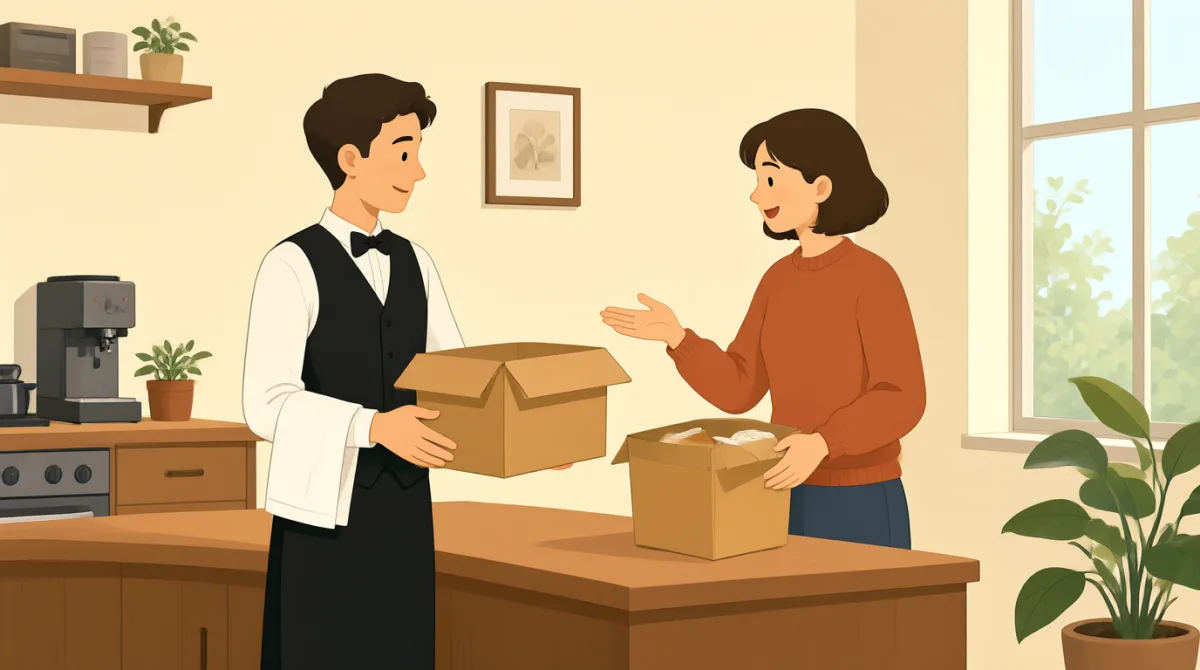

Excuse me, could we get some takeout boxes for the rest of our food?
Affedersiniz, kalan yemeklerimiz için paket kutusu alabilir miyiz?

Certainly! What would you like to pack up?
Elbette! Neleri paketleyelim?
Just the pasta and the extra bread, please. We'll finish the salad here.
Lütfen sadece makarnayı ve fazla ekmeği paketleyin. Salatayı burada bitireceğiz.
Alright, so one box for the pasta and another for the bread. Is that correct?
Peki, makarna için bir kutu, ekmek için de bir kutu. Doğru mu?
Yes, that's perfect. Thanks!
Evet, harika. Teşekkürler!
No problem! I'll be right back with those.
Rica ederim! Hemen getiriyorum.
Kelime Bilgisi6
- takeout boxespaket kutuları
Containers used to pack leftover food from a restaurant to take home. In American English, 'takeout' means food ordered to eat away from the restaurant.
Restoranda kalan yemekleri eve götürmek için koyduğunuz kaplar. Amerikan İngilizcesinde 'takeout', restoranda yemeyip başka bir yerde yemek üzere sipariş edilen yiyecek demektir.
- pack uppaketlemek
A phrasal verb meaning to put food or items into a container for carrying away. It's commonly used in restaurants when customers want leftovers.
Yiyecekleri veya eşyaları götürmek üzere bir kaba koymak anlamına gelen bir fiil öbeğidir. Restoranlarda müşteriler kalan yemeklerini paketletmek istediğinde sıkça kullanılır.
- certainlyelbette
An adverb used to politely agree or confirm something, similar to 'of course' or 'sure'. It shows willingness to help.
Kibarca kabul etmek veya onaylamak için kullanılan bir zarftır; 'tabii ki' ya da 'memnuniyetle' anlamına gelir. Yardım etmeye istekli olduğunuzu gösterir.
- alrightpeki
An informal way to say 'okay' or 'all right', used to confirm or accept a situation. It's casual and common in everyday conversations.
'Tamam' demenin günlük ve samimi bir yoludur; bir durumu onaylamak veya kabul etmek için kullanılır. Günlük konuşmalarda sıkça duyulur.
- perfectharika
An adjective meaning exactly right or ideal. Here, it's used to express satisfaction with a suggestion or confirmation.
Tam yerinde veya ideal anlamına gelen bir sıfattır. Burada bir öneriden ya da teyitten memnun olduğunuzu belirtir.
- no problemsorun değil
A casual response to 'thank you', meaning it's not a bother or you're welcome. It's very common in service situations.
'Teşekkürler'e verilen samimi bir yanıttır; bunun zahmet olmadığını veya bir şey değil anlamına gelir. Hizmet sektöründe çok yaygındır.
Önemli Cümleler6
- 1
Excuse me, could we get some takeout boxes for the rest of our food?
Affedersiniz, kalan yemeklerimiz için paket kutusu alabilir miyiz?
This is a polite way to request something from a server. 'Excuse me' gets attention, 'could we get' is a polite request form using 'could' for possibility, and 'the rest of our food' refers to leftovers. Useful for asking for help in restaurants.
Bu, garsondan kibarca bir şey istemenin yoludur. 'Excuse me' (Affedersiniz) dikkat çekmek için kullanılır. 'Could we get' (alabilir miyiz) olasılık bildiren 'could' ile nazik bir rica kalıbıdır; 'the rest of our food' (yemeklerimizin kalanı) ise artan yemekleri ifade eder. Restoranda yardım isterken kullanışlıdır.
- 2
Certainly! What would you like to pack up?
Elbette! Neleri paketleyelim?
A helpful response to a request. 'Certainly' agrees politely, and the question uses 'would you like' for offering choices. This sentence shows how servers clarify customer needs, useful for service roles or understanding offers.
Bu, bir ricaya yardımcı olmak isteyen kişinin verdiği yanıttır. 'Certainly' (elbette) kibarca kabul eder; 'would you like' ise seçenek sunarken kullanılan bir soru kalıbıdır. Garsonların müşterinin ne istediğini nasıl netleştirdiğini gösterir; hizmet sektöründe çalışanlar veya sunulan seçenekleri anlamak isteyenler için yararlıdır.
- 3
Just the pasta and the extra bread, please. We'll finish the salad here.
Lütfen sadece makarnayı ve fazla ekmeği paketleyin. Salatayı burada bitireceğiz.
This specifies what to pack while declining others. 'Just' means only, 'extra' means additional, and 'we'll finish...here' explains intentions. It's practical for customizing requests and polite with 'please'.
Bu cümle, diğer yiyecekleri paketletmek istemediğinizi belirtirken hangilerinin paketleneceğini söyler. 'Just' yalnızca, 'extra' fazladan demektir. 'We'll finish...here' ise yemeği burada bitireceğinizi anlatır. İsteğinizi belirlerken 'please' ile nazik olmak için kullanışlıdır.
- 4
Alright, so one box for the pasta and another for the bread. Is that correct?
Peki, makarna için bir kutu, ekmek için de bir kutu. Doğru mu?
This confirms the order by summarizing. 'Alright, so' introduces confirmation, 'one...and another' lists items, and 'Is that correct?' seeks agreement. Useful for avoiding mistakes in transactions.
Bu cümle, siparişi özetleyerek teyit eder. 'Alright, so' teyide giriş yapar; 'one...and another' ise ürünleri sıralar. 'Is that correct?' karşı tarafın onayını ister. Alışveriş veya sipariş sırasında hataları önlemeye yardımcı olur.
- 5
Yes, that's perfect. Thanks!
Evet, harika. Teşekkürler!
A simple agreement and thanks. 'That's perfect' affirms satisfaction, and 'Thanks!' shows gratitude. This short response is common in positive interactions and helps end conversations politely.
Bu, kısa bir onay ve teşekkür ifadesidir. 'That's perfect' memnuniyetinizi belirtir; 'Thanks!' ise teşekkür eder. Olumlu bir konuşmada sık kullanılan bu kısa yanıt, sohbeti nazikçe bitirmeye yardımcı olur.
- 6
No problem! I'll be right back with those.
Sorun değil! Hemen getiriyorum.
A friendly reply to thanks. 'No problem' is casual for 'you're welcome', and 'I'll be right back' promises quick action. Useful for reassuring customers in service settings.
Bu, teşekkür eden kişiye verilen samimi bir yanıttır. 'No problem' (sorun değil), 'rica ederim' demenin günlük bir yoludur; 'I'll be right back' ise hemen döneceğinizi söyler. Hizmet sunarken müşteriye kısa süre içinde yardımcı olacağınızı belirtmek için kullanışlıdır.