Following the Teacher
ทำตามครูผู้สอน
In her first class, Emma follows Grace's simple instructions for a few easy poses. She asks Grace how to position her hands and feet.
ในคลาสแรกของเธอ เอ็มมาทำตามคำแนะนำง่าย ๆ ของเกรซสำหรับท่าโยคะพื้นฐานสองสามท่า เธอถามเกรซว่าควรวางมือและเท้าอย่างไร
บทสนทนา9
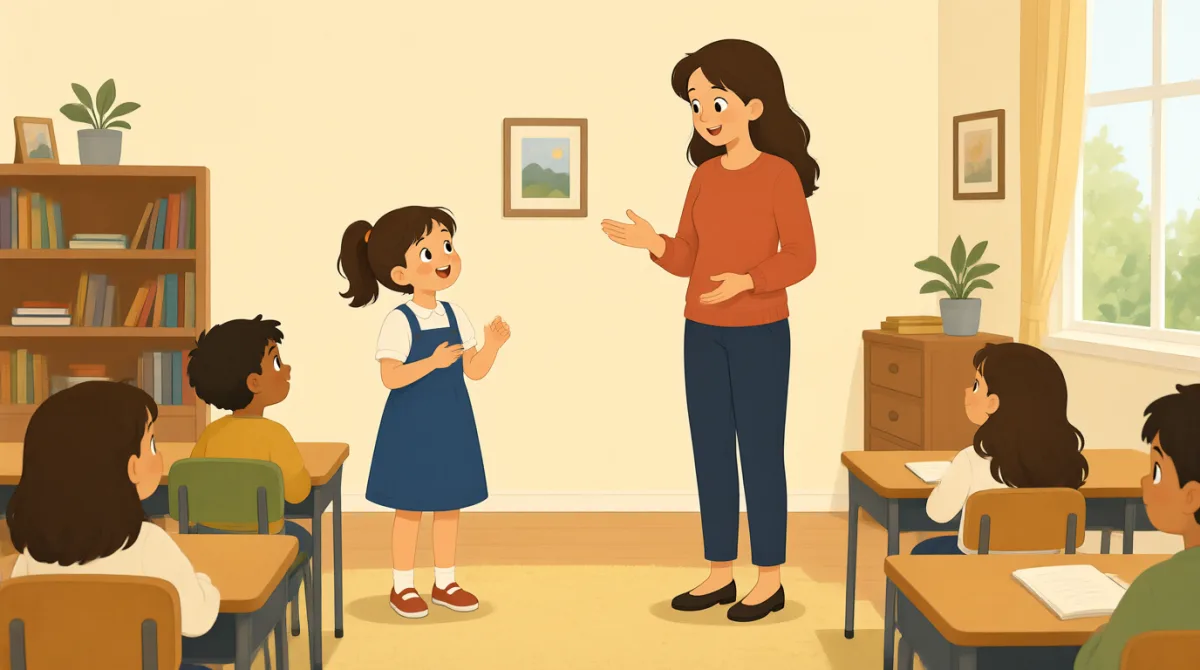

Stand with your feet hip-width apart, and let your arms rest by your sides.
ยืนแยกเท้าให้กว้างเท่าช่วงสะโพก แล้วปล่อยแขนวางแนบลำตัวนะคะ

Like this? Should my feet point straight ahead?
แบบนี้ใช่ไหมคะ เท้าควรชี้ตรงไปข้างหน้าหรือเปล่าคะ
Yes, that's right. Now lift your arms slowly over your head.
ใช่ค่ะ ถูกต้องแล้ว ทีนี้ค่อย ๆ ยกแขนขึ้นเหนือศีรษะนะคะ
Should I keep my hands together or leave some space?
ควรประนมมือไว้ด้วยกันหรือเว้นระยะห่างไว้เล็กน้อยคะ
Leave a little space, and keep your shoulders relaxed.
เว้นระยะห่างไว้เล็กน้อย แล้วผ่อนคลายหัวไหล่นะคะ
Okay. Where should I put my feet for the next pose?
เข้าใจแล้วค่ะ สำหรับท่าต่อไปควรวางเท้าไว้ตรงไหนคะ
Step your right foot back, and turn your left toes forward.
ก้าวเท้าขวาถอยหลัง แล้วหันปลายเท้าซ้ายไปข้างหน้านะคะ
Is my front knee over my ankle?
เข่าด้านหน้าอยู่ตรงกับข้อเท้าหรือเปล่าคะ
Yes. Bend it gently, and keep your back leg straight.
ใช่ค่ะ ค่อย ๆ งอเข่า แล้วเหยียดขาด้านหลังให้ตรงนะคะ
คำศัพท์7
- hip-width apartแยกเท้าให้กว้างเท่าช่วงสะโพก
This means with your feet separated by about the width of your hips. It describes a comfortable standing position.
คำนี้หมายถึงการแยกเท้าออกจากกันโดยให้มีระยะห่างประมาณความกว้างของสะโพก ใช้อธิบายท่ายืนที่สบายได้
- rest by your sidesวางแขนแนบลำตัว
This means to let your arms hang naturally next to your body. You can use “rest by your sides” to describe where to place your arms.
คำนี้หมายถึงการปล่อยแขนห้อยลงตามธรรมชาติข้างลำตัว คุณใช้ “rest by your sides” เพื่อบอกตำแหน่งที่ควรวางแขนได้
- point straight aheadชี้ตรงไปข้างหน้า
This means to face directly forward. It can describe the direction your feet or body should face.
คำนี้หมายถึงหันตรงไปข้างหน้า ใช้อธิบายทิศทางที่เท้าหรือลำตัวควรหันไปได้
- lift your armsยกแขนขึ้น
This means to raise your arms. You can use “lift” for other body parts or objects, too.
คำนี้หมายถึงยกแขนขึ้น คุณใช้ “lift” กับส่วนอื่น ๆ ของร่างกายหรือสิ่งของได้เช่นกัน
- keep your shoulders relaxedผ่อนคลายหัวไหล่
This means not to tense or raise your shoulders. It is a useful instruction for staying comfortable during exercise.
คำนี้หมายถึงไม่เกร็งหรือยกหัวไหล่ขึ้น เป็นคำแนะนำที่มีประโยชน์เพื่อให้รู้สึกสบายระหว่างออกกำลังกาย
- step your right foot backก้าวเท้าขวาถอยหลัง
This means to move your right foot behind you. You can change “right” to “left” when giving a different instruction.
คำนี้หมายถึงขยับเท้าขวาไปด้านหลัง คุณสามารถเปลี่ยน “right” เป็น “left” ได้เมื่อต้องการให้คำแนะนำอีกแบบหนึ่ง
- bend it gentlyค่อย ๆ งอเข่า
This means to bend your knee slowly and without using too much force. “Gently” makes the instruction sound careful and calm.
คำนี้หมายถึงงอเข่าอย่างช้า ๆ และไม่ออกแรงมากเกินไป คำว่า “gently” ทำให้คำแนะนำฟังดูระมัดระวังและนุ่มนวล
ประโยคสำคัญ7
- 1
Should my feet point straight ahead?
เท้าควรชี้ตรงไปข้างหน้าหรือเปล่าคะ
Use this question to check the correct direction for your feet or another body part. You can replace “my feet” with another part, such as “my knees.”
ใช้คำถามนี้เพื่อตรวจสอบทิศทางที่ถูกต้องของเท้าหรือส่วนอื่นของร่างกาย คุณเปลี่ยน “my feet” เป็นส่วนอื่นได้ เช่น “my knees”
- 2
Now lift your arms slowly over your head.
ทีนี้ค่อย ๆ ยกแขนขึ้นเหนือศีรษะนะคะ
This is a clear instruction for moving your arms. You can reuse “Now” to introduce the next step in an activity.
นี่เป็นคำแนะนำที่ชัดเจนสำหรับการขยับแขน คุณสามารถใช้ “Now” อีกครั้งเพื่อเริ่มบอกขั้นตอนถัดไปของกิจกรรมได้
- 3
Should I keep my hands together or leave some space?
ควรประนมมือไว้ด้วยกันหรือเว้นระยะห่างไว้เล็กน้อยคะ
Use this question when you want to choose between two positions. The pattern “Should I … or …?” is useful for checking instructions.
ใช้คำถามนี้เมื่อต้องการเลือกระหว่างตำแหน่งสองแบบ รูปแบบ “Should I … or …?” มีประโยชน์เมื่อต้องการตรวจสอบคำแนะนำ
- 4
Leave a little space, and keep your shoulders relaxed.
เว้นระยะห่างไว้เล็กน้อย แล้วผ่อนคลายหัวไหล่นะคะ
This gives two simple instructions at once. You can use “keep” to tell someone to maintain a position or condition.
ประโยคนี้ให้คำแนะนำง่าย ๆ สองอย่างในครั้งเดียว คุณใช้ “keep” เพื่อบอกให้ใครสักคนคงตำแหน่งหรือสภาพเดิมไว้ได้
- 5
Where should I put my feet for the next pose?
สำหรับท่าต่อไปควรวางเท้าไว้ตรงไหนคะ
Use this question to ask where to place your body for the next activity. You can replace “my feet” with another body part or object.
ใช้คำถามนี้เพื่อถามว่าควรวางร่างกายไว้ตรงไหนสำหรับกิจกรรมถัดไป คุณเปลี่ยน “my feet” เป็นส่วนอื่นของร่างกายหรือสิ่งของได้
- 6
Is my front knee over my ankle?
เข่าด้านหน้าอยู่ตรงกับข้อเท้าหรือเปล่าคะ
This is a useful way to check whether one body part is in the right position. You can use the pattern “Is my … over my …?” for other alignment questions.
นี่เป็นวิธีที่มีประโยชน์ในการตรวจสอบว่าส่วนหนึ่งของร่างกายอยู่ในตำแหน่งที่ถูกต้องหรือไม่ คุณใช้รูปแบบ “Is my … over my …?” กับคำถามเรื่องแนวการจัดวางส่วนอื่น ๆ ได้
- 7
Bend it gently, and keep your back leg straight.
ค่อย ๆ งอเข่า แล้วเหยียดขาด้านหลังให้ตรงนะคะ
This combines two short instructions for a pose. You can use “keep … straight” to tell someone how to hold a limb or object.
ประโยคนี้รวมคำแนะนำสั้น ๆ สองอย่างสำหรับท่าโยคะ คุณใช้ “keep … straight” เพื่อบอกวิธีรักษาแขนขาหรือสิ่งของให้อยู่ในแนวตรงได้