Following the Teacher
शिक्षिका के निर्देशों का पालन
In her first class, Emma follows Grace's simple instructions for a few easy poses. She asks Grace how to position her hands and feet.
अपनी पहली कक्षा में एमा कुछ आसान आसनों के लिए ग्रेस के सरल निर्देशों का पालन करती है। वह ग्रेस से पूछती है कि हाथों और पैरों को किस तरह रखना है।
संवाद9
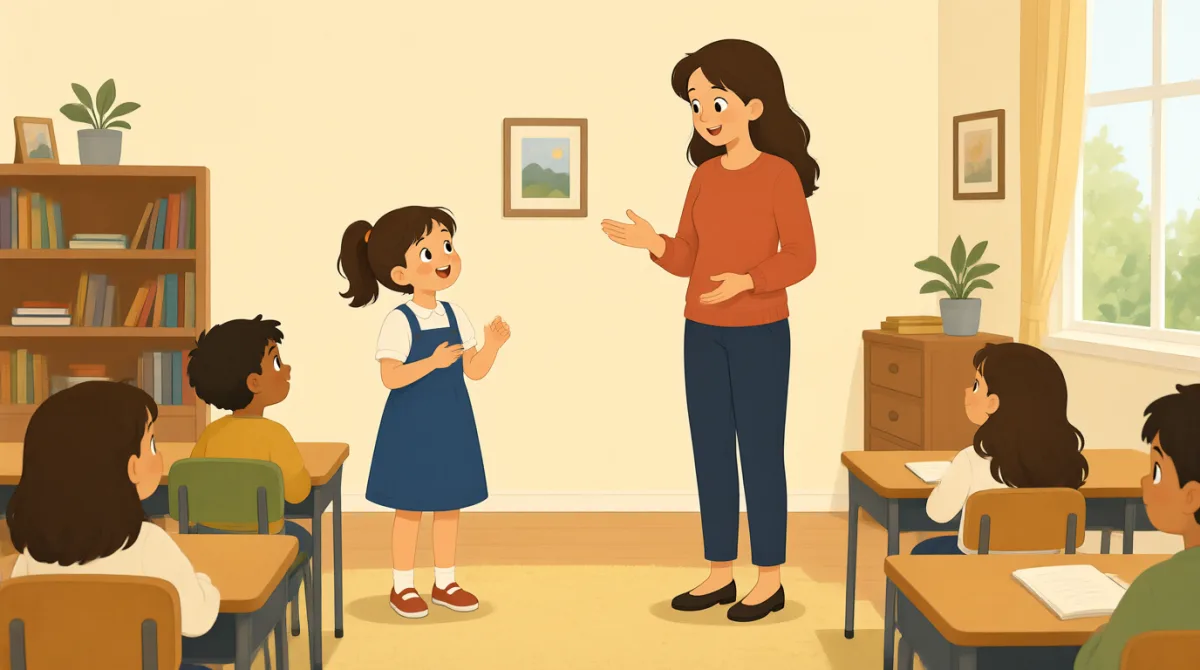

Stand with your feet hip-width apart, and let your arms rest by your sides.
अपने पैरों के बीच कूल्हों जितनी दूरी रखकर खड़ी हो जाइए और हाथों को शरीर के दोनों ओर ढीला छोड़ दीजिए।

Like this? Should my feet point straight ahead?
ऐसे? क्या मेरे पैरों के पंजे सीधे आगे की ओर होने चाहिए?
Yes, that's right. Now lift your arms slowly over your head.
हाँ, बिल्कुल सही। अब धीरे-धीरे अपनी बाँहें सिर के ऊपर उठाइए।
Should I keep my hands together or leave some space?
क्या मुझे अपने हाथों को मिलाकर रखना चाहिए या उनके बीच थोड़ी जगह छोड़नी चाहिए?
Leave a little space, and keep your shoulders relaxed.
थोड़ी-सी जगह छोड़िए और कंधों को ढीला रखिए।
Okay. Where should I put my feet for the next pose?
ठीक है। अगले आसन के लिए मुझे अपने पैर कहाँ रखने चाहिए?
Step your right foot back, and turn your left toes forward.
अपना दायाँ पैर पीछे ले जाइए और बाएँ पैर की उँगलियों को आगे की ओर घुमाइए।
Is my front knee over my ankle?
क्या मेरा आगे वाला घुटना टखने के ठीक ऊपर है?
Yes. Bend it gently, and keep your back leg straight.
हाँ। घुटने को धीरे से मोड़िए और पिछला पैर सीधा रखिए।
शब्दावली7
- hip-width apartकूल्हों जितनी दूरी पर
This means with your feet separated by about the width of your hips. It describes a comfortable standing position.
इसका मतलब है कि आपके पैरों के बीच लगभग आपके कूल्हों जितनी दूरी हो। यह खड़े होने की एक आरामदायक मुद्रा बताता है।
- rest by your sidesबाँहों को शरीर के दोनों ओर ढीला छोड़ना
This means to let your arms hang naturally next to your body. You can use “rest by your sides” to describe where to place your arms.
इसका मतलब है कि अपनी बाँहों को शरीर के बगल में स्वाभाविक रूप से लटकने दें। बाँहों को कहाँ रखना है, यह बताने के लिए आप “rest by your sides” कह सकते हैं।
- point straight aheadसीधे आगे की ओर होना
This means to face directly forward. It can describe the direction your feet or body should face.
इसका मतलब है बिल्कुल सामने की ओर होना। इसका इस्तेमाल पैरों या शरीर की दिशा बताने के लिए किया जा सकता है।
- lift your armsबाँहें उठाना
This means to raise your arms. You can use “lift” for other body parts or objects, too.
इसका मतलब है अपनी बाँहों को ऊपर उठाना। “lift” का इस्तेमाल शरीर के दूसरे अंगों या चीज़ों के लिए भी कर सकते हैं।
- keep your shoulders relaxedकंधों को ढीला रखना
This means not to tense or raise your shoulders. It is a useful instruction for staying comfortable during exercise.
इसका मतलब है कि कंधों में तनाव न रखें और उन्हें ऊपर न उठाएँ। व्यायाम करते समय आराम से बने रहने के लिए यह एक उपयोगी निर्देश है।
- step your right foot backदायाँ पैर पीछे ले जाना
This means to move your right foot behind you. You can change “right” to “left” when giving a different instruction.
इसका मतलब है अपना दायाँ पैर पीछे की ओर ले जाना। कोई दूसरा निर्देश देते समय “right” की जगह “left” कह सकते हैं।
- bend it gentlyधीरे से मोड़ना
This means to bend your knee slowly and without using too much force. “Gently” makes the instruction sound careful and calm.
इसका मतलब है घुटने को धीरे से और ज़्यादा ज़ोर लगाए बिना मोड़ना। “Gently” निर्देश को सावधानी भरा और शांत बनाता है।
मुख्य वाक्य7
- 1
Should my feet point straight ahead?
क्या मेरे पैरों के पंजे सीधे आगे की ओर होने चाहिए?
Use this question to check the correct direction for your feet or another body part. You can replace “my feet” with another part, such as “my knees.”
अपने पैरों या शरीर के किसी दूसरे अंग की सही दिशा पूछने के लिए यह सवाल इस्तेमाल करें। “my feet” की जगह शरीर के किसी और अंग का नाम रख सकते हैं, जैसे “my knees”।
- 2
Now lift your arms slowly over your head.
अब धीरे-धीरे अपनी बाँहें सिर के ऊपर उठाइए।
This is a clear instruction for moving your arms. You can reuse “Now” to introduce the next step in an activity.
यह बाँहों को हिलाने का एक साफ़ निर्देश है। किसी गतिविधि का अगला चरण बताने के लिए “Now” का इस्तेमाल फिर से कर सकते हैं।
- 3
Should I keep my hands together or leave some space?
क्या मुझे अपने हाथों को मिलाकर रखना चाहिए या उनके बीच थोड़ी जगह छोड़नी चाहिए?
Use this question when you want to choose between two positions. The pattern “Should I … or …?” is useful for checking instructions.
दो स्थितियों में से किसी एक को चुनने के लिए यह सवाल पूछें। निर्देशों की पुष्टि करने के लिए “Should I … or …?” का ढाँचा उपयोगी है।
- 4
Leave a little space, and keep your shoulders relaxed.
थोड़ी-सी जगह छोड़िए और कंधों को ढीला रखिए।
This gives two simple instructions at once. You can use “keep” to tell someone to maintain a position or condition.
इसमें एक साथ दो आसान निर्देश दिए गए हैं। किसी को कोई स्थिति या अवस्था बनाए रखने के लिए कहने में “keep” का इस्तेमाल कर सकते हैं।
- 5
Where should I put my feet for the next pose?
अगले आसन के लिए मुझे अपने पैर कहाँ रखने चाहिए?
Use this question to ask where to place your body for the next activity. You can replace “my feet” with another body part or object.
अगली गतिविधि के लिए अपने शरीर को कहाँ रखना है, यह पूछने के लिए इस सवाल का इस्तेमाल करें। “my feet” की जगह शरीर के किसी दूसरे अंग या किसी चीज़ का नाम रख सकते हैं।
- 6
Is my front knee over my ankle?
क्या मेरा आगे वाला घुटना टखने के ठीक ऊपर है?
This is a useful way to check whether one body part is in the right position. You can use the pattern “Is my … over my …?” for other alignment questions.
यह जानने का एक उपयोगी तरीका है कि शरीर का कोई अंग सही जगह पर है या नहीं। शरीर के दूसरे अंगों की स्थिति के बारे में पूछने के लिए “Is my … over my …?” का ढाँचा इस्तेमाल कर सकते हैं।
- 7
Bend it gently, and keep your back leg straight.
घुटने को धीरे से मोड़िए और पिछला पैर सीधा रखिए।
This combines two short instructions for a pose. You can use “keep … straight” to tell someone how to hold a limb or object.
इसमें एक आसन के लिए दो छोटे निर्देश दिए गए हैं। किसी को यह बताने के लिए कि हाथ-पैर या कोई चीज़ कैसी रखनी है, “keep … straight” का इस्तेमाल कर सकते हैं।