Meeting the Pet Sitter
พบกับคนดูแลสัตว์เลี้ยง
Emma meets Jack and introduces him to her dog, Buddy. They talk about Buddy’s routine and how Jack can get into the house.
เอมมาพบแจ็กและแนะนำบัดดี้ สุนัขของเธอให้เขารู้จัก ทั้งคู่คุยกันเรื่องกิจวัตรของบัดดี้และวิธีที่แจ็กจะเข้าบ้านได้
บทสนทนา8
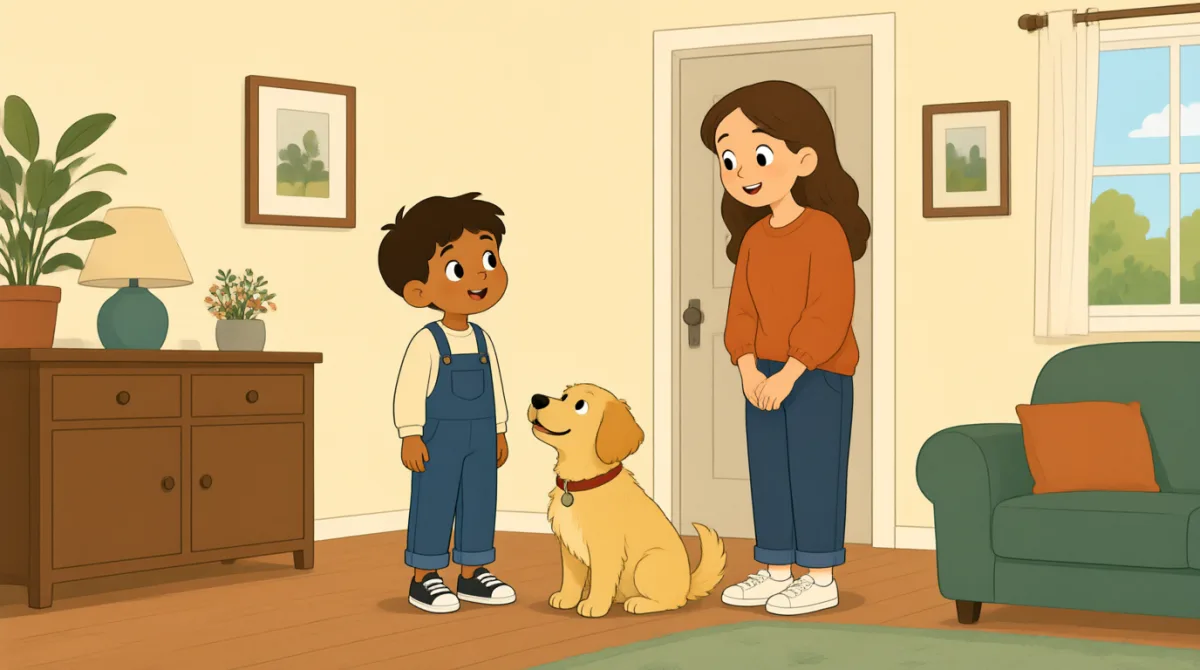

Hi, Jack. Thanks for coming over to meet Buddy.
หวัดดี แจ็ก ขอบคุณที่แวะมาทำความรู้จักกับบัดดี้นะ

Hi, Emma. He’s a friendly dog. Can I say hello?
หวัดดี เอ็มมา เขาดูเป็นมิตรนะ ขอทักทายเขาได้ไหม
Sure. He may bark at first, but he’ll calm down soon.
ได้สิ ตอนแรกเขาอาจเห่า แต่เดี๋ยวก็สงบลง
That’s okay. What’s his usual routine during the day?
ไม่เป็นไร ปกติตอนกลางวันเขาทำอะไรบ้างเหรอ
He eats breakfast at seven and dinner at six. He needs two walks.
เขากินมื้อเช้าตอนเจ็ดโมง แล้วก็มื้อเย็นตอนหกโมง เขาต้องพาไปเดินเล่นสองรอบ
Got it. Where can I find the leash and the house key?
เข้าใจแล้ว สายจูงกับกุญแจบ้านอยู่ตรงไหนเหรอ
The leash is by the front door. I’ll leave the key under the mat.
สายจูงอยู่ข้างประตูหน้า เดี๋ยวฉันวางกุญแจไว้ใต้พรมเช็ดเท้านะ
Great. I’ll keep the door closed so Buddy doesn’t run out.
ดีเลย ฉันจะปิดประตูไว้ บัดดี้จะได้ไม่วิ่งออกไป
คำศัพท์8
- coming overแวะมาหา
To come to someone’s home. Here, Jack is visiting Emma to meet Buddy.
หมายถึงไปที่บ้านของใครสักคน ในที่นี้แจ็กมาเยี่ยมเอ็มมาเพื่อทำความรู้จักกับบัดดี้
- say helloทักทาย
To greet someone. You can also use this phrase when greeting a pet.
หมายถึงกล่าวทักทายใครสักคน วลีนี้ใช้ทักทายสัตว์เลี้ยงได้ด้วย
- calm downสงบลง
To become quiet or relaxed. Here, Buddy may stop barking after a short time.
หมายถึงเงียบลงหรือผ่อนคลายลง ในที่นี้บัดดี้อาจหยุดเห่าหลังจากผ่านไปสักพัก
- usual routineกิจวัตรประจำวัน
The things someone usually does each day. You can ask about a person’s or pet’s daily routine.
สิ่งที่ใครสักคนทำเป็นประจำในแต่ละวัน คุณถามถึงกิจวัตรประจำวันของคนหรือสัตว์เลี้ยงก็ได้
- walksการพาไปเดินเล่น
Here, walks are times when Buddy goes outside for exercise. You can say a dog needs one or two walks a day.
ในที่นี้หมายถึงการพาบัดดี้ออกไปข้างนอกเพื่อออกกำลังกาย คุณพูดได้ว่าสุนัขต้องเดินเล่นวันละหนึ่งหรือสองรอบ
- front doorประตูหน้าบ้าน
The main door at the entrance of a house. This phrase is useful when giving directions.
ประตูหลักตรงทางเข้าบ้าน วลีนี้มีประโยชน์เวลาบอกทาง
- under the matใต้พรมเช็ดเท้า
In the space below a mat. People sometimes leave a key there so someone can get into the house.
บริเวณด้านล่างของพรมเช็ดเท้า บางครั้งคนก็วางกุญแจไว้ตรงนั้นเพื่อให้คนอื่นเข้าบ้านได้
- run outวิ่งออกไป
To leave a place quickly, often by running. Here, Jack wants to stop Buddy from getting outside.
ออกจากสถานที่อย่างรวดเร็ว ซึ่งมักจะวิ่งออกไป ในที่นี้แจ็กอยากป้องกันไม่ให้บัดดี้ออกไปข้างนอก
ประโยคสำคัญ7
- 1
Thanks for coming over to meet Buddy.
ขอบคุณที่แวะมาทำความรู้จักกับบัดดี้นะ
Use this to thank someone for visiting your home. You can replace “meet Buddy” with another reason for the visit.
ใช้ประโยคนี้ขอบคุณใครสักคนที่มาเยี่ยมบ้าน คุณเปลี่ยน “meet Buddy” เป็นเหตุผลอื่นที่เขามาเยี่ยมได้
- 2
Can I say hello?
ขอทักทายเขาได้ไหม
Use this to politely ask if you can greet someone. It also works when asking to greet a pet.
ใช้ประโยคนี้ถามอย่างสุภาพว่าขอทักทายใครสักคนได้ไหม ใช้ถามขอทักทายสัตว์เลี้ยงได้ด้วย
- 3
What’s his usual routine during the day?
ปกติตอนกลางวันเขาทำอะไรบ้างเหรอ
Use this question to ask what someone usually does each day. You can replace “his” with “your” or “her.”
ใช้คำถามนี้ถามว่าใครสักคนทำอะไรเป็นประจำในแต่ละวัน คุณเปลี่ยน “his” เป็น “your” หรือ “her” ได้
- 4
He eats breakfast at seven and dinner at six.
เขากินมื้อเช้าตอนเจ็ดโมง แล้วก็มื้อเย็นตอนหกโมง
This sentence gives a simple daily schedule. You can use the same pattern to talk about meal times.
ประโยคนี้บอกตารางเวลาในแต่ละวันแบบง่าย ๆ คุณใช้รูปแบบเดียวกันนี้พูดถึงเวลาอาหารได้
- 5
Where can I find the leash and the house key?
สายจูงกับกุญแจบ้านอยู่ตรงไหนเหรอ
Use this to ask where two things are. Replace “the leash and the house key” with the items you need.
ใช้ประโยคนี้ถามว่าสิ่งของสองอย่างอยู่ที่ไหน เปลี่ยน “the leash and the house key” เป็นสิ่งของที่คุณต้องการได้
- 6
I’ll leave the key under the mat.
เดี๋ยวฉันวางกุญแจไว้ใต้พรมเช็ดเท้า
Use “I’ll” to say what you will do in the future. You can replace “under the mat” with another location.
ใช้ “I’ll” เพื่อบอกสิ่งที่จะทำในอนาคต คุณเปลี่ยน “under the mat” เป็นสถานที่อื่นได้
- 7
I’ll keep the door closed so Buddy doesn’t run out.
ฉันจะปิดประตูไว้ บัดดี้จะได้ไม่วิ่งออกไป
Use “I’ll keep” to say you will make sure something stays a certain way. “So” explains the reason.
ใช้ “I’ll keep” เพื่อบอกว่าจะทำให้แน่ใจว่าสิ่งหนึ่งยังคงอยู่ในสภาพใดสภาพหนึ่ง ส่วน “so” ใช้อธิบายเหตุผล