Explaining Food and Walks
อธิบายเรื่องอาหารและการพาไปเดินเล่น
Emma shows Jack where the dog food and leash are. She explains when Buddy eats and how often he needs walks.
เอมมาบอกแจ็กว่าอาหารสุนัขกับสายจูงอยู่ตรงไหน แล้วอธิบายว่าบัดดี้กินอาหารเวลาไหนและต้องพาไปเดินเล่นบ่อยแค่ไหน
บทสนทนา8
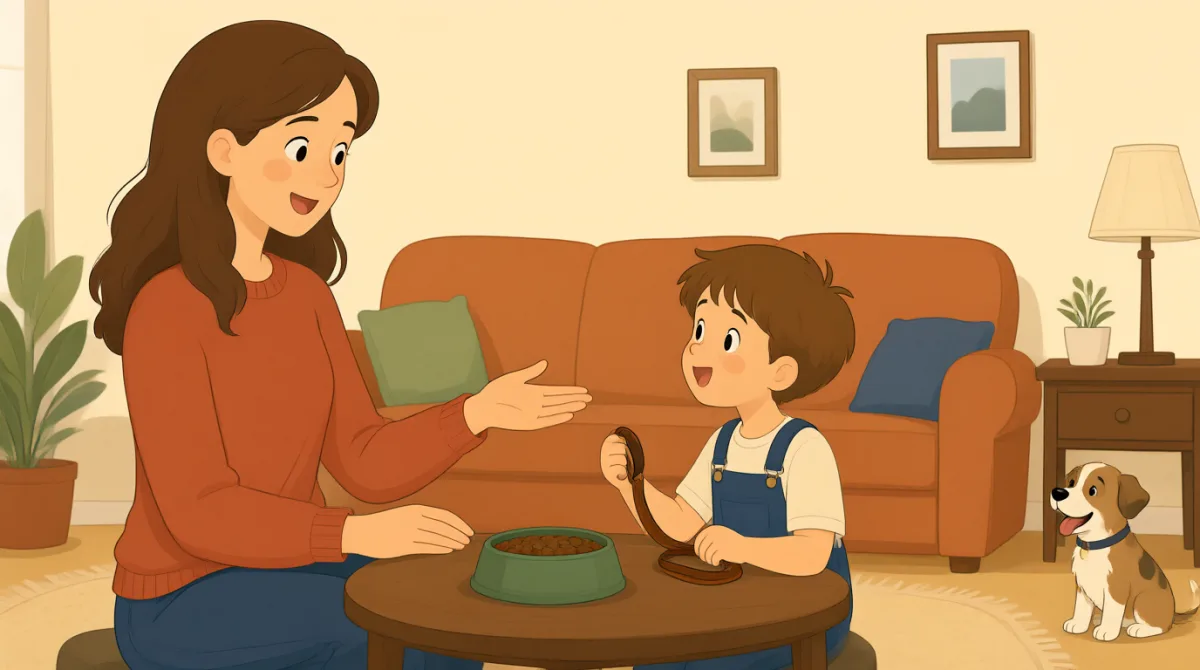

The dog food is in this bin. Buddy eats one cup in the morning and one at night.
อาหารสุนัขอยู่ในถังใบนี้นะ บัดดี้กินหนึ่งถ้วยตอนเช้า แล้วก็อีกหนึ่งถ้วยตอนกลางคืน

Got it. Should I give him breakfast before or after his walk?
เข้าใจแล้ว เราควรให้มื้อเช้าก่อนหรือหลังพาเขาไปเดินเล่นดี?
After his morning walk, please. He likes to eat when he gets back.
หลังจากพาไปเดินเล่นตอนเช้านะ เขาชอบกินตอนกลับมา
Okay. Where do you keep his leash?
โอเค แล้วเก็บสายจูงไว้ที่ไหนเหรอ?
It’s hanging by the front door. Please take him out three times a day.
แขวนอยู่ข้างประตูหน้า ช่วยพาเขาออกไปข้างนอกวันละสามครั้งนะ
How long should each walk be?
แต่ละครั้งควรพาไปเดินนานแค่ไหนเหรอ?
About twenty minutes is good. Keep him on the leash, please.
ประมาณยี่สิบนาทีกำลังดีนะ ช่วยใส่สายจูงให้เขาด้วย
Sure. I’ll take him out after breakfast, in the afternoon, and before dinner.
ได้เลย เราจะพาเขาออกไปหลังมื้อเช้า ตอนบ่าย แล้วก็ช่วงก่อนมื้อเย็น
คำศัพท์8
- dog foodอาหารสุนัข
Food that is made for dogs. You can use this phrase when talking about what a dog eats.
อาหารที่ทำขึ้นสำหรับสุนัข ใช้วลีนี้เวลาพูดถึงอาหารที่สุนัขกินได้เลย
- one cupหนึ่งถ้วย
A measurement for the amount of food Buddy should eat. You can use it to explain how much to give someone or something.
หน่วยวัดปริมาณอาหารที่บัดดี้ควรกิน ใช้บอกได้ว่าควรให้คนหรือสัตว์กินมากแค่ไหน
- morning walkการพาไปเดินเล่นตอนเช้า
A walk taken in the morning. You can use this phrase to talk about a regular daily activity.
การเดินเล่นในตอนเช้า ใช้วลีนี้พูดถึงกิจวัตรประจำวันที่ทำเป็นประจำได้
- gets backกลับมา
Returns to a place. Here, Buddy gets back home after his walk.
กลับมาที่สถานที่แห่งหนึ่ง ในประโยคนี้บัดดี้กลับมาบ้านหลังจากไปเดินเล่น
- leashสายจูง
A strap used to keep a dog safely beside you while walking. You can ask where someone keeps a pet’s leash.
สายที่ใช้คล้องสุนัขไว้ใกล้ตัวอย่างปลอดภัยระหว่างพาเดินเล่น ใช้ถามได้ว่าใครเก็บสายจูงสัตว์เลี้ยงไว้ที่ไหน
- take him outพาเขาออกไปข้างนอก
Take Buddy outside, usually for a walk. You can use this phrase when talking about caring for a dog.
พาบัดดี้ออกไปข้างนอก ซึ่งโดยมากก็คือพาไปเดินเล่น ใช้วลีนี้เวลาพูดถึงการดูแลสุนัขได้
- three times a dayวันละสามครั้ง
Three times during each day. You can use this phrase to explain how often an activity should happen.
สามครั้งในแต่ละวัน ใช้วลีนี้บอกว่าควรทำกิจกรรมบ่อยแค่ไหนได้
- keep him on the leashใส่สายจูงให้เขาไว้
Make sure Buddy stays attached to his leash. You can use this phrase to give a simple safety instruction.
ดูให้แน่ใจว่าบัดดี้คล้องสายจูงอยู่ ใช้วลีนี้บอกคำแนะนำง่าย ๆ เพื่อความปลอดภัยได้
ประโยคสำคัญ8
- 1
Buddy eats one cup in the morning and one at night.
บัดดี้กินหนึ่งถ้วยตอนเช้า แล้วก็อีกหนึ่งถ้วยตอนกลางคืน
This sentence explains a daily feeding schedule. Reuse the pattern “one [amount] in the morning and one at night” to describe routines.
ประโยคนี้อธิบายตารางให้อาหารในแต่ละวัน ลองใช้รูปแบบ “one [amount] in the morning and one at night” เพื่อบอกกิจวัตรดูนะ
- 2
Should I give him breakfast before or after his walk?
เราควรให้มื้อเช้าก่อนหรือหลังพาเขาไปเดินเล่นดี?
This is a polite way to ask about the order of two activities. Replace “breakfast” and “his walk” with other tasks to ask about a routine.
นี่เป็นวิธีสุภาพในการถามว่าควรทำสองกิจกรรมไหนก่อนหลัง ลองเปลี่ยน “breakfast” และ “his walk” เป็นกิจกรรมอื่นเพื่อถามเกี่ยวกับกิจวัตรได้นะ
- 3
After his morning walk, please.
หลังจากพาไปเดินเล่นตอนเช้านะ
This gives a short, clear answer about when to do something. You can use “After [activity], please” to give a simple instruction.
ประโยคนี้ตอบสั้น ๆ ชัดเจนว่าควรทำสิ่งหนึ่งเมื่อไร ใช้ “After [activity], please” เพื่อบอกคำแนะนำง่าย ๆ ได้เลย
- 4
It’s hanging by the front door.
มันแขวนอยู่ข้างประตูหน้า
This tells someone where an item is. Reuse “It’s hanging by…” to describe where something can be found.
ประโยคนี้บอกตำแหน่งของสิ่งของ ลองใช้ “It’s hanging by…” เพื่อบอกว่าหาของได้ที่ไหนนะ
- 5
Please take him out three times a day.
ช่วยพาเขาออกไปข้างนอกวันละสามครั้งนะ
This politely explains how often Buddy needs to go outside. You can use “Please [action] [number] times a day” for regular instructions.
ประโยคนี้บอกอย่างสุภาพว่าบัดดี้ต้องออกไปข้างนอกบ่อยแค่ไหน ใช้ “Please [action] [number] times a day” เพื่อบอกคำแนะนำที่ต้องทำเป็นประจำได้
- 6
About twenty minutes is good.
ประมาณยี่สิบนาทีกำลังดี
This gives an approximate amount of time. Use “About [length of time] is good” to suggest how long an activity should last.
ประโยคนี้บอกระยะเวลาโดยประมาณ ใช้ “About [length of time] is good” เพื่อแนะนำว่ากิจกรรมหนึ่งควรใช้เวลานานแค่ไหน
- 7
Keep him on the leash, please.
ช่วยใส่สายจูงให้เขาด้วยนะ
This is a polite safety instruction. You can use “Keep [someone or something] on…” to explain what should stay attached or in place.
นี่เป็นคำแนะนำเพื่อความปลอดภัยที่ฟังสุภาพ ใช้ “Keep [someone or something] on…” เพื่อบอกว่าควรให้ใครหรืออะไรคล้องอยู่หรืออยู่กับที่นะ
- 8
I’ll take him out after breakfast, in the afternoon, and before dinner.
เราจะพาเขาออกไปหลังมื้อเช้า ตอนบ่าย แล้วก็ช่วงก่อนมื้อเย็น
This sentence lays out a plan for the day using clear time expressions. Reuse “I’ll [action] after…, in…, and before…” to describe a schedule.
ประโยคนี้แจกแจงแผนในแต่ละวันโดยใช้คำบอกเวลาอย่างชัดเจน ลองใช้ “I’ll [action] after…, in…, and before…” เพื่อบอกตารางกิจกรรมดูนะ