Meeting the Pet Sitter
पालतू जानवर की देखभाल करने वाले से मुलाकात
Emma meets Jack and introduces him to her dog, Buddy. They talk about Buddy’s routine and how Jack can get into the house.
एमा जैक से मिलती है और उसे अपने कुत्ते बडी से मिलवाती है। वे बडी की दिनचर्या और जैक के घर में आने के तरीके के बारे में बात करते हैं।
संवाद8
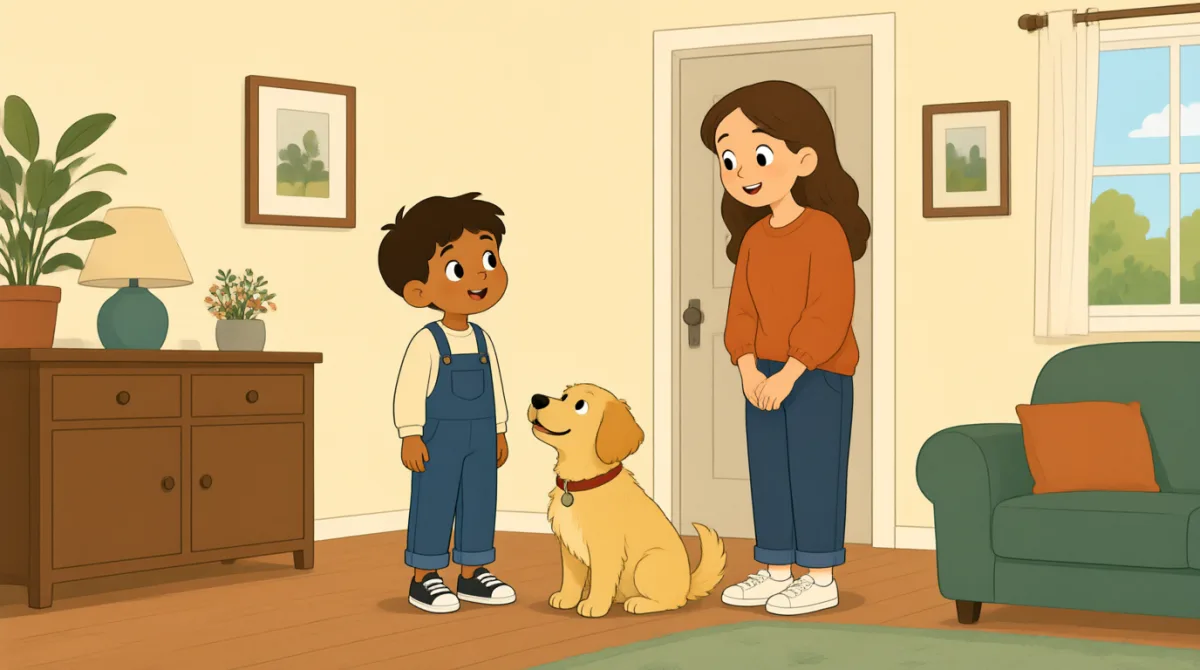

Hi, Jack. Thanks for coming over to meet Buddy.
हाय, जैक। बडी से मिलने आने के लिए शुक्रिया।

Hi, Emma. He’s a friendly dog. Can I say hello?
हाय, एमा। यह बहुत मिलनसार कुत्ता है। क्या मैं इसे नमस्ते कह सकता हूँ?
Sure. He may bark at first, but he’ll calm down soon.
ज़रूर। हो सकता है कि वह पहले भौंके, लेकिन जल्द ही शांत हो जाएगा।
That’s okay. What’s his usual routine during the day?
कोई बात नहीं। दिन में इसका आम तौर पर क्या रूटीन रहता है?
He eats breakfast at seven and dinner at six. He needs two walks.
यह सात बजे नाश्ता और छह बजे रात का खाना खाता है। इसे दो बार बाहर घुमाना पड़ता है।
Got it. Where can I find the leash and the house key?
समझ गया। पट्टा और घर की चाबी कहाँ मिलेंगे?
The leash is by the front door. I’ll leave the key under the mat.
पट्टा सामने वाले दरवाज़े के पास है। मैं चाबी पायदान के नीचे रख दूँगी।
Great. I’ll keep the door closed so Buddy doesn’t run out.
बढ़िया। मैं दरवाज़ा बंद रखूँगा, ताकि बडी बाहर न भाग जाए।
शब्दावली8
- coming overघर आना
To come to someone’s home. Here, Jack is visiting Emma to meet Buddy.
किसी के घर जाना। यहाँ जैक, बडी से मिलने एमा के घर आया है।
- say helloनमस्ते कहना
To greet someone. You can also use this phrase when greeting a pet.
किसी का अभिवादन करना। पालतू जानवर का अभिवादन करते समय भी इस वाक्यांश का इस्तेमाल कर सकते हैं।
- calm downशांत हो जाना
To become quiet or relaxed. Here, Buddy may stop barking after a short time.
शांत या आराम से हो जाना। यहाँ, थोड़ी देर बाद बडी भौंकना बंद कर सकता है।
- usual routineआम दिनचर्या
The things someone usually does each day. You can ask about a person’s or pet’s daily routine.
वे काम जो कोई व्यक्ति आम तौर पर हर दिन करता है। आप किसी व्यक्ति या पालतू जानवर की रोज़ की दिनचर्या के बारे में पूछ सकते हैं।
- walksबाहर घुमाने की सैर
Here, walks are times when Buddy goes outside for exercise. You can say a dog needs one or two walks a day.
यहाँ, इसका मतलब उन मौकों से है जब बडी व्यायाम के लिए बाहर जाता है। आप कह सकते हैं कि कुत्ते को दिन में एक या दो बार बाहर घुमाने की ज़रूरत होती है।
- front doorसामने का दरवाज़ा
The main door at the entrance of a house. This phrase is useful when giving directions.
घर के प्रवेश द्वार पर लगा मुख्य दरवाज़ा। किसी को रास्ता बताने में यह वाक्यांश काम आता है।
- under the matपायदान के नीचे
In the space below a mat. People sometimes leave a key there so someone can get into the house.
पायदान के नीचे की जगह में। कभी-कभी लोग किसी को घर में आने देने के लिए वहाँ चाबी रख देते हैं।
- run outबाहर भाग जाना
To leave a place quickly, often by running. Here, Jack wants to stop Buddy from getting outside.
किसी जगह से तेज़ी से निकल जाना, अक्सर दौड़कर। यहाँ जैक बडी को बाहर जाने से रोकना चाहता है।
मुख्य वाक्य7
- 1
Thanks for coming over to meet Buddy.
बडी से मिलने आने के लिए शुक्रिया।
Use this to thank someone for visiting your home. You can replace “meet Buddy” with another reason for the visit.
किसी के आपके घर आने पर उसे धन्यवाद देने के लिए इस वाक्य का इस्तेमाल करें। “meet Buddy” की जगह आने की कोई दूसरी वजह बता सकते हैं।
- 2
Can I say hello?
क्या मैं नमस्ते कह सकता हूँ?
Use this to politely ask if you can greet someone. It also works when asking to greet a pet.
किसी का अभिवादन करने की इजाज़त विनम्रता से माँगने के लिए इस वाक्य का इस्तेमाल करें। पालतू जानवर का अभिवादन करने की इजाज़त माँगते समय भी यह ठीक है।
- 3
What’s his usual routine during the day?
दिन में इसका आम तौर पर क्या रूटीन रहता है?
Use this question to ask what someone usually does each day. You can replace “his” with “your” or “her.”
किसी से यह पूछने के लिए कि वह आम तौर पर हर दिन क्या करता है, इस सवाल का इस्तेमाल करें। “his” की जगह “your” या “her” रख सकते हैं।
- 4
He eats breakfast at seven and dinner at six.
यह सात बजे नाश्ता और छह बजे रात का खाना खाता है।
This sentence gives a simple daily schedule. You can use the same pattern to talk about meal times.
इस वाक्य में दिन का एक साधारण समय-सारणी बताई गई है। खाने के समय के बारे में बात करने के लिए भी यही ढाँचा इस्तेमाल कर सकते हैं।
- 5
Where can I find the leash and the house key?
पट्टा और घर की चाबी कहाँ मिलेंगे?
Use this to ask where two things are. Replace “the leash and the house key” with the items you need.
दो चीज़ें कहाँ हैं, यह पूछने के लिए इस वाक्य का इस्तेमाल करें। “the leash and the house key” की जगह उन चीज़ों के नाम रखें जिनकी आपको ज़रूरत है।
- 6
I’ll leave the key under the mat.
मैं चाबी पायदान के नीचे रख दूँगी।
Use “I’ll” to say what you will do in the future. You can replace “under the mat” with another location.
भविष्य में आप क्या करेंगे, यह बताने के लिए “I’ll” का इस्तेमाल करें। “under the mat” की जगह कोई दूसरी जगह बता सकते हैं।
- 7
I’ll keep the door closed so Buddy doesn’t run out.
मैं दरवाज़ा बंद रखूँगा, ताकि बडी बाहर न भाग जाए।
Use “I’ll keep” to say you will make sure something stays a certain way. “So” explains the reason.
यह कहने के लिए “I’ll keep” का इस्तेमाल करें कि आप किसी चीज़ को एक खास हालत में बनाए रखेंगे। “So” वजह बताता है।