Choosing a Story
เลือกนิทาน
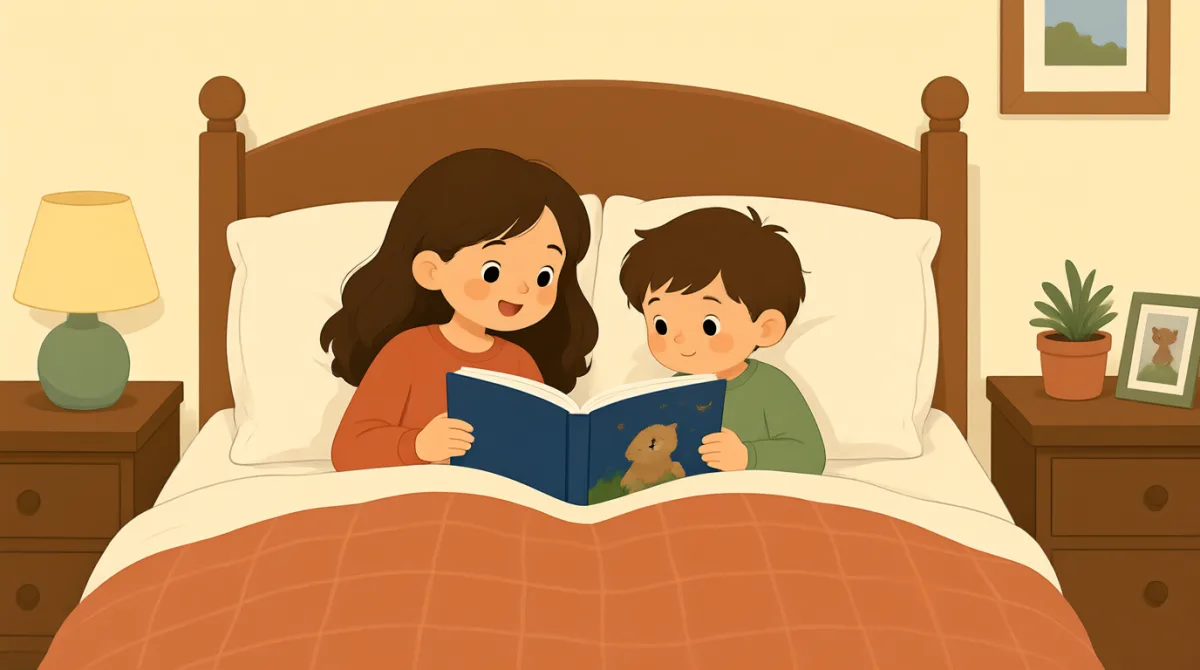
In bed, Grace lets the child choose a bedtime story. They read a short book together.
บนเตียง เกรซให้เด็กเลือกนิทานก่อนนอน แล้วทั้งคู่ก็อ่านหนังสือเล่มสั้น ๆ ด้วยกัน
บทสนทนา8

Which story would you like tonight?
คืนนี้อยากฟังนิทานเรื่องไหนจ๊ะ?

The book about the little bear, please.
ขอเล่มที่เกี่ยวกับหมีน้อยจ้ะ
Good choice. Let’s read it together.
เลือกได้ดีจ้ะ มาอ่านด้วยกันนะ
Can I hold the book?
หนูถือหนังสือได้ไหมจ๊ะ?
Of course. Turn the page, please.
ได้สิจ๊ะ พลิกหน้าหน่อยนะ
The bear is sleepy now.
ตอนนี้เจ้าหมีง่วงแล้ว
Yes. Let’s read one more page.
ใช่จ้ะ อ่านอีกหน้าหนึ่งนะ
Then I’ll go to sleep.
แล้วหนูจะเข้านอน
คำศัพท์8
- tonightคืนนี้
It means this evening or night. Use it to talk about plans for the current night.
หมายถึงช่วงเย็นหรือกลางคืนของวันนี้ ใช้พูดถึงแผนการในคืนนี้
- little bearหมีน้อย
This means a small bear. It can also describe a bear character in a children's story.
หมายถึงหมีตัวเล็ก ๆ และยังใช้เรียกตัวละครหมีในนิทานเด็กได้ด้วย
- Good choice.เลือกได้ดี
This means that someone picked something nice or suitable. You can say it when you approve of another person's choice.
หมายถึงมีคนเลือกสิ่งที่ดีหรือเหมาะสม ใช้พูดเมื่อเราชอบตัวเลือกของอีกฝ่าย
- read it togetherอ่านด้วยกัน
This means to read the book with another person. Use “read [something] together” for a shared reading activity.
หมายถึงอ่านหนังสือกับคนอื่น ใช้ “read [something] together” เมื่อต้องการพูดถึงการอ่านร่วมกัน
- hold the bookถือหนังสือ
This means to keep the book in your hands. You can use “hold” to ask to carry or keep something in your hands.
หมายถึงประคองหนังสือไว้ในมือ ใช้ “hold” เพื่อขอถือหรือจับสิ่งของไว้ในมือได้
- Of course.ได้สิ
This is a friendly way to say yes. Use it when you are happy to agree to a request.
เป็นวิธีตอบตกลงอย่างเป็นกันเอง ใช้เมื่อยินดีทำตามคำขอ
- Turn the pageพลิกหน้า
This means to move to the next page in a book. You can say it when reading with someone.
หมายถึงเปิดไปหน้าถัดไปในหนังสือ ใช้พูดเวลาที่อ่านหนังสือกับใครสักคน
- go to sleepเข้านอน
This means to begin sleeping. Use it when talking about bedtime.
หมายถึงเริ่มนอนหลับ ใช้พูดถึงเวลาเข้านอน
ประโยคสำคัญ8
- 1
Which story would you like tonight?
คืนนี้อยากฟังนิทานเรื่องไหนจ๊ะ?
This is a polite way to ask someone to choose a story. You can reuse “Which [thing] would you like?” to offer a choice.
นี่เป็นวิธีสุภาพในการถามให้ใครสักคนเลือกนิทาน นำ “Which [thing] would you like?” ไปใช้ถามเพื่อเสนอทางเลือกได้
- 2
The book about the little bear, please.
ขอเล่มที่เกี่ยวกับหมีน้อยจ้ะ
This is a simple way to choose something politely. Replace “the book about the little bear” with the item you want.
นี่เป็นวิธีเลือกสิ่งที่ต้องการอย่างสุภาพ เปลี่ยน “the book about the little bear” เป็นสิ่งที่อยากได้
- 3
Good choice.
เลือกได้ดีจ้ะ
Use this short phrase to show that you like someone's choice. You can say it after someone picks a book, meal, or activity.
ใช้วลีสั้น ๆ นี้เพื่อบอกว่าชอบตัวเลือกของใครสักคน พูดได้หลังจากอีกฝ่ายเลือกหนังสือ อาหาร หรือกิจกรรม
- 4
Let’s read it together.
มาอ่านด้วยกันนะ
This is an invitation to do something with another person. Replace “read it” with another activity, such as “play a game.”
นี่เป็นการชวนทำอะไรบางอย่างด้วยกัน เปลี่ยน “read it” เป็นกิจกรรมอื่นได้ เช่น “play a game”
- 5
Can I hold the book?
หนูถือหนังสือได้ไหมจ๊ะ?
This is a polite way to ask permission to hold something. Replace “the book” with another object.
นี่เป็นวิธีสุภาพในการขออนุญาตถือของ เปลี่ยน “the book” เป็นสิ่งของอื่นได้
- 6
Of course.
ได้สิจ๊ะ
This is a friendly way to agree to a request. It is useful when you want to say yes warmly.
นี่เป็นวิธีตอบตกลงตามคำขออย่างเป็นกันเอง ใช้เมื่อต้องการตอบรับอย่างอบอุ่น
- 7
Turn the page, please.
พลิกหน้าหน่อยนะ
This is a polite way to ask someone to move to the next page. You can use “please” to make simple instructions sound kind.
นี่เป็นวิธีสุภาพในการขอให้ใครสักคนเปิดไปหน้าถัดไป การเติม “please” ช่วยให้คำบอกง่าย ๆ ฟังดูสุภาพและอ่อนโยน
- 8
Then I’ll go to sleep.
แล้วหนูจะเข้านอน
This sentence says what will happen next. Use “Then I’ll…” to talk about the next step in your plans.
ประโยคนี้บอกว่าจะเกิดอะไรขึ้นต่อ ใช้ “Then I’ll…” เพื่อพูดถึงขั้นตอนถัดไปตามแผน