Receiving a Delivery at Home
รับพัสดุที่บ้าน
A delivery driver arrives at a residential address with a package, interacting with the recipient for signature or proving identity.
พนักงานส่งพัสดุมาถึงบ้านพร้อมพัสดุ และขอให้ผู้รับเซ็นรับหรือยืนยันตัวตน
บทสนทนา8
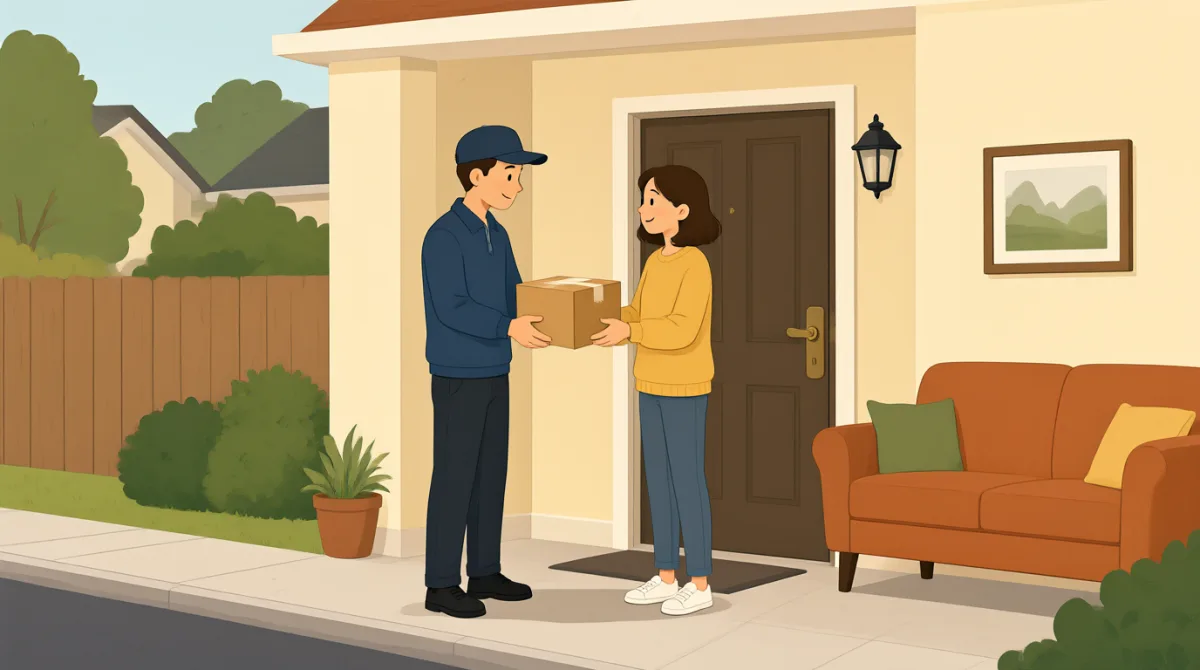

Hello, delivery for Emma?
สวัสดีครับ มีพัสดุมาส่งให้คุณเอ็มมาหรือเปล่าครับ

Yes, that's me. Can I help you?
ใช่ค่ะ ฉันเอง มีอะไรให้ช่วยไหมคะ
Great. I have a package here for you. Do I need a signature for this one?
ดีเลยครับ ผมมีพัสดุมาส่งให้คุณ ต้องเซ็นรับไหมครับ
Oh, I think it's the one I ordered online. Usually, they don't require a signature, but let me check.
อ๋อ น่าจะเป็นของที่ฉันสั่งออนไลน์ค่ะ ปกติไม่ต้องเซ็นรับ แต่ขอฉันเช็กก่อนนะคะ
Okay, the system says 'signature required'. Could you please sign on my device here?
ได้ครับ ระบบแจ้งว่า 'ต้องเซ็นรับ' รบกวนเซ็นบนอุปกรณ์ของผมตรงนี้ได้ไหมครับ
Sure, no problem. Just a moment. Here you go.
ได้ค่ะ ไม่มีปัญหา รอสักครู่นะคะ เรียบร้อยค่ะ
Thank you. And this is for you. Have a good day!
ขอบคุณครับ แล้วนี่ของคุณครับ ขอให้เป็นวันที่ดีนะครับ
You too! Thanks for the delivery.
เช่นกันค่ะ ขอบคุณที่มาส่งนะคะ
คำศัพท์6
- deliveryการจัดส่ง
A delivery means bringing a package or item to someone's home or office, like from an online order. Use it when talking about receiving mail or goods.
delivery หมายถึงการนำพัสดุหรือสิ่งของไปส่งที่บ้านหรือที่ทำงาน เช่น ของที่สั่งซื้อออนไลน์ ใช้คำนี้เมื่อพูดถึงการรับจดหมายหรือสินค้า
- packageพัสดุ
A package is a wrapped box or container holding items being sent by mail or courier. It's common in shipping contexts to refer to what you're receiving.
package คือกล่องหรือภาชนะที่ห่อบรรจุสิ่งของเพื่อส่งทางไปรษณีย์หรือบริษัทขนส่ง ในบริบทการส่งของ มักใช้เรียกสิ่งที่เรากำลังได้รับ
- signatureลายเซ็น
A signature is your handwritten name as proof of receiving something. In deliveries, it's often required for important packages to confirm you got it.
signature คือลายมือชื่อที่เขียนเพื่อเป็นหลักฐานว่าได้รับของแล้ว การส่งพัสดุสำคัญมักกำหนดให้เซ็นเพื่อยืนยันว่าได้รับของ
- orderedสั่งซื้อ
Ordered means you bought or requested something, especially online. Use it to describe purchases like 'I ordered a book from the website.'
ordered หมายถึงซื้อหรือขอให้จัดส่งบางอย่าง โดยเฉพาะการสั่งซื้อทางออนไลน์ ใช้พูดถึงการซื้อของ เช่น 'I ordered a book from the website.' (ฉันสั่งหนังสือจากเว็บไซต์)
- onlineทางออนไลน์
Online refers to the internet. In shopping, 'ordered online' means buying through a website or app, which is very common for deliveries.
online หมายถึงการใช้อินเทอร์เน็ต ในบริบทการซื้อของ 'ordered online' หมายถึงสั่งซื้อผ่านเว็บไซต์หรือแอป ซึ่งเป็นวิธีที่พบได้ทั่วไปสำหรับการจัดส่ง
- deviceอุปกรณ์
A device is an electronic tool like a phone or tablet. In this context, it's the delivery person's electronic pad for signing receipts.
device คือเครื่องมืออิเล็กทรอนิกส์ เช่น โทรศัพท์หรือแท็บเล็ต ในสถานการณ์นี้หมายถึงเครื่องรับลายเซ็นอิเล็กทรอนิกส์ที่พนักงานส่งของใช้ให้เซ็นรับ
ประโยคสำคัญ8
- 1
Hello, delivery for Emma?
สวัสดีครับ มีพัสดุมาส่งให้คุณเอ็มมาหรือเปล่าครับ
This is a polite greeting to confirm if the person is expecting a package. It's useful for delivery drivers starting a conversation; the question form makes it direct and friendly.
เป็นคำทักทายสุภาพเพื่อยืนยันว่าคนตรงหน้ากำลังรอรับพัสดุหรือไม่ เหมาะสำหรับพนักงานส่งของใช้เริ่มบทสนทนา รูปคำถามฟังดูตรงไปตรงมาและเป็นมิตร
- 2
Yes, that's me. Can I help you?
ใช่ค่ะ ฉันเอง มีอะไรให้ช่วยไหมคะ
This confirms your identity and offers assistance politely. Use it when someone arrives at your door; 'that's me' is a casual way to say 'I am the person,' and the question shows good manners.
ประโยคนี้ยืนยันตัวตนและเสนอความช่วยเหลืออย่างสุภาพ ใช้ได้เมื่อมีคนมาที่หน้าบ้าน 'that's me' เป็นวิธีพูดสบาย ๆ ว่า “ฉันคือคนที่คุณถามหา” ส่วนคำถามช่วยแสดงมารยาทที่ดี
- 3
I have a package here for you. Do I need a signature for this one?
ผมมีพัสดุมาส่งให้คุณ ต้องเซ็นรับไหมครับ
This informs the recipient about the item and asks about requirements. It's practical for delivery situations; the question uses 'do I need' for polite inquiries about procedures.
ประโยคนี้บอกผู้รับว่ามีของมาส่งและถามถึงข้อกำหนดต่าง ๆ เหมาะกับสถานการณ์รับพัสดุ โดยใช้ 'do I need' เพื่อถามเรื่องขั้นตอนอย่างสุภาพ
- 4
Oh, I think it's the one I ordered online.
อ๋อ น่าจะเป็นของที่ฉันสั่งออนไลน์ค่ะ
This expresses recognition of the package. Useful when receiving expected items; 'I think' softens the statement to show uncertainty, and it teaches past tense 'ordered' for completed actions.
ใช้บอกว่าจำได้ว่าพัสดุน่าจะเป็นอะไร เหมาะเมื่อได้รับของที่คาดว่าจะมาถึง 'I think' ช่วยให้ประโยคฟังไม่ฟันธงและสื่อว่ายังไม่แน่ใจ อีกทั้งยังเป็นตัวอย่างการใช้ 'ordered' ในรูปอดีตกับการกระทำที่เสร็จสิ้นแล้ว
- 5
Okay, the system says 'signature required'.
ได้ครับ ระบบแจ้งว่า 'signature required' (ต้องเซ็นรับ)
This explains the need based on technology. 'The system says' refers to computer instructions; it's common in modern services and uses quotes for exact terms.
ประโยคนี้อธิบายว่าต้องทำอะไรตามข้อมูลในระบบ 'The system says' ใช้กล่าวถึงคำแนะนำจากระบบคอมพิวเตอร์ พบได้บ่อยในบริการสมัยใหม่ ส่วนข้อความในเครื่องหมายคำพูดคือคำที่ระบบแสดงไว้ตรง ๆ
- 6
Could you please sign on my device here?
รบกวนเซ็นบนอุปกรณ์ของผมตรงนี้ได้ไหมครับ
This is a polite request for action. Use 'could you please' for courteous asks; it's essential in professional interactions like deliveries to get someone to sign digitally.
'Could you please' เป็นวิธีขอให้ใครทำบางอย่างอย่างสุภาพ เหมาะกับการพูดคุยเรื่องงานบริการ เช่น ขอให้ผู้รับเซ็นชื่อบนอุปกรณ์อิเล็กทรอนิกส์
- 7
Thank you. And this is for you. Have a good day!
ขอบคุณครับ แล้วนี่ของคุณครับ ขอให้เป็นวันที่ดีนะครับ
This thanks and hands over the item with a farewell. It's a standard polite ending; 'have a good day' is a common, friendly way to close conversations in service scenarios.
ประโยคนี้ใช้กล่าวขอบคุณพร้อมส่งมอบของและกล่าวลา เป็นคำลงท้ายสุภาพที่ใช้กันทั่วไป 'have a good day' เป็นคำอวยพรที่เป็นมิตรและพบได้บ่อยเมื่อต้องปิดบทสนทนาในงานบริการ
- 8
You too! Thanks for the delivery.
เช่นกันค่ะ ขอบคุณที่มาส่งนะคะ
This reciprocates the goodbye and shows appreciation. 'You too' mirrors the other person's wish; it's casual and useful for ending positive interactions, with 'thanks for' expressing gratitude specifically.
ประโยคนี้กล่าวตอบรับคำอวยพรและแสดงความขอบคุณ 'You too' ใช้ตอบกลับคำอวยพรของอีกฝ่าย เหมาะสำหรับจบบทสนทนาดี ๆ แบบเป็นกันเอง ส่วน 'thanks for' ใช้ระบุสิ่งที่เราขอบคุณอย่างชัดเจน