Receiving a Delivery at Home
استلام طرد في المنزل
A delivery driver arrives at a residential address with a package, interacting with the recipient for signature or proving identity.
يصل مندوب توصيل إلى منزل ومعه طرد، ويتواصل مع المستلِم للحصول على توقيعه أو التحقق من هويته.
حوار8
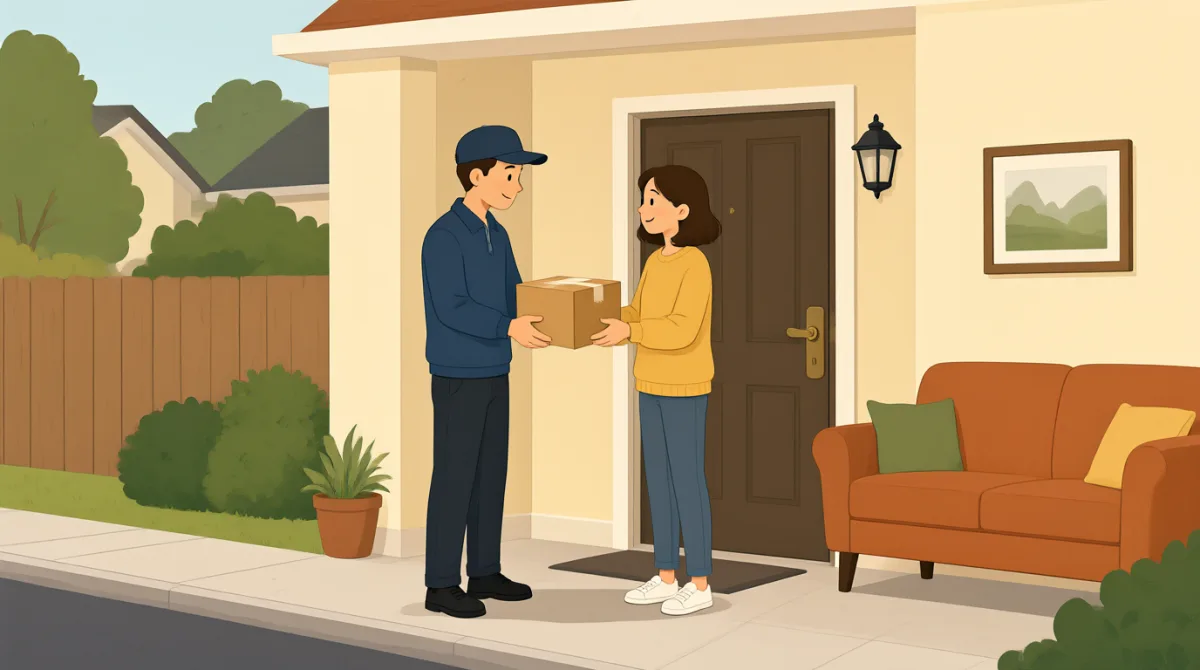

Hello, delivery for Emma?
مرحبًا، هل هذه شحنة لإيما؟

Yes, that's me. Can I help you?
نعم، أنا إيما. هل أستطيع مساعدتك؟
Great. I have a package here for you. Do I need a signature for this one?
رائع. لديّ طرد لكِ هنا. هل أحتاج إلى توقيعكِ لاستلامه؟
Oh, I think it's the one I ordered online. Usually, they don't require a signature, but let me check.
أوه، أظن أنه الطرد الذي طلبته عبر الإنترنت. عادةً لا يطلبون توقيعًا، لكن دعني أتحقق.
Okay, the system says 'signature required'. Could you please sign on my device here?
حسنًا، يظهر في النظام أن «التوقيع مطلوب». هل يمكنكِ التوقيع على جهازي هنا، من فضلك؟
Sure, no problem. Just a moment. Here you go.
بالتأكيد، لا مشكلة. لحظة من فضلك. تفضل.
Thank you. And this is for you. Have a good day!
شكرًا لكِ. وهذا طردكِ. أتمنى لكِ يومًا سعيدًا!
You too! Thanks for the delivery.
وأنت أيضًا! شكرًا على التوصيل.
المفردات6
- deliveryتوصيل
A delivery means bringing a package or item to someone's home or office, like from an online order. Use it when talking about receiving mail or goods.
تعني كلمة "delivery" إيصال طرد أو غرض إلى منزل شخص أو مكتبه، مثل طلبية من متجر عبر الإنترنت. تُستخدم عند الحديث عن استلام البريد أو السلع.
- packageطرد
A package is a wrapped box or container holding items being sent by mail or courier. It's common in shipping contexts to refer to what you're receiving.
الـ"package" صندوق أو حاوية مغلّفة تحتوي على أغراض تُرسل بالبريد أو مع شركة توصيل. تُستخدم هذه الكلمة كثيرًا في سياق الشحن للإشارة إلى ما تتلقاه.
- signatureتوقيع
A signature is your handwritten name as proof of receiving something. In deliveries, it's often required for important packages to confirm you got it.
الـ"signature" هو اسمك المكتوب بخط اليد لإثبات استلام شيء ما. في عمليات التوصيل، غالبًا ما يكون التوقيع مطلوبًا للطرود المهمة لتأكيد استلامها.
- orderedطلبَ
Ordered means you bought or requested something, especially online. Use it to describe purchases like 'I ordered a book from the website.'
تعني "ordered" أنك اشتريت شيئًا أو طلبته، وخصوصًا عبر الإنترنت. تُستخدم لوصف مشتريات مثل: 'I ordered a book from the website.' (طلبت كتابًا من الموقع).
- onlineعبر الإنترنت
Online refers to the internet. In shopping, 'ordered online' means buying through a website or app, which is very common for deliveries.
تشير كلمة "online" إلى الإنترنت. وفي سياق التسوق، تعني عبارة 'ordered online' الشراء من خلال موقع إلكتروني أو تطبيق، وهو أمر شائع جدًا في عمليات التوصيل.
- deviceجهاز
A device is an electronic tool like a phone or tablet. In this context, it's the delivery person's electronic pad for signing receipts.
الـ"device" أداة إلكترونية مثل الهاتف أو الجهاز اللوحي. وفي هذا السياق، هو الجهاز الإلكتروني الذي يستخدمه مندوب التوصيل لتسجيل التوقيع على الإيصال.
الجمل الأساسية8
- 1
Hello, delivery for Emma?
مرحبًا، هل هذه شحنة لإيما؟
This is a polite greeting to confirm if the person is expecting a package. It's useful for delivery drivers starting a conversation; the question form makes it direct and friendly.
هذه تحية مهذبة للتأكد مما إذا كان الشخص ينتظر طردًا. تفيد مندوب التوصيل عند بدء الحديث؛ فصيغة السؤال تجعل العبارة مباشرة وودودة.
- 2
Yes, that's me. Can I help you?
نعم، أنا إيما. هل أستطيع مساعدتك؟
This confirms your identity and offers assistance politely. Use it when someone arrives at your door; 'that's me' is a casual way to say 'I am the person,' and the question shows good manners.
تؤكد هذه العبارة هويتك وتعرض المساعدة بأدب. استخدمها عندما يصل أحدهم إلى باب منزلك؛ فعبارة 'that's me' طريقة غير رسمية لقول «أنا الشخص المقصود»، والسؤال يُظهر حسن الأدب.
- 3
I have a package here for you. Do I need a signature for this one?
لديّ طرد لك. هل أحتاج إلى توقيعك لاستلامه؟
This informs the recipient about the item and asks about requirements. It's practical for delivery situations; the question uses 'do I need' for polite inquiries about procedures.
تُعلم هذه العبارة المستلِم بوجود غرض له وتسأله عن المتطلبات. وهي عملية في مواقف التوصيل؛ إذ تُستخدم عبارة 'do I need' للاستفسار بأدب عن الإجراءات.
- 4
Oh, I think it's the one I ordered online.
أوه، أظن أنه الطرد الذي طلبته عبر الإنترنت.
This expresses recognition of the package. Useful when receiving expected items; 'I think' softens the statement to show uncertainty, and it teaches past tense 'ordered' for completed actions.
تُعبّر هذه العبارة عن التعرّف على الطرد. وهي مفيدة عند استلام أغراض كنت تتوقعها؛ فعبارة 'I think' تجعل الكلام أقل جزمًا وتُظهر عدم اليقين، كما تعلّمك صيغة الماضي 'ordered' للتحدث عن أفعال اكتملت.
- 5
Okay, the system says 'signature required'.
حسنًا، يظهر في النظام أن «التوقيع مطلوب».
This explains the need based on technology. 'The system says' refers to computer instructions; it's common in modern services and uses quotes for exact terms.
توضح هذه العبارة أن الحاجة إلى التوقيع ناتجة عن معلومات تقنية. تشير عبارة 'The system says' إلى تعليمات تظهر على الكمبيوتر؛ وهي شائعة في الخدمات الحديثة، وتُستخدم علامات الاقتباس لنقل المصطلح كما هو.
- 6
Could you please sign on my device here?
هل يمكنك التوقيع على جهازي هنا، من فضلك؟
This is a polite request for action. Use 'could you please' for courteous asks; it's essential in professional interactions like deliveries to get someone to sign digitally.
هذا طلب مهذب للقيام بعمل ما. استخدم 'could you please' عند الطلب بلطف؛ فهي مهمة في التعاملات المهنية، مثل طلب توقيع المستلِم إلكترونيًا عند توصيل طرد.
- 7
Thank you. And this is for you. Have a good day!
شكرًا لك. وهذا طردك. أتمنى لك يومًا سعيدًا!
This thanks and hands over the item with a farewell. It's a standard polite ending; 'have a good day' is a common, friendly way to close conversations in service scenarios.
تتضمن هذه العبارة شكرًا وتسليمًا للغرض مع توديع. وهي خاتمة مهذبة شائعة؛ وعبارة 'have a good day' طريقة ودودة ومألوفة لإنهاء الحديث في مواقف تقديم الخدمات.
- 8
You too! Thanks for the delivery.
وأنت أيضًا! شكرًا على التوصيل.
This reciprocates the goodbye and shows appreciation. 'You too' mirrors the other person's wish; it's casual and useful for ending positive interactions, with 'thanks for' expressing gratitude specifically.
ترد هذه العبارة على التمنّي بالخير وتُظهر التقدير. تكرّر 'You too' التمنّي الذي قاله الطرف الآخر؛ وهي عبارة غير رسمية ومفيدة لإنهاء التفاعلات الودية، بينما تعبّر 'thanks for' عن الامتنان لشيء محدد.