Receiving a Delivery at Home
在家接收快遞
A delivery driver arrives at a residential address with a package, interacting with the recipient for signature or proving identity.
快遞員送包裹到住宅地址,與收件人互動以獲取簽名或身份證明。
對話8
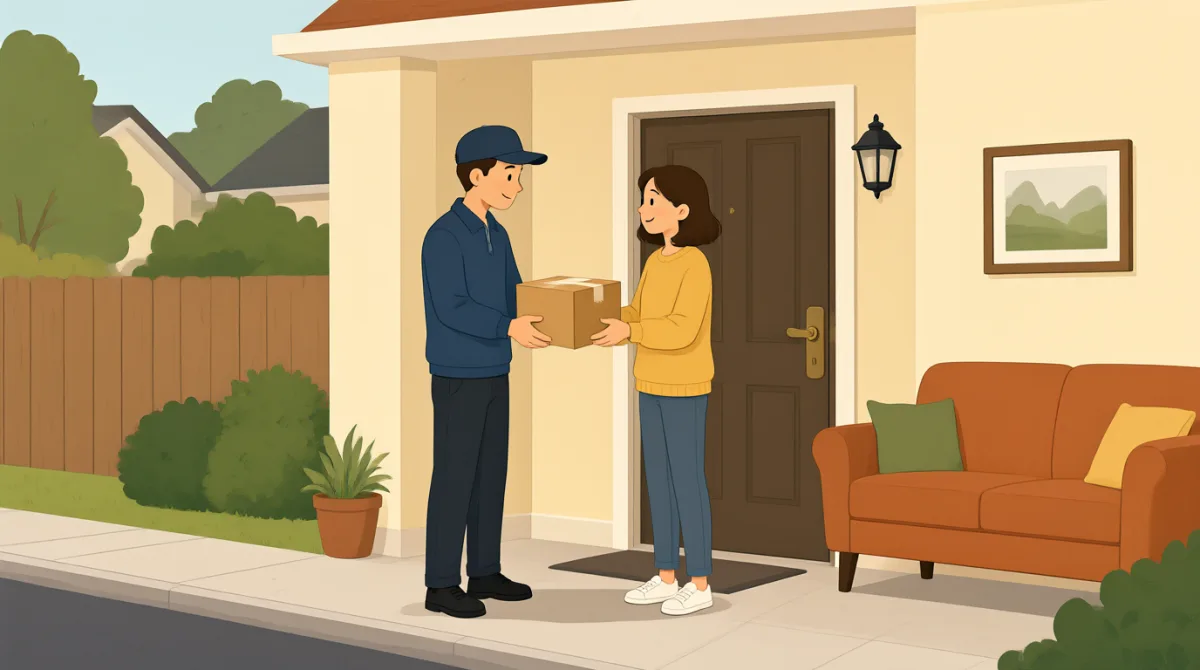

Hello, delivery for Emma?
您好,有艾瑪的快遞嗎?

Yes, that's me. Can I help you?
是的,是我。請問有什麼可以幫您的?
Great. I have a package here for you. Do I need a signature for this one?
太好了。我這裡有個您的包裹。這個需要簽名嗎?
Oh, I think it's the one I ordered online. Usually, they don't require a signature, but let me check.
哦,我想這是我網上訂的那個。通常,它們不需要簽名,但我確認一下。
Okay, the system says 'signature required'. Could you please sign on my device here?
好的,系統顯示“需要簽名”。請您在我這裡的裝置上籤個字,好嗎?
Sure, no problem. Just a moment. Here you go.
好的,沒問題。稍等。給您。
Thank you. And this is for you. Have a good day!
謝謝。這是您的包裹。祝您愉快!
You too! Thanks for the delivery.
您也一樣!謝謝您的派送。
詞彙6
- delivery快遞
A delivery means bringing a package or item to someone's home or office, like from an online order. Use it when talking about receiving mail or goods.
“delivery”指把包裹或物品送到某人的家裡或辦公室,比如送網上購買的商品。談到收郵件或收貨時,可以用這個詞。
- package包裹
A package is a wrapped box or container holding items being sent by mail or courier. It's common in shipping contexts to refer to what you're receiving.
“package”指用包裝紙包好或裝在容器裡、透過郵寄或快遞寄送的物品。在寄送場景中,常用這個詞來指你收到的東西。
- signature簽名
A signature is your handwritten name as proof of receiving something. In deliveries, it's often required for important packages to confirm you got it.
“signature”指親筆寫下的姓名,用來證明你收到了某樣東西。快遞包裹有時需要簽名,以確認你已經收件。
- ordered訂購
Ordered means you bought or requested something, especially online. Use it to describe purchases like 'I ordered a book from the website.'
“ordered”表示買了或訂了某樣東西,尤其是透過網路購買。可以用它來描述購物,比如“I ordered a book from the website.”(我在網站上訂了一本書。)
- online線上;網上
Online refers to the internet. In shopping, 'ordered online' means buying through a website or app, which is very common for deliveries.
“online”指透過網際網路進行的。在購物時,“ordered online”表示透過網站或應用購買,這種方式很常見。
- device裝置
A device is an electronic tool like a phone or tablet. In this context, it's the delivery person's electronic pad for signing receipts.
“device”指手機或平板電腦這類電子裝置。在這裡,它指快遞員用來讓收件人簽收的電子簽名板。
關鍵句8
- 1
Hello, delivery for Emma?
您好,有艾瑪的快遞嗎?
This is a polite greeting to confirm if the person is expecting a package. It's useful for delivery drivers starting a conversation; the question form makes it direct and friendly.
這是禮貌地打招呼並確認對方是否是包裹收件人的說法。快遞員開始交談時很適合這樣問;用疑問句聽起來直接又友好。
- 2
Yes, that's me. Can I help you?
是的,是我。請問有什麼可以幫您的?
This confirms your identity and offers assistance politely. Use it when someone arrives at your door; 'that's me' is a casual way to say 'I am the person,' and the question shows good manners.
這句話既確認了自己的身份,也禮貌地表示願意提供幫助。有人來到家門口時可以這樣說;“that's me”是隨意地表示“我就是那個人”,後面的問句則顯得有禮貌。
- 3
I have a package here for you. Do I need a signature for this one?
我這裡有個您的包裹。這個需要簽名嗎?
This informs the recipient about the item and asks about requirements. It's practical for delivery situations; the question uses 'do I need' for polite inquiries about procedures.
這句話告訴收件人有物品送到,並詢問相關要求。在派送場景中很實用;用“do I need”可以禮貌地詢問是否需要履行某項手續。
- 4
Oh, I think it's the one I ordered online.
哦,我想這是我網上訂的那個。
This expresses recognition of the package. Useful when receiving expected items; 'I think' softens the statement to show uncertainty, and it teaches past tense 'ordered' for completed actions.
這句話表示你認出了包裹。收到自己預期會到的東西時可以這樣說;“I think”能緩和語氣,表達不太確定,也可以藉此學習過去式“ordered”,表示已經完成的動作。
- 5
Okay, the system says 'signature required'.
好的,系統顯示“需要簽名”。
This explains the need based on technology. 'The system says' refers to computer instructions; it's common in modern services and uses quotes for exact terms.
這句話根據系統資訊說明為什麼需要簽名。“The system says”指電腦系統給出的提示,在現代服務中很常見;引號裡是系統顯示的確切用語。
- 6
Could you please sign on my device here?
請您在我這裡的裝置上籤個字,好嗎?
This is a polite request for action. Use 'could you please' for courteous asks; it's essential in professional interactions like deliveries to get someone to sign digitally.
這是一種禮貌地請對方做某事的說法。用“could you please”來提出客氣的請求;在派送等工作場合中,可以用它請對方在電子裝置上簽收。
- 7
Thank you. And this is for you. Have a good day!
謝謝。這是給您的。祝您愉快!
This thanks and hands over the item with a farewell. It's a standard polite ending; 'have a good day' is a common, friendly way to close conversations in service scenarios.
這句話表達感謝,把物品交給對方,並向對方道別。這是常見而禮貌的收尾方式;“have a good day”是服務場景中友好結束交談的常用說法。
- 8
You too! Thanks for the delivery.
您也一樣!謝謝您送快遞。
This reciprocates the goodbye and shows appreciation. 'You too' mirrors the other person's wish; it's casual and useful for ending positive interactions, with 'thanks for' expressing gratitude specifically.
這句話回應了對方的祝福,並表示感謝。“You too”可以重複對方的祝願;它語氣輕鬆,適合友好地結束交談。“thanks for”則用來針對具體事情表達感謝。