Explaining Route by Landmarks
การบอกเส้นทางโดยใช้จุดสังเกต
A passenger or driver explains a route or a stop's location by referencing nearby landmarks, rather than just street names.
ผู้โดยสารหรือคนขับอธิบายเส้นทางหรือตำแหน่งป้ายรถโดยอ้างอิงจุดสังเกตใกล้เคียง แทนที่จะบอกเพียงชื่อถนน
บทสนทนา8
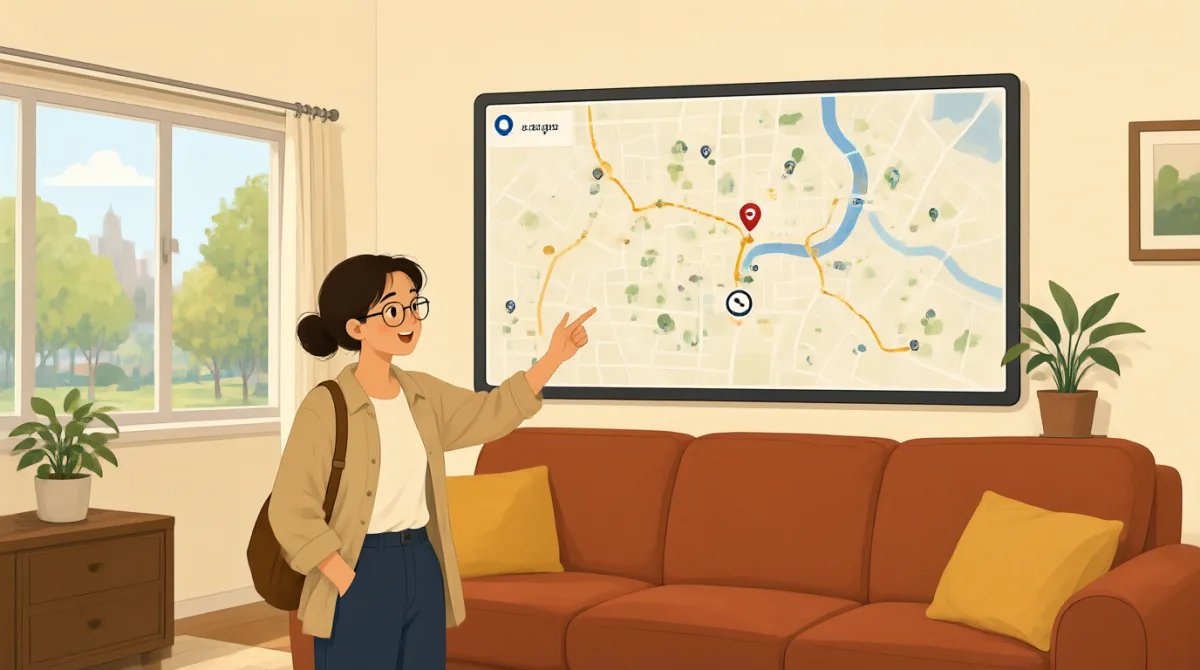

Excuse me, I'm trying to get to the City Library. Does this bus go there?
ขอโทษครับ ผมกำลังจะไปห้องสมุดเมือง รถบัสคันนี้ไปที่นั่นไหมครับ

Yes, it does. You need to get off at the stop right after the big park.
ไปค่ะ คุณต้องลงที่ป้ายถัดจากสวนสาธารณะใหญ่เลยค่ะ
The big park? Is that the Central Park?
สวนสาธารณะใหญ่เหรอครับ หมายถึงเซ็นทรัลพาร์กใช่ไหมครับ
That's right. After Central Park, you'll see a large fountain on your left. The stop is just past that, on the right side of the street.
ใช่ค่ะ หลังจากเซ็นทรัลพาร์ก คุณจะเห็นน้ำพุขนาดใหญ่อยู่ทางซ้ายมือ ป้ายรถอยู่เลยน้ำพุนั้นไปนิดเดียว ทางด้านขวามือของถนนค่ะ
Okay, so Central Park, then the fountain, and then my stop. Got it. Is the library visible from the bus stop?
โอเคครับ งั้นก็เซ็นทรัลพาร์ก แล้วก็น้ำพุ จากนั้นก็ป้ายที่ผมต้องลง เข้าใจแล้วครับ ห้องสมุดมองเห็นจากป้ายรถไหมครับ
Not directly from the stop. Once you get off, walk a bit back towards the fountain, and you'll see a large building with a grand staircase. That's the library.
มองจากป้ายรถโดยตรงไม่เห็นค่ะ พอลงรถแล้ว ให้เดินย้อนกลับไปทางน้ำพุสักหน่อย คุณจะเห็นอาคารขนาดใหญ่ที่มีบันไดกว้างโอ่อ่า นั่นแหละค่ะคือห้องสมุด
A grand staircase. That's very helpful! Thank you so much!
บันไดกว้างโอ่อ่า ช่วยได้มากเลยครับ ขอบคุณมากนะครับ
You're welcome! Enjoy your visit.
ยินดีค่ะ ขอให้เที่ยวให้สนุกนะคะ
คำศัพท์7
- excuse meขอโทษครับ/ค่ะ
A polite phrase used to get someone's attention when you need to ask a question, like starting a conversation on a bus.
วลีสุภาพที่ใช้เรียกความสนใจของใครสักคนเมื่อต้องการถามคำถาม เช่น ตอนเริ่มพูดคุยบนรถบัส
- get offลงรถ
To leave a vehicle like a bus or train at a stop; it's a common phrasal verb for public transportation.
ออกจากยานพาหนะ เช่น รถบัสหรือรถไฟที่ป้ายใดป้ายหนึ่ง เป็นกริยาวลีที่ใช้กันทั่วไปเมื่อพูดถึงการเดินทางด้วยขนส่งสาธารณะ
- stopป้ายรถ
A place where a bus pauses to let passengers get on or off; in this context, it refers to a bus stop.
สถานที่ที่รถบัสจอดเพื่อให้ผู้โดยสารขึ้นหรือลง ในบริบทนี้หมายถึงป้ายรถบัส
- right afterถัดจาก...ทันที
Immediately following something, used to describe the next location or action in a sequence.
หมายถึงสิ่งที่ตามมาทันที ใช้บอกสถานที่หรือลำดับการกระทำถัดไป
- fountainน้ำพุ
A structure with water shooting up, often in parks or public areas; here, it's used as a landmark to help describe directions.
สิ่งก่อสร้างที่มีน้ำพุ่งขึ้น มักพบในสวนสาธารณะหรือพื้นที่สาธารณะ ที่นี่ใช้เป็นจุดสังเกตเพื่อช่วยบอกเส้นทาง
- visibleมองเห็นได้
Able to be seen; in travel, it means you can spot something from where you are, like from a bus stop.
สามารถมองเห็นได้ ในบริบทการเดินทาง หมายถึงคุณสามารถมองเห็นสิ่งใดสิ่งหนึ่งจากจุดที่ยืนอยู่ เช่น จากป้ายรถ
- staircaseบันได
A set of stairs inside or outside a building; 'grand staircase' means an impressive, large one, helping identify the library.
ชุดขั้นบันไดภายในหรือภายนอกอาคาร โดย 'grand staircase' หมายถึงบันไดขนาดใหญ่ที่ดูโอ่อ่า ซึ่งช่วยให้ระบุห้องสมุดได้
ประโยคสำคัญ6
- 1
Excuse me, I'm trying to get to the City Library. Does this bus go there?
ขอโทษครับ ผมกำลังจะไปห้องสมุดเมือง รถบัสคันนี้ไปที่นั่นไหมครับ
This is a polite way to ask for directions on public transport. 'I'm trying to get to' expresses your destination goal, and the question uses 'does' for yes/no answers about routes. Useful for starting inquiries.
นี่เป็นวิธีสุภาพในการถามเส้นทางเมื่อใช้ขนส่งสาธารณะ 'I'm trying to get to' ใช้บอกจุดหมายที่ต้องการไป และคำถามนี้ใช้ 'does' เพื่อถามคำตอบแบบใช่หรือไม่ใช่เกี่ยวกับเส้นทาง เหมาะสำหรับเริ่มถามข้อมูล
- 2
Yes, it does. You need to get off at the stop right after the big park.
ใช่ค่ะ คุณต้องลงที่ป้ายถัดจากสวนสาธารณะใหญ่เลยค่ะ
A helpful response confirming a route. 'It does' is a short affirmative answer to a yes/no question. 'You need to get off' gives clear instructions using a modal verb 'need to' for necessity. Great for giving directions by landmarks.
เป็นคำตอบที่ช่วยยืนยันเส้นทาง 'It does' เป็นคำตอบสั้น ๆ ในเชิงยืนยันสำหรับคำถามแบบใช่หรือไม่ใช่ ส่วน 'You need to get off' ใช้บอกคำแนะนำอย่างชัดเจน โดยใช้กริยาช่วย 'need to' เพื่อสื่อถึงความจำเป็น เหมาะสำหรับการบอกเส้นทางโดยใช้จุดสังเกต
- 3
After Central Park, you'll see a large fountain on your left.
หลังจากเซ็นทรัลพาร์ก คุณจะเห็นน้ำพุขนาดใหญ่อยู่ทางซ้ายมือ
This describes a sequence of landmarks using 'after' for order and 'you'll see' for future prediction. 'On your left' specifies direction. It's practical for explaining routes without street names, common in real-life navigation.
ประโยคนี้บอกลำดับของจุดสังเกต โดยใช้ 'after' เพื่อบอกลำดับ และใช้ 'you'll see' เพื่อคาดการณ์สิ่งที่จะเห็นในอนาคต ส่วน 'On your left' ใช้ระบุทิศทาง เป็นประโยคที่ใช้ได้จริงเมื่อต้องอธิบายเส้นทางโดยไม่บอกชื่อถนน ซึ่งพบได้บ่อยในการบอกทางในชีวิตประจำวัน
- 4
Okay, so Central Park, then the fountain, and then my stop. Got it.
โอเคครับ งั้นก็เซ็นทรัลพาร์ก แล้วก็น้ำพุ จากนั้นก็ป้ายที่ผมต้องลง เข้าใจแล้วครับ
This shows summarizing directions with 'so' for clarification and 'then' for sequence. 'Got it' is informal slang meaning 'I understand.' Useful for confirming understanding in conversations to avoid mistakes.
ประโยคนี้แสดงการสรุปคำบอกทาง โดยใช้ 'so' เพื่อช่วยให้ชัดเจน และใช้ 'then' เพื่อบอกลำดับ 'Got it' เป็นคำพูดไม่เป็นทางการที่หมายถึง 'ฉันเข้าใจแล้ว' ใช้ยืนยันว่าเข้าใจตรงกันในการสนทนา เพื่อป้องกันความผิดพลาดได้
- 5
Once you get off, walk a bit back towards the fountain, and you'll see a large building with a grand staircase.
พอลงรถแล้ว ให้เดินย้อนกลับไปทางน้ำพุสักหน่อย คุณจะเห็นอาคารขนาดใหญ่ที่มีบันไดกว้างโอ่อ่า
Gives step-by-step instructions after alighting. 'Once you get off' means immediately after, 'walk a bit back' suggests a short distance, and 'towards' indicates direction. The relative clause 'with a grand staircase' describes the building. Ideal for detailed guidance.
ประโยคนี้ให้คำแนะนำทีละขั้นตอนหลังจากลงรถ 'Once you get off' หมายถึงทันทีที่ลงรถ 'walk a bit back' สื่อว่าให้เดินย้อนกลับไปเป็นระยะทางสั้น ๆ และ 'towards' ใช้บอกทิศทาง ส่วนอนุประโยค 'with a grand staircase' ใช้บรรยายอาคาร เหมาะสำหรับการบอกทางอย่างละเอียด
- 6
That's very helpful! Thank you so much!
ช่วยได้มากเลยครับ ขอบคุณมากนะครับ
Expresses gratitude politely. 'That's very helpful' acknowledges useful information, and 'thank you so much' is an emphatic way to say thanks. Always use this to end helpful interactions positively.
ใช้แสดงความขอบคุณอย่างสุภาพ 'That's very helpful' เป็นการยอมรับว่าข้อมูลนั้นมีประโยชน์ และ 'thank you so much' เป็นวิธีขอบคุณที่เน้นย้ำความรู้สึก ใช้ปิดท้ายการสนทนาที่อีกฝ่ายให้ความช่วยเหลือได้อย่างเป็นมิตร