Accidentally Stepping on Someone's Foot
เผลอเหยียบเท้าคนอื่น
In a crowded place, someone accidentally steps on another person's foot and quickly expresses an apology.
ในที่คนพลุกพล่าน คนหนึ่งเผลอเหยียบเท้าอีกคนแล้วรีบกล่าวขอโทษ
บทสนทนา6
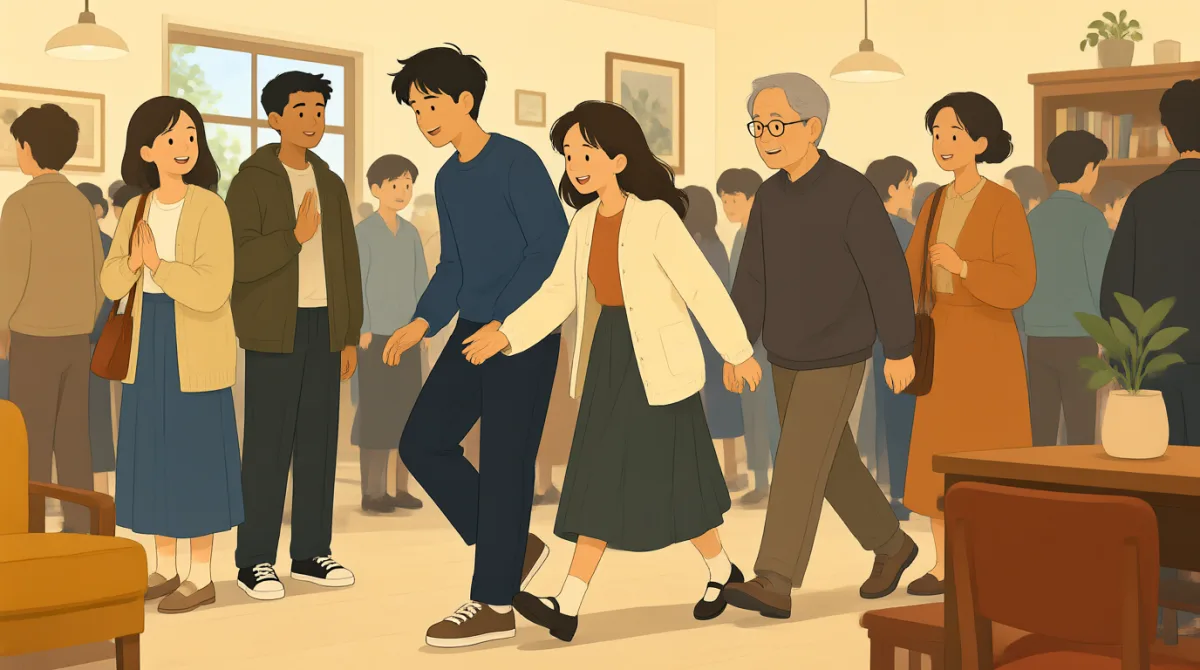

Oh, excuse me! I am so sorry. Did I step on your foot?
อุ๊ย ขอโทษนะ เราขอโทษจริง ๆ เผลอเหยียบเท้าเธอหรือเปล่า?

Ouch! Just a little. It's okay, crowded place.
โอ๊ย นิดหน่อย ไม่เป็นไรหรอก ที่นี่คนเยอะน่ะ
I really apologize. I wasn't looking where I was going.
เราขอโทษจริง ๆ เราไม่ได้มองทางตอนเดินน่ะ
No worries at all. My fault for standing so close too.
ไม่เป็นไรเลย เราก็ยืนใกล้เกินไปเหมือนกัน เป็นความผิดเราเอง
Are you sure you're alright? I hope I didn't hurt you.
แน่ใจนะว่าไม่เป็นไร เราหวังว่าจะไม่ได้ทำเธอเจ็บนะ
Yeah, I'm fine. Thanks for asking!
อื้ม เราไม่เป็นไร ขอบคุณที่ถามนะ!
คำศัพท์9
- excuse meขอโทษนะ
A polite way to get attention or apologize for a small mistake, like bumping into someone. Use it immediately after an accident.
เป็นคำสุภาพที่ใช้เรียกความสนใจหรือขอโทษเมื่อทำพลาดเล็กน้อย เช่น เดินชนใคร ใช้พูดทันทีหลังเกิดเหตุได้เลย
- sorryขอโทษ
A common word to express apology for something you did wrong. It's simple and used in everyday situations.
คำที่ใช้กันทั่วไปเพื่อขอโทษเมื่อเราทำอะไรผิด เป็นคำง่าย ๆ ที่ใช้ได้ในชีวิตประจำวัน
- step onเหยียบ
To accidentally put your foot on something or someone, like a person's foot. Useful for describing minor accidents.
หมายถึงวางเท้าลงบนสิ่งของหรือคนโดยไม่ตั้งใจ เช่น เท้าของใครสักคน ใช้พูดถึงอุบัติเหตุเล็ก ๆ ได้
- ouchโอ๊ย
An exclamation used when you feel sudden pain, like when someone steps on your foot. It's informal and natural.
คำอุทานเมื่อรู้สึกเจ็บขึ้นมาทันที เช่น ตอนมีคนเหยียบเท้า เป็นคำไม่เป็นทางการที่ฟังดูเป็นธรรมชาติ
- crowdedพลุกพล่าน
Describes a place with many people close together, making accidents more likely. Common in busy areas like markets or subways.
ใช้บรรยายสถานที่ที่มีคนจำนวนมากอยู่ใกล้ชิดกัน ทำให้เกิดอุบัติเหตุได้ง่าย มักใช้กับสถานที่วุ่นวายอย่างตลาดหรือรถไฟใต้ดิน
- apologizeกล่าวขอโทษ
To say sorry in a more formal way. Use it when you want to show you feel bad about a mistake.
หมายถึงพูดขอโทษในแบบที่เป็นทางการขึ้น ใช้เมื่อต้องการแสดงว่ารู้สึกไม่ดีที่ทำพลาด
- no worriesไม่เป็นไร
A casual way to say it's okay or no problem. Helps to reassure someone after they apologize.
เป็นคำพูดสบาย ๆ ที่หมายถึงไม่เป็นไรหรือไม่มีปัญหา ใช้ปลอบใจอีกฝ่ายหลังจากเขาขอโทษ
- alrightไม่เป็นไร
Means okay or fine, often used to check if someone is not hurt. It's a friendly way to show concern.
หมายถึงโอเคหรือสบายดี มักใช้ถามว่าอีกฝ่ายไม่ได้รับบาดเจ็บใช่ไหม เป็นวิธีแสดงความห่วงใยอย่างเป็นกันเอง
- hurtทำให้เจ็บ
To cause pain or injury. In apologies, ask if you hurt someone to show you care about their well-being.
หมายถึงทำให้เกิดความเจ็บปวดหรือบาดเจ็บ เวลาขอโทษ การถามว่าทำให้อีกฝ่ายเจ็บไหมแสดงว่าเราเป็นห่วงเขา
ประโยคสำคัญ6
- 1
Oh, excuse me! I am so sorry. Did I step on your foot?
อุ๊ย ขอโทษนะ เราขอโทษจริง ๆ เผลอเหยียบเท้าเธอหรือเปล่า?
This is a quick apology after a small accident. 'Excuse me' starts politely, 'I am so sorry' expresses regret, and the question checks what happened. Use it right away in crowded places to be polite.
ประโยคนี้ใช้ขอโทษอย่างรวดเร็วหลังเกิดอุบัติเหตุเล็กน้อย 'Excuse me' ใช้เริ่มพูดอย่างสุภาพ ส่วน 'I am so sorry' แสดงความเสียใจ และคำถามก็ช่วยตรวจสอบว่าเกิดอะไรขึ้น ใช้ได้ทันทีในที่คนพลุกพล่านเพื่อแสดงความสุภาพ
- 2
Ouch! Just a little. It's okay, crowded place.
โอ๊ย นิดหน่อย ไม่เป็นไรหรอก ที่นี่คนเยอะน่ะ
An expression of mild pain followed by reassurance. 'Ouch' shows pain, 'just a little' downplays it, and explaining the reason (crowded) makes it natural. Useful for responding without making a big deal.
เป็นการแสดงว่าเจ็บนิดหน่อยแล้วตามด้วยการปลอบอีกฝ่าย 'Ouch' แสดงความเจ็บ ส่วน 'just a little' ช่วยบอกว่าเจ็บเพียงเล็กน้อย และการบอกเหตุผลว่า 'crowded' ทำให้คำพูดฟังเป็นธรรมชาติ ใช้ตอบได้โดยไม่ทำให้เรื่องใหญ่
- 3
I really apologize. I wasn't looking where I was going.
เราขอโทษจริง ๆ เราไม่ได้มองทางตอนเดินน่ะ
A sincere apology with an explanation. 'Really apologize' adds emphasis, and the past continuous tense 'wasn't looking' describes the mistake. Good for showing you take responsibility.
เป็นการขอโทษอย่างจริงใจพร้อมอธิบายเหตุผล 'Really apologize' ช่วยเน้นว่าขอโทษจริง ๆ ส่วน 'wasn't looking' เป็นรูปอดีตกำลังกระทำที่อธิบายสิ่งที่พลาดไป ใช้เพื่อแสดงว่าเรายอมรับผิด
- 4
No worries at all. My fault for standing so close too.
ไม่เป็นไรเลย เราก็ยืนใกล้เกินไปเหมือนกัน เป็นความผิดเราเอง
A forgiving response. 'No worries at all' means it's fine, and 'my fault too' shares blame politely. Use this to end the conversation positively and avoid awkwardness.
เป็นคำตอบที่ให้อภัยอีกฝ่าย 'No worries at all' หมายถึงไม่เป็นไรเลย ส่วน 'my fault too' คือการยอมรับว่าตัวเองก็มีส่วนผิดอย่างสุภาพ ใช้จบบทสนทนาในแง่ดีและลดความกระอักกระอ่วนได้
- 5
Are you sure you're alright? I hope I didn't hurt you.
แน่ใจนะว่าไม่เป็นไร เราหวังว่าจะไม่ได้ทำเธอเจ็บนะ
Shows concern after apologizing. The question uses 'are you sure' for confirmation, and 'I hope' expresses a wish. It's caring and uses present tense for current state; use to check on the other person.
แสดงความห่วงใยหลังจากขอโทษ คำถามใช้ 'are you sure' เพื่อยืนยันให้แน่ใจ และ 'I hope' ใช้บอกความหวัง ฟังดูใส่ใจและใช้กาลปัจจุบันพูดถึงอาการตอนนี้ ใช้ถามไถ่อีกฝ่ายได้
- 6
Yeah, I'm fine. Thanks for asking!
อื้ม เราไม่เป็นไร ขอบคุณที่ถามนะ!
A positive reply to concern. 'Yeah' is casual for 'yes', 'I'm fine' states well-being, and 'thanks for asking' shows appreciation. Simple structure; use to reassure and be polite.
เป็นคำตอบเชิงบวกเมื่ออีกฝ่ายแสดงความเป็นห่วง 'Yeah' เป็นคำตอบแบบสบาย ๆ แทน 'yes' ส่วน 'I'm fine' บอกว่าสบายดี และ 'thanks for asking' แสดงความขอบคุณ โครงสร้างเรียบง่าย ใช้ปลอบให้อีกฝ่ายสบายใจและแสดงความสุภาพได้