Asking in a Restaurant/Cafe
การถามทางไปห้องน้ำในร้านอาหาร/คาเฟ่
A patron is dining or having coffee and needs to use the restroom. They ask a waiter/waitress or barista for the location.
ลูกค้ากำลังรับประทานอาหารหรือดื่มกาแฟ และต้องการใช้ห้องน้ำ จึงถามพนักงานเสิร์ฟหรือบาริสตาว่าห้องน้ำอยู่ที่ไหน
บทสนทนา4
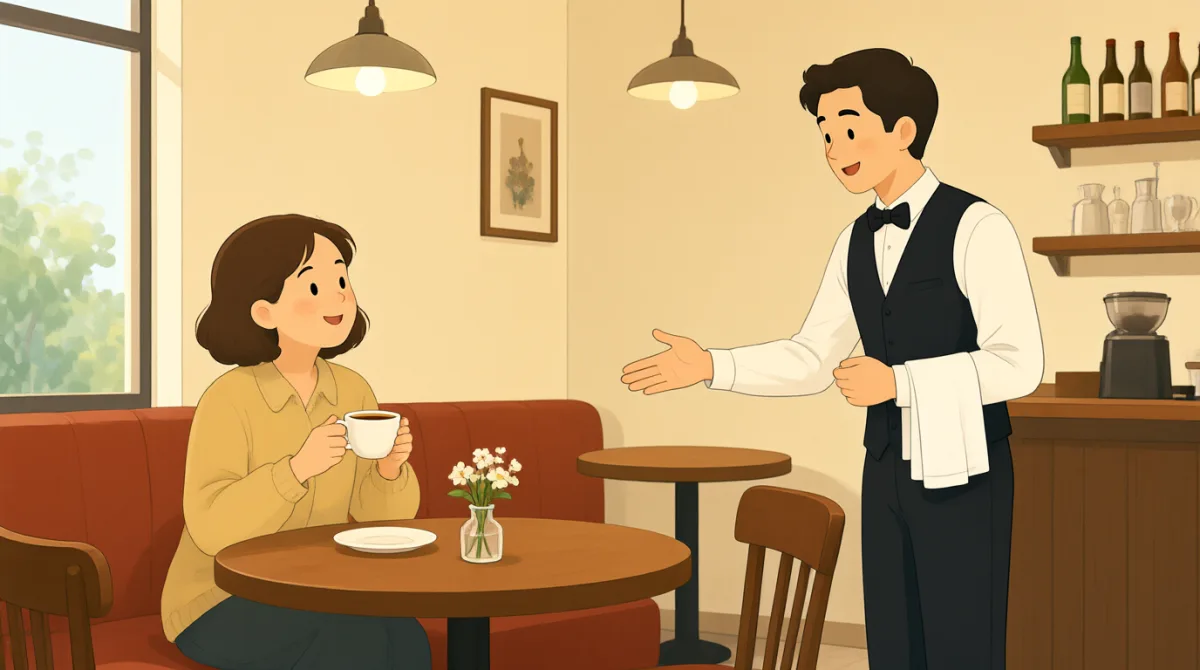

Excuse me, could you tell me where the restroom is?
ขอโทษนะครับ รบกวนบอกได้ไหมครับว่าห้องน้ำอยู่ตรงไหน

Certainly! The restroom is just past the counter, to your left. You'll see a sign.
ได้เลยค่ะ ห้องน้ำอยู่เลยเคาน์เตอร์ไปนิดเดียวทางซ้ายมือค่ะ จะเห็นป้ายอยู่ค่ะ
Past the counter and to the left, got it. Thank you!
เลยเคาน์เตอร์ไปทางซ้าย เข้าใจแล้วครับ ขอบคุณครับ
You're welcome! Let me know if you need anything else.
ยินดีค่ะ ถ้าต้องการอะไรเพิ่มเติมก็บอกได้นะคะ
คำศัพท์6
- restroomห้องน้ำ
A polite word for bathroom or toilet, commonly used in American English in public places like restaurants.
คำสุภาพที่ใช้เรียกห้องน้ำ มักใช้ในภาษาอังกฤษแบบอเมริกันเมื่อพูดถึงสถานที่สาธารณะ เช่น ร้านอาหาร
- counterเคาน์เตอร์
A long table or surface in a restaurant or cafe where customers order or pay, like the bar area.
โต๊ะหรือพื้นผิวยาวในร้านอาหารหรือคาเฟ่ที่ลูกค้าสั่งอาหารหรือชำระเงิน เช่น บริเวณบาร์
- pastเลยไป
Means beyond or after something in location, like going further than a point; here, it means 'beyond the counter'.
หมายถึงอยู่ถัดจากหรือเลยสถานที่หนึ่งไป เช่น เดินต่อไปให้พ้นจุดนั้น ในที่นี้หมายถึง “เลยเคาน์เตอร์ไป”
- leftซ้าย
The direction on your left side when facing forward; used to give directions clearly.
ทิศทางด้านซ้ายมือเมื่อหันหน้าไปข้างหน้า ใช้บอกทางให้ชัดเจน
- signป้าย
A notice or symbol that shows information, like a restroom sign with a picture of a person.
ข้อความหรือสัญลักษณ์ที่แสดงข้อมูล เช่น ป้ายห้องน้ำที่มีรูปคน
- certainlyได้เลย
A polite way to say 'yes' or 'of course' when agreeing to help someone.
คำสุภาพที่ใช้ตอบตกลงหรือแสดงความเต็มใจเมื่อมีคนขอให้ช่วย
ประโยคสำคัญ4
- 1
Excuse me, could you tell me where the restroom is?
ขอโทษนะครับ รบกวนบอกได้ไหมครับว่าห้องน้ำอยู่ตรงไหน
This is a polite way to ask for directions or information. 'Excuse me' gets attention, and 'could you tell me' is a polite request using 'could' for possibility. Useful when interrupting someone nicely in public.
ประโยคนี้ใช้ถามทางหรือขอข้อมูลอย่างสุภาพ “Excuse me” ใช้เรียกความสนใจ ส่วน “could you tell me” เป็นคำขอร้องอย่างสุภาพ โดยใช้ “could” เพื่อสื่อถึงความเป็นไปได้ เหมาะเวลาต้องการขัดจังหวะใครสักคนในที่สาธารณะอย่างสุภาพ
- 2
Certainly! The restroom is just past the counter, to your left. You'll see a sign.
ได้เลยค่ะ ห้องน้ำอยู่เลยเคาน์เตอร์ไปนิดเดียวทางซ้ายมือค่ะ จะเห็นป้ายอยู่ค่ะ
A helpful response giving directions. 'Certainly' means 'yes, happily.' 'Just past' means a short distance beyond, and 'to your left' specifies direction. 'You'll see' predicts what the listener will notice. Great for service workers to use clearly.
คำตอบนี้บอกทางอย่างเป็นมิตร “Certainly” หมายถึง “ได้เลย” หรือ “ยินดีค่ะ” ส่วน “just past” หมายถึงเลยไปอีกนิด และ “to your left” บอกทิศทางว่าอยู่ทางซ้ายมือ “You'll see” ใช้คาดการณ์ว่าสิ่งที่พูดถึงจะมองเห็นได้ พนักงานบริการใช้บอกทางให้ชัดเจนได้ดี
- 3
Past the counter and to the left, got it. Thank you!
เลยเคาน์เตอร์ไปทางซ้าย เข้าใจแล้วครับ ขอบคุณครับ
This repeats directions to confirm understanding. 'Got it' is informal for 'I understand.' 'Thank you' shows gratitude. Useful for learners to repeat back and thank, making conversations smoother.
ประโยคนี้ทวนเส้นทางเพื่อยืนยันว่าเข้าใจแล้ว “Got it” เป็นคำไม่เป็นทางการที่หมายถึง “เข้าใจแล้ว” ส่วน “Thank you” ใช้แสดงความขอบคุณ การทวนเส้นทางแล้วกล่าวขอบคุณช่วยให้บทสนทนาราบรื่นขึ้น
- 4
You're welcome! Let me know if you need anything else.
ยินดีค่ะ ถ้าต้องการอะไรเพิ่มเติมก็บอกได้นะคะ
A standard polite reply to 'thank you.' 'You're welcome' means 'no problem.' 'Let me know' invites more questions using the imperative 'let' for permission. Essential in customer service to offer more help.
เป็นคำตอบสุภาพที่ใช้หลังได้รับคำขอบคุณ “You're welcome” หมายถึง “ยินดี” หรือ “ไม่เป็นไร” ส่วน “Let me know” เป็นการเชื้อเชิญให้ถามเพิ่มเติม โดยใช้ “let” ในรูปประโยคคำสั่งเพื่อแสดงการอนุญาต พนักงานบริการมักใช้ประโยคนี้เพื่อเสนอตัวช่วยเหลือเพิ่มเติม