Asking a Pedestrian Outdoors
ถามคนเดินถนนเกี่ยวกับห้องน้ำ
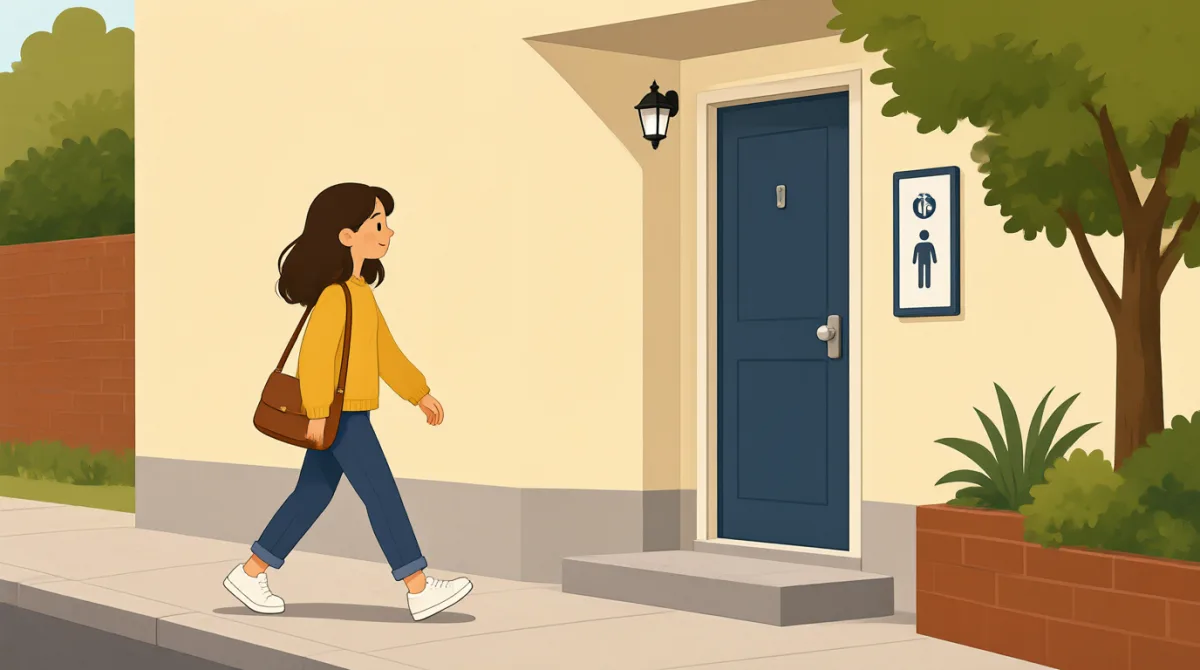
A person is walking outdoors in an unfamiliar area and needs to find a public restroom. They ask a local pedestrian for help.
คนคนหนึ่งกำลังเดินอยู่กลางแจ้งในย่านที่ไม่คุ้นเคยและต้องการหาห้องน้ำสาธารณะ จึงขอความช่วยเหลือจากคนเดินถนนในพื้นที่
บทสนทนา6

Excuse me, I'm a bit lost and really need to find a restroom. Do you know if there's one nearby?
ขอโทษนะคะ ฉันหลงทางนิดหน่อย แล้วก็ต้องหาห้องน้ำจริง ๆ คุณพอจะทราบไหมคะว่ามีห้องน้ำอยู่ใกล้ ๆ ไหม

Sure, no problem. The closest public restroom is in the park, just a couple of blocks down that way.
ได้เลย ไม่มีปัญหา ห้องน้ำสาธารณะที่ใกล้ที่สุดอยู่ในสวนสาธารณะ เดินตรงไปทางนั้นอีกแค่สองสามช่วงตึกเอง
In the park? Okay. Is it easy to spot, or is it tucked away somewhere?
ในสวนสาธารณะเหรอคะ เข้าใจแล้วค่ะ แล้วหาง่ายไหมคะ หรือว่าอยู่ในมุมที่สังเกตยาก
It's pretty easy. Once you get to the park entrance, you'll see a small building to your left. That's it.
หาง่ายครับ พอถึงทางเข้าสวนสาธารณะ คุณก็จะเห็นอาคารหลังเล็ก ๆ อยู่ทางซ้ายมือ นั่นแหละครับ
Got it. So, just straight down this street, and then look for the park entrance. Perfect. Thank you so much!
เข้าใจแล้วค่ะ งั้นเดินตรงไปตามถนนเส้นนี้ แล้วมองหาทางเข้าสวนสาธารณะ ใช่เลยค่ะ ขอบคุณมากนะคะ
You're welcome! Hope you find it quickly.
ยินดีครับ ขอให้หาเจอเร็ว ๆ นะครับ
คำศัพท์7
- Excuse meขอโทษนะคะ/ครับ
A polite way to get someone's attention when you need to ask a question, like starting a conversation with a stranger.
เป็นคำสุภาพที่ใช้เรียกความสนใจของใครสักคนก่อนถามคำถาม เช่น เวลาจะเริ่มคุยกับคนแปลกหน้า
- lostหลงทาง
Means you don't know where you are or how to get to a place; useful when asking for directions in new areas.
หมายถึงไม่รู้ว่าตัวเองอยู่ที่ไหนหรือจะไปยังสถานที่หนึ่งได้อย่างไร เหมาะกับการใช้ถามทางในย่านที่ไม่คุ้นเคย
- restroomห้องน้ำ
Another word for bathroom or toilet, especially in American English; polite term used in public places.
อีกคำหนึ่งที่ใช้เรียกห้องน้ำหรือส้วม โดยเฉพาะในภาษาอังกฤษแบบอเมริกัน เป็นคำสุภาพที่ใช้ในสถานที่สาธารณะ
- nearbyใกล้ ๆ
Means close by or not far away; helps when asking about locations that are convenient.
หมายถึงอยู่ไม่ไกลหรืออยู่แถวนี้ ใช้ถามถึงสถานที่ที่เดินทางไปได้สะดวก
- public restroomห้องน้ำสาธารณะ
A bathroom available for anyone to use, like in parks or malls; important for travelers in public spaces.
ห้องน้ำที่ใคร ๆ ก็เข้าใช้ได้ เช่น ในสวนสาธารณะหรือห้างสรรพสินค้า เป็นสิ่งสำคัญที่นักเดินทางควรรู้จักในพื้นที่สาธารณะ
- tucked awayซ่อนอยู่ / อยู่ในมุมที่สังเกตยาก
Means hidden or not easily seen; describes something in a quiet or less obvious spot.
หมายถึงถูกบังหรือมองเห็นได้ยาก ใช้บรรยายสิ่งที่อยู่ในที่เงียบ ๆ หรือไม่โดดเด่น
- entranceทางเข้า
The door or gate where you enter a place, like a park; key for giving or following directions.
ประตูหรือทางที่ใช้เข้าไปในสถานที่หนึ่ง เช่น สวนสาธารณะ เป็นคำสำคัญในการบอกทางหรือทำตามคำบอกทาง
ประโยคสำคัญ6
- 1
Excuse me, I'm a bit lost and really need to find a restroom. Do you know if there's one nearby?
ขอโทษนะคะ ฉันหลงทางนิดหน่อย แล้วก็ต้องหาห้องน้ำจริง ๆ คุณพอจะทราบไหมคะว่ามีห้องน้ำอยู่ใกล้ ๆ ไหม
This is a polite way to ask for directions. 'Excuse me' gets attention, 'a bit lost' softens the request, and the question uses 'Do you know if...' for indirect politeness. Useful for starting conversations when needing help urgently.
ประโยคนี้ใช้ถามทางอย่างสุภาพ “Excuse me” ใช้เรียกความสนใจ ส่วน “a bit lost” ช่วยทำให้คำขอฟังดูนุ่มนวลขึ้น และคำถามใช้ “Do you know if...” เพื่อถามอย่างอ้อม ๆ และสุภาพ เหมาะสำหรับเริ่มคุยเมื่อจำเป็นต้องขอความช่วยเหลืออย่างเร่งด่วน
- 2
Sure, no problem. The closest public restroom is in the park, just a couple of blocks down that way.
ได้เลย ไม่มีปัญหา ห้องน้ำสาธารณะที่ใกล้ที่สุดอยู่ในสวนสาธารณะ เดินตรงไปทางนั้นอีกแค่สองสามช่วงตึกเอง
A helpful response to a direction request. 'Sure, no problem' shows willingness, and 'just a couple of blocks down that way' gives simple directions using distance and direction. Great for everyday navigation talks.
เป็นคำตอบที่แสดงความเต็มใจช่วยบอกทาง “Sure, no problem” แสดงว่าพร้อมช่วย ส่วน “just a couple of blocks down that way” บอกระยะทางและทิศทางอย่างง่าย ๆ เหมาะกับการถามทางในชีวิตประจำวัน
- 3
In the park? Okay. Is it easy to spot, or is it tucked away somewhere?
ในสวนสาธารณะเหรอคะ เข้าใจแล้วค่ะ แล้วหาง่ายไหมคะ หรือว่าอยู่ในมุมที่สังเกตยาก
This confirms information and asks for more details. 'Okay' acknowledges, and the question contrasts 'easy to spot' vs. 'tucked away' using 'or' for alternatives. Useful to clarify locations and avoid confusion.
ประโยคนี้ใช้ยืนยันข้อมูลและถามรายละเอียดเพิ่มเติม “Okay” แสดงว่ารับทราบแล้ว ส่วนคำถามเปรียบเทียบ “easy to spot” กับ “tucked away” โดยใช้ “or” เพื่อเสนอทางเลือก เหมาะสำหรับถามให้ชัดเจนเพื่อไม่ให้เข้าใจผิดเกี่ยวกับตำแหน่ง
- 4
It's pretty easy. Once you get to the park entrance, you'll see a small building to your left. That's it.
หาง่ายครับ พอถึงทางเข้าสวนสาธารณะ คุณก็จะเห็นอาคารหลังเล็ก ๆ อยู่ทางซ้ายมือ นั่นแหละครับ
Provides clear instructions. 'Once you get to...' uses a time clause for sequence, and 'to your left' specifies position. 'That's it' means that's the place. Ideal for giving step-by-step directions.
ประโยคนี้บอกทางอย่างชัดเจน “Once you get to...” ใช้บอกลำดับเหตุการณ์ ส่วน “to your left” ระบุตำแหน่งทางซ้ายมือ “That's it” หมายถึงตรงนั้นแหละ เหมาะสำหรับบอกทางเป็นขั้นตอน
- 5
Got it. So, just straight down this street, and then look for the park entrance. Perfect. Thank you so much!
เข้าใจแล้วค่ะ งั้นเดินตรงไปตามถนนเส้นนี้ แล้วมองหาทางเข้าสวนสาธารณะ ใช่เลยค่ะ ขอบคุณมากนะคะ
Shows understanding and repeats for confirmation. 'Got it' means I understand, 'just straight down' simplifies directions with 'and then' for steps. Ends with thanks. Helpful for confirming and expressing gratitude.
ประโยคนี้แสดงว่าเข้าใจและทวนคำบอกทางเพื่อยืนยัน “Got it” หมายถึงเข้าใจแล้ว ส่วน “just straight down” ช่วยย่อคำบอกทางให้ง่ายขึ้น และ “and then” ใช้บอกขั้นตอนถัดไป ท้ายประโยคกล่าวขอบคุณ เหมาะสำหรับยืนยันความเข้าใจและแสดงความขอบคุณ
- 6
You're welcome! Hope you find it quickly.
ยินดีครับ ขอให้หาเจอเร็ว ๆ นะครับ
A standard polite reply to thanks. 'You're welcome' responds to gratitude, and 'Hope you...' expresses a wish. Use this to end helpful conversations positively.
เป็นคำตอบสุภาพมาตรฐานเมื่อมีคนกล่าวขอบคุณ “You're welcome” ใช้ตอบรับคำขอบคุณ ส่วน “Hope you...” ใช้แสดงความปรารถนาดี ใช้ปิดบทสนทนาที่ได้ช่วยเหลือกันอย่างเป็นมิตร