Interpreting Directions Given
ทำความเข้าใจเส้นทางที่บอก
After asking for the restroom location, the person receives verbal directions and needs to understand them, potentially asking for clarification.
หลังจากถามว่าห้องน้ำอยู่ที่ไหน ผู้ถามได้รับคำบอกทางด้วยวาจาและต้องทำความเข้าใจ อาจต้องถามเพื่อขอคำอธิบายเพิ่มเติม
บทสนทนา6
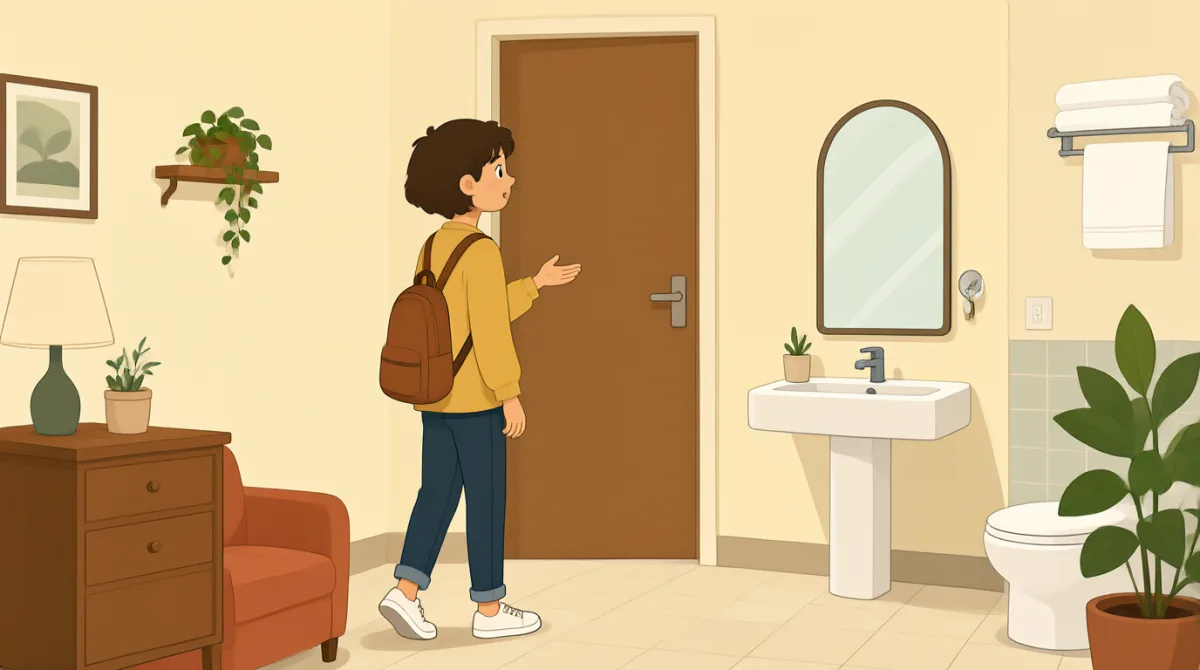

Excuse me, I'm looking for the restroom. Could you tell me where it is?
ขอโทษนะครับ ผมกำลังหาห้องน้ำอยู่ ช่วยบอกได้ไหมครับว่าอยู่ตรงไหน

Certainly! Go straight down this hallway, past the reception desk, and then make a left. It'll be on your right.
ได้เลยค่ะ! เดินตรงไปตามโถงทางเดินนี้ ผ่านเคาน์เตอร์ประชาสัมพันธ์ไป แล้วเลี้ยวซ้ายค่ะ ห้องน้ำจะอยู่ทางขวามือ
Okay, so straight down the hallway, past the reception, and then a left... Got it. Is it far?
โอเคครับ เดินตรงไปตามโถงทางเดิน ผ่านเคาน์เตอร์ประชาสัมพันธ์ แล้วเลี้ยวซ้าย... เข้าใจแล้วครับ ไกลไหมครับ
Not at all, it's just a short walk, maybe thirty seconds or so from here. You can't miss it.
ไม่ไกลเลยค่ะ เดินแป๊บเดียว อาจจะประมาณสามสิบวินาทีจากตรงนี้ หาไม่ยากแน่นอนค่ะ
Great, thank you so much for the clear directions!
ดีเลยครับ ขอบคุณมากนะครับที่บอกทางชัดเจน!
You're welcome! Have a good day.
ยินดีค่ะ ขอให้เป็นวันที่ดีนะคะ
คำศัพท์7
- restroomห้องน้ำ
A polite word for a bathroom or toilet, commonly used in public places like hotels or offices in American English.
คำสุภาพที่ใช้เรียกห้องน้ำหรือห้องสุขา มักใช้ในสถานที่สาธารณะ เช่น โรงแรมหรือสำนักงานในภาษาอังกฤษแบบอเมริกัน
- hallwayโถงทางเดิน
A long passage or corridor inside a building that connects different rooms or areas.
ทางเดินยาวภายในอาคารที่เชื่อมระหว่างห้องหรือพื้นที่ต่าง ๆ
- reception deskเคาน์เตอร์ประชาสัมพันธ์
The front counter in a hotel, office, or building where visitors check in or get information.
เคาน์เตอร์ด้านหน้าของโรงแรม สำนักงาน หรืออาคาร ที่ผู้มาติดต่อเช็กอินหรือขอข้อมูล
- make a leftเลี้ยวซ้าย
To turn left when walking or driving; a common phrase in giving directions.
เปลี่ยนทิศทางไปทางซ้ายขณะเดินหรือขับรถ เป็นวลีที่ใช้บ่อยเวลาบอกทาง
- on your rightอยู่ทางขวามือ
Located to the right side from your perspective; used to describe the position of something.
ตั้งอยู่ทางด้านขวาเมื่อมองจากตำแหน่งของคุณ ใช้บอกตำแหน่งของสิ่งต่าง ๆ
- got itเข้าใจแล้ว
An informal way to say 'I understand' or 'Okay, clear'; useful in conversations to confirm comprehension.
วิธีพูดแบบไม่เป็นทางการว่า “เข้าใจแล้ว” หรือ “โอเค ชัดเจนแล้ว” ใช้ยืนยันว่าเข้าใจสิ่งที่อีกฝ่ายพูดในการสนทนาได้
- can't miss itหาไม่ยาก
Means it's very easy to find and you won't overlook it; reassures the listener when giving directions.
หมายความว่าหาเจอได้ง่ายและจะไม่มองข้าม ใช้พูดให้ผู้ฟังสบายใจเวลาบอกทาง
ประโยคสำคัญ6
- 1
Excuse me, I'm looking for the restroom. Could you tell me where it is?
ขอโทษนะครับ ผมกำลังหาห้องน้ำอยู่ ช่วยบอกได้ไหมครับว่าอยู่ตรงไหน
This is a polite way to ask for directions to the bathroom. Use 'Excuse me' to get attention politely, and 'Could you tell me' makes the request courteous. Great for starting conversations in public places.
ประโยคนี้ใช้ถามทางไปห้องน้ำอย่างสุภาพ ใช้ 'Excuse me' เพื่อเรียกความสนใจอย่างสุภาพ และ 'Could you tell me' ช่วยให้คำขอฟังดูสุภาพ เหมาะสำหรับเริ่มบทสนทนาในที่สาธารณะ
- 2
Go straight down this hallway, past the reception desk, and then make a left.
เดินตรงไปตามโถงทางเดินนี้ ผ่านเคาน์เตอร์ประชาสัมพันธ์ไป แล้วเลี้ยวซ้าย
A common pattern for giving directions: use action verbs like 'go straight,' 'past,' and 'make a left' to describe steps clearly. Useful when helping someone navigate a building.
นี่เป็นรูปแบบการบอกทางที่ใช้กันทั่วไป โดยใช้คำที่บอกการกระทำอย่าง 'go straight,' 'past,' และ 'make a left' เพื่ออธิบายแต่ละขั้นตอนให้ชัดเจน มีประโยชน์เวลาช่วยบอกทางภายในอาคาร
- 3
Okay, so straight down the hallway, past the reception, and then a left... Got it.
โอเคครับ เดินตรงไปตามโถงทางเดิน ผ่านเคาน์เตอร์ประชาสัมพันธ์ แล้วเลี้ยวซ้าย... เข้าใจแล้วครับ
This repeats the directions to confirm understanding, using 'so' to summarize. 'Got it' is informal confirmation. Practice this to show active listening and avoid mistakes.
เป็นการทวนเส้นทางเพื่อยืนยันว่าเข้าใจ โดยใช้ 'so' เพื่อสรุป และ 'Got it' เป็นคำยืนยันความเข้าใจแบบไม่เป็นทางการ ลองฝึกพูดแบบนี้เพื่อแสดงว่าตั้งใจฟังและช่วยป้องกันการเข้าใจผิด
- 4
Is it far?
ไกลไหมครับ
A simple question to ask about distance after getting directions. 'Far' means a long way; use this in travel or public situations to plan your time.
คำถามสั้น ๆ เพื่อถามถึงระยะทางหลังจากได้รับคำบอกทาง 'Far' หมายถึงอยู่ไกล ใช้ถามแบบนี้ได้เวลาเดินทางหรืออยู่ในที่สาธารณะเพื่อวางแผนเวลา
- 5
Not at all, it's just a short walk, maybe thirty seconds or so from here.
ไม่ไกลเลยค่ะ เดินแป๊บเดียว อาจจะประมาณสามสิบวินาทีจากตรงนี้
Responds to a distance question politely with 'Not at all' (meaning no, it's not far). 'Or so' softens estimates. Helpful for reassuring someone when giving info.
เป็นคำตอบสุภาพเมื่อมีคนถามถึงระยะทาง โดยใช้ 'Not at all' (หมายถึง ไม่ไกลเลย) ส่วน 'or so' ช่วยให้การประมาณฟังดูไม่ตายตัว ใช้พูดให้ใครสบายใจเวลาบอกข้อมูลได้
- 6
Great, thank you so much for the clear directions!
ดีเลยครับ ขอบคุณมากนะครับที่บอกทางชัดเจน!
Expresses thanks after receiving help, using 'so much' for emphasis and 'clear' to compliment. Use this to end interactions politely and build positive rapport.
เป็นการกล่าวขอบคุณหลังได้รับความช่วยเหลือ โดยใช้ 'so much' เพื่อเน้นความรู้สึกขอบคุณ และใช้ 'clear' เพื่อชมว่าบอกทางได้ชัดเจน ลองใช้ประโยคนี้เพื่อจบบทสนทนาอย่างสุภาพและสร้างความประทับใจที่ดี