Addressing an Unassigned Chore
พูดถึงงานบ้านที่ยังไม่มีคนรับผิดชอบ
A chore that wasn't initially assigned or discussed becomes apparent (e.g., cleaning the microwave, taking out recycling), leading to a conversation about who should take responsibility.
มีงานบ้านที่ตอนแรกไม่ได้แบ่งหรือพูดถึงไว้ปรากฏขึ้นมา เช่น ทำความสะอาดไมโครเวฟหรือนำขยะรีไซเคิลไปทิ้ง จึงเกิดการพูดคุยกันว่าใครควรรับผิดชอบ
บทสนทนา9
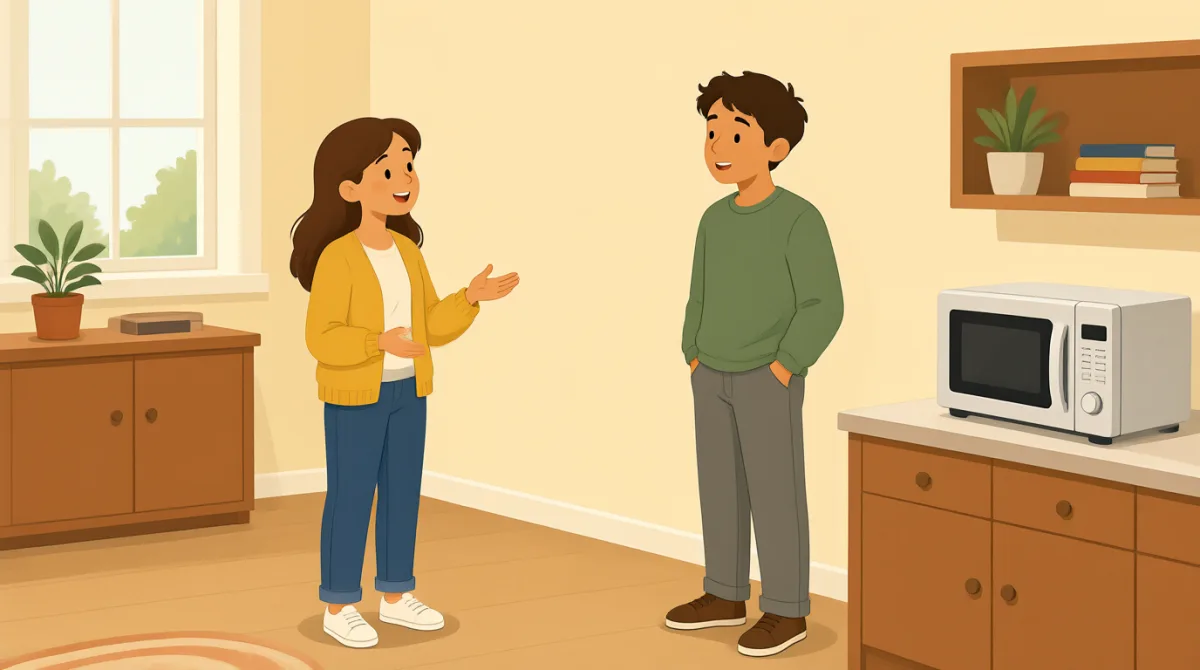

Hey Leo, have you noticed the recycling bin is overflowing? It really needs to be taken out.
เฮ้ ลีโอ เห็นไหมว่าถังรีไซเคิลล้นแล้ว? ต้องเอาไปทิ้งจริง ๆ นะ

Oh, wow, I hadn't even looked. You're right, it's pretty full. Who usually takes it out?
อ้าว จริงด้วย ฉันไม่ทันได้สังเกตเลย เธอพูดถูก มันเต็มมากแล้ว ปกติใครเป็นคนเอาไปทิ้งเหรอ?
That's the thing, I don't think we ever explicitly assigned it. It just kind of… happens. But it's been building up for a while now.
นั่นแหละปัญหา ฉันว่าเราไม่เคยแบ่งกันชัด ๆ เลยว่าใครต้องทำ มันก็เหมือน…ทำกันไปเอง แต่ตอนนี้มันกองมาสักพักแล้วนะ
You're right, it's one of those unassigned chores. Well, I can grab it this time if you want. It's on my way out anyway.
เธอพูดถูก เป็นหนึ่งในงานบ้านที่ยังไม่มีคนรับผิดชอบสินะ งั้นรอบนี้ฉันเอาไปทิ้งให้ก็ได้ถ้าเธออยากให้ช่วย ยังไงฉันก็ต้องออกไปอยู่แล้ว
Oh, really? That would be awesome, thanks! And maybe we should add it to our chore chart or rotation so we don't forget it again?
จริงเหรอ? ดีมากเลย ขอบใจนะ! แล้วเราน่าจะเพิ่มงานนี้ลงในตารางงานบ้านหรือจัดเวรหมุนเวียนกันไหม จะได้ไม่ลืมอีก
Good idea. We can rotate it weekly with the regular trash, or just assign it to whoever's turn it is with the kitchen cleaning. What do you think?
ดีเลย เราจะหมุนเวรกันทำทุกสัปดาห์พร้อมกับขยะทั่วไปก็ได้ หรือมอบหมายให้คนที่ถึงคิวทำความสะอาดครัว เธอคิดว่าไง?
Assigning it to whoever cleans the kitchen sounds more logical. That way, it’s always getting done when the kitchen is tidied up. How about that for next week?
ให้คนที่ทำความสะอาดครัวเป็นคนจัดการฟังดูมีเหตุผลกว่า แบบนี้ก็จะทำเสร็จทุกครั้งที่เก็บครัวเรียบร้อย แล้วเริ่มอาทิตย์หน้าเลยดีไหม?
Sounds good to me. I'll take it out now, and we'll officially add it to the kitchen chore moving forward. Thanks for pointing it out!
ฉันก็ว่าโอเค เดี๋ยวฉันเอาไปทิ้งตอนนี้เลย แล้วต่อจากนี้เราจะเพิ่มงานนี้เป็นงานครัวอย่างเป็นทางการ ขอบใจที่ทักนะ!
No problem! And thanks again for taking care of it this time.
ไม่เป็นไร! แล้วก็ขอบใจอีกทีนะที่ช่วยจัดการให้รอบนี้
คำศัพท์8
- overflowingล้น
When a container is so full that things start spilling over the edges, like a trash bin that's too full.
ใช้เมื่อภาชนะเต็มจนของเริ่มล้นออกมาจากขอบ เช่น ถังขยะที่ใส่จนเต็มเกินไป
- recycling binถังรีไซเคิล
A container used to collect items like paper, plastic, or glass that can be recycled instead of thrown away as regular trash.
ภาชนะสำหรับรวบรวมของอย่างกระดาษ พลาสติก หรือแก้วที่นำไปรีไซเคิลได้ แทนที่จะทิ้งเป็นขยะทั่วไป
- unassignedที่ยังไม่ได้มอบหมาย
Something that hasn't been given to a specific person to do, like a task no one is responsible for yet.
ใช้พูดถึงสิ่งที่ยังไม่ได้มอบหมายให้ใครทำโดยเฉพาะ เช่น งานที่ยังไม่มีใครรับผิดชอบ
- explicitlyอย่างชัดเจน
Done in a clear and direct way, without any confusion, often used when talking about instructions or assignments.
ทำหรือพูดอย่างชัดเจนตรงไปตรงมา ไม่ทำให้สับสน มักใช้เมื่อพูดถึงคำสั่งหรือการมอบหมายงาน
- rotationการหมุนเวียนกันทำ
A system where people take turns doing a task, like sharing chores equally over time.
ระบบที่แต่ละคนผลัดกันทำงาน เช่น แบ่งกันทำงานบ้านอย่างเท่าเทียมเมื่อเวลาผ่านไป
- chore chartตารางงานบ้าน
A list or schedule that shows who is responsible for different household tasks and when.
รายการหรือตารางที่ระบุว่าใครรับผิดชอบงานบ้านแต่ละอย่างและต้องทำเมื่อไร
- tidied upเก็บให้เรียบร้อย
Cleaned and organized a space to make it neat and orderly, often used for rooms or areas like the kitchen.
ทำความสะอาดและจัดพื้นที่ให้เป็นระเบียบ มักใช้พูดถึงห้องหรือบริเวณต่าง ๆ เช่น ห้องครัว
- moving forwardต่อจากนี้
From now on or in the future, used to talk about changes that will happen starting now.
นับจากนี้ไปหรือในอนาคต ใช้พูดถึงการเปลี่ยนแปลงที่จะเริ่มตั้งแต่ตอนนี้
ประโยคสำคัญ8
- 1
Hey Leo, have you noticed the recycling bin is overflowing? It really needs to be taken out.
เฮ้ ลีโอ เห็นไหมว่าถังรีไซเคิลล้นแล้ว? ต้องเอาไปทิ้งจริง ๆ นะ
This is a polite way to point out a problem and suggest action. Use it to start a conversation about shared responsibilities. Notice the present continuous 'is overflowing' for current situations.
ประโยคนี้ใช้ชี้ให้เห็นปัญหาอย่างสุภาพและเสนอให้ลงมือแก้ เหมาะสำหรับเริ่มคุยเรื่องความรับผิดชอบร่วมกัน สังเกตว่า 'is overflowing' เป็น present continuous ใช้พูดถึงสถานการณ์ที่กำลังเกิดขึ้น
- 2
Who usually takes it out?
ปกติใครเป็นคนเอาไปทิ้งเหรอ?
A simple question to ask about normal routines or responsibilities. 'Usually' shows habitual actions, helpful for clarifying roles in group settings like roommates.
เป็นคำถามง่าย ๆ เพื่อถามถึงกิจวัตรหรือความรับผิดชอบตามปกติ 'Usually' แสดงถึงสิ่งที่ทำเป็นประจำ และช่วยให้ชี้แจงหน้าที่ในกลุ่ม เช่น กลุ่มเพื่อนร่วมห้อง ได้ชัดเจนขึ้น
- 3
That's the thing, I don't think we ever explicitly assigned it.
นั่นแหละปัญหา ฉันว่าเราไม่เคยแบ่งกันชัด ๆ เลยว่าใครต้องทำ
This expresses the main issue casually. 'That's the thing' is an idiom to highlight a point, and 'ever' with present perfect 'have assigned' talks about past experiences up to now.
ประโยคนี้พูดถึงปัญหาหลักแบบเป็นกันเอง 'That's the thing' เป็นสำนวนที่ใช้เน้นประเด็น และ 'ever' ที่ใช้กับ present perfect 'have assigned' กล่าวถึงประสบการณ์ตั้งแต่อดีตจนถึงตอนนี้
- 4
Well, I can grab it this time if you want.
งั้นรอบนี้ฉันเอาไปทิ้งให้ก็ได้ถ้าเธออยากให้ช่วย
An offer to help voluntarily. 'Grab' means to take quickly here, and 'if you want' makes it polite and optional. Use this to show willingness in everyday offers.
เป็นการเสนอตัวช่วยด้วยความเต็มใจ ในที่นี้ 'Grab' หมายถึงหยิบหรือเอาไปอย่างรวดเร็ว ส่วน 'if you want' ทำให้ฟังสุภาพและเปิดโอกาสให้อีกฝ่ายเลือก ใช้ได้เมื่อเสนอตัวช่วยในชีวิตประจำวัน
- 5
And maybe we should add it to our chore chart or rotation so we don't forget it again?
แล้วเราน่าจะเพิ่มงานนี้ลงในตารางงานบ้านหรือจัดเวรหมุนเวียนกันไหม จะได้ไม่ลืมอีก
A suggestion for improvement with a reason. 'Maybe we should' softens the idea, and 'so' connects cause and effect. Great for proposing solutions in discussions.
เป็นการเสนอวิธีปรับปรุงพร้อมบอกเหตุผล 'Maybe we should' ช่วยทำให้ข้อเสนอฟังนุ่มนวลขึ้น ส่วน 'so' ใช้เชื่อมเหตุและผล เหมาะสำหรับเสนอทางแก้ระหว่างพูดคุยกัน
- 6
What do you think?
เธอคิดว่าไง?
A common way to ask for someone's opinion after sharing an idea. It's short and direct, useful in conversations to keep dialogue going and show respect.
เป็นวิธีถามความคิดเห็นที่ใช้กันทั่วไปหลังจากเสนอไอเดีย เป็นประโยคสั้น ๆ ตรงไปตรงมา ช่วยให้บทสนทนาดำเนินต่อและแสดงว่าเราใส่ใจความเห็นของอีกฝ่าย
- 7
Assigning it to whoever cleans the kitchen sounds more logical.
ให้คนที่ทำความสะอาดครัวเป็นคนจัดการฟังดูมีเหตุผลกว่า
This agrees and suggests a better way. 'Whoever' means any person who does the task, and 'sounds more logical' explains why it's a good choice. Use for logical reasoning.
ประโยคนี้แสดงความเห็นด้วยพร้อมเสนอวิธีที่ดีกว่า 'Whoever' หมายถึงใครก็ตามที่ทำงานนั้น ส่วน 'sounds more logical' อธิบายว่าทำไมตัวเลือกนี้จึงเหมาะสม ใช้เมื่อต้องการให้เหตุผลอย่างเป็นตรรกะ
- 8
Sounds good to me. I'll take it out now, and we'll officially add it to the kitchen chore moving forward.
ฉันก็ว่าโอเค เดี๋ยวฉันเอาไปทิ้งตอนนี้เลย แล้วต่อจากนี้เราจะเพิ่มงานนี้เป็นงานครัวอย่างเป็นทางการ
Agreement plus a plan for the future. 'Sounds good to me' is casual approval, and 'moving forward' indicates from now on. Combines present and future actions.
ประโยคนี้แสดงทั้งการเห็นด้วยและแผนสำหรับอนาคต 'Sounds good to me' เป็นการตอบรับแบบเป็นกันเอง และ 'moving forward' หมายถึงนับจากนี้ไป ประโยคนี้รวมการกระทำในปัจจุบันกับแผนในอนาคตไว้ด้วยกัน