Handling Shared Space Messiness
จัดการความรกในพื้นที่ส่วนกลาง
The discussion focuses on general tidiness in common areas (living room, kitchen counter, bathroom shared items) rather than specific assigned chores, addressing habits that contribute to mess.
บทสนทนานี้พูดถึงการช่วยกันรักษาความเป็นระเบียบในพื้นที่ส่วนกลาง เช่น ห้องนั่งเล่น เคาน์เตอร์ครัว และของใช้ส่วนรวมในห้องน้ำ ไม่ได้เน้นงานบ้านที่แบ่งหน้าที่กันโดยเฉพาะ แต่พูดถึงพฤติกรรมที่ทำให้เกิดความรก
บทสนทนา10
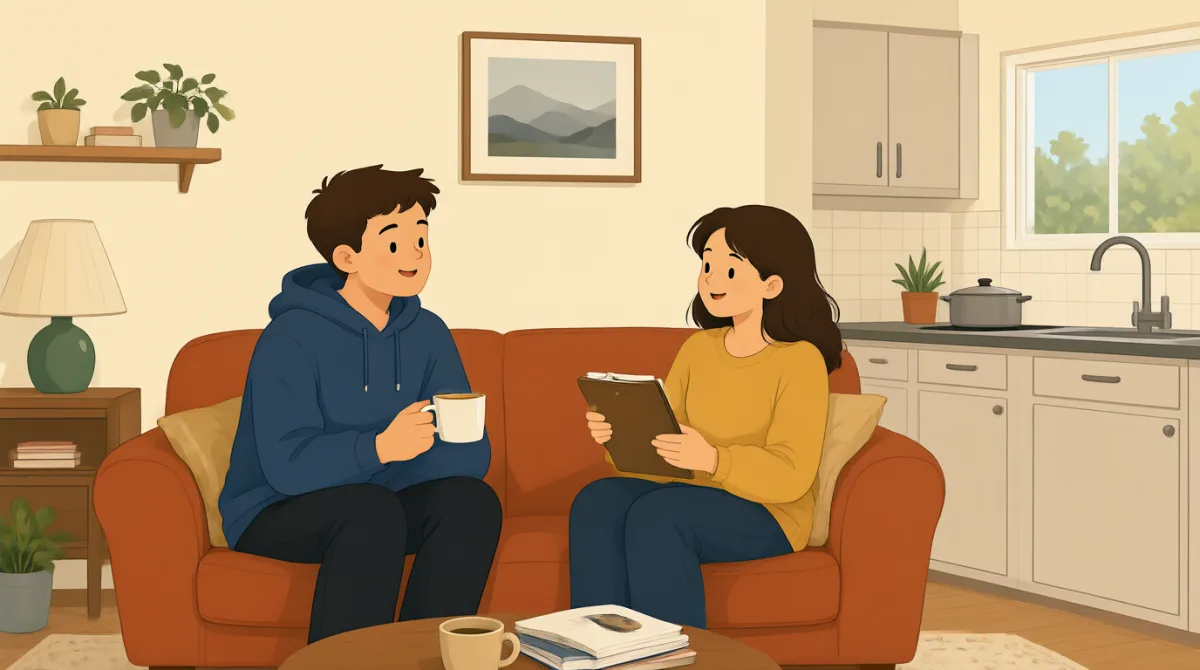

Hey Jack, do you have a minute? I wanted to chat about the common areas.
นี่แจ็ก พอมีเวลาสักนาทีไหม? เราอยากคุยเรื่องพื้นที่ส่วนกลางหน่อย

Sure, what's up, Emma?
ได้สิ มีอะไรเหรอเอมมา?
It's just that the living room and kitchen counter have been a bit messier than usual lately. Like, sometimes there are dishes left out or things piled up.
คือช่วงนี้ห้องนั่งเล่นกับเคาน์เตอร์ครัวรกกว่าปกตินิดหน่อยน่ะ บางทีก็มีจานวางทิ้งไว้ หรือมีของกองพะเนิน
Oh, yeah, I've noticed too. My apologies if I've contributed to it. I've been a bit swamped with work.
อ๋อ ใช่ เราก็สังเกตเหมือนกัน ขอโทษนะถ้าเรามีส่วนทำให้รก ช่วงนี้งานยุ่งมากเลย
No worries, I totally get it. We're all busy. I just thought we could maybe try to be a bit more mindful about putting things away right after we use them.
ไม่เป็นไร เราเข้าใจเลย ทุกคนก็ยุ่งกันทั้งนั้น เราแค่คิดว่าเราอาจจะช่วยกันระวังเก็บของเข้าที่ทันทีหลังใช้เสร็จให้มากขึ้นหน่อย
That's a fair point. So, you mean general tidiness, not just the deep cleaning schedule?
ก็จริงนะ หมายถึงช่วยกันรักษาความเป็นระเบียบทั่วไป ไม่ใช่แค่ตารางทำความสะอาดครั้งใหญ่ใช่ไหม?
Exactly! Just things like clearing plates from the coffee table, wiping down the kitchen counter after cooking, and keeping shared bathroom items neat.
ใช่เลย! ก็อย่างเช่น เก็บจานออกจากโต๊ะกลาง เช็ดเคาน์เตอร์ครัวหลังทำอาหาร แล้วก็จัดของใช้ส่วนรวมในห้องน้ำให้เป็นระเบียบ
Got it. I'll definitely make more of an effort. Maybe we can set a quick 10-minute tidy-up rule before bed each night for everyone?
เข้าใจแล้ว เราจะพยายามให้มากขึ้นแน่นอน เรามาตั้งกติกาเก็บกวาดกันสัก 10 นาทีก่อนนอนทุกคืนดีไหม ให้ทุกคนช่วยกัน?
That's a great idea, Jack! A small effort from everyone would make a big difference. Thanks for being so understanding.
เป็นไอเดียที่ดีมาก แจ็ก! ทุกคนช่วยกันนิดเดียวก็เปลี่ยนอะไรได้เยอะเลย ขอบใจที่เข้าใจนะ
No problem, Emma. It's important for all of us to feel comfortable in our space. We're a team.
ไม่มีปัญหา เอมมา เราทุกคนควรรู้สึกสบายใจเวลาอยู่ในบ้านของเรา เราเป็นทีมเดียวกัน
คำศัพท์8
- common areasพื้นที่ส่วนกลาง
Spaces shared by people living together, like the living room or kitchen, not personal rooms.
พื้นที่ที่คนอยู่ร่วมกันใช้ร่วมกัน เช่น ห้องนั่งเล่นหรือห้องครัว ไม่ใช่ห้องส่วนตัว
- messierรกกว่า
Comparative form of 'messy,' meaning more dirty or disorganized than before.
ขั้นกว่าของ 'messy' หมายถึงสกปรกหรือไม่เป็นระเบียบมากกว่าเดิม
- swampedยุ่งมาก
Very busy or overwhelmed with work or tasks, like being buried under too much to do.
มีงานหรือเรื่องให้ทำมากจนยุ่งหรือรับมือแทบไม่ไหว เหมือนมีงานท่วมหัว
- mindfulใส่ใจ
Being careful and aware of what you are doing, especially to avoid problems.
ระมัดระวังและตระหนักว่ากำลังทำอะไรอยู่ โดยเฉพาะเพื่อป้องกันไม่ให้เกิดปัญหา
- tidinessความเป็นระเบียบ
The state of being neat and orderly, opposite of messiness.
สภาพที่สะอาดเรียบร้อยและจัดเป็นระเบียบ ตรงข้ามกับความรก
- wiping downเช็ดทำความสะอาด
Cleaning a surface by rubbing it with a cloth to remove dirt, often used for counters or tables.
ทำความสะอาดพื้นผิวโดยใช้ผ้าเช็ดเพื่อขจัดสิ่งสกปรก มักใช้กับเคาน์เตอร์หรือโต๊ะ
- neatเรียบร้อย
Clean, tidy, and organized; not messy.
สะอาด เป็นระเบียบ และจัดของไว้เรียบร้อย ไม่รก
- tidy-upเก็บกวาด
A quick cleaning or organizing session to make things neat.
การทำความสะอาดหรือจัดระเบียบอย่างรวดเร็วเพื่อให้สิ่งต่าง ๆ เรียบร้อย
ประโยคสำคัญ10
- 1
Hey Jack, do you have a minute? I wanted to chat about the common areas.
นี่แจ็ก พอมีเวลาสักนาทีไหม? เราอยากคุยเรื่องพื้นที่ส่วนกลางหน่อย
This is a polite way to start a conversation asking for a short time to discuss something. Useful for roommates to bring up shared issues without being rude. 'Do you have a minute?' is an idiom for 'are you free briefly?'
ประโยคนี้เป็นวิธีสุภาพในการเริ่มคุย โดยขอเวลาอีกฝ่ายสั้น ๆ เพื่อพูดเรื่องบางอย่าง เหมาะกับการหยิบยกปัญหาที่เพื่อนร่วมห้องใช้พื้นที่ร่วมกันมาคุยโดยไม่ฟังดูเสียมารยาท 'Do you have a minute?' เป็นสำนวนที่หมายถึง 'พอมีเวลาสักครู่ไหม?'
- 2
Sure, what's up, Emma?
ได้สิ มีอะไรเหรอเอมมา?
A casual response agreeing to talk and asking what's wrong or what the issue is. 'What's up?' is informal slang for 'what's happening?' or 'what do you want to say?' Great for friendly dialogues.
เป็นคำตอบสบาย ๆ ที่ตอบตกลงคุยและถามว่ามีอะไรหรือเกิดปัญหาอะไรขึ้น 'What's up?' เป็นสแลงไม่เป็นทางการที่หมายถึง 'มีอะไรเกิดขึ้น?' หรือ 'อยากพูดอะไรเหรอ?' เหมาะกับบทสนทนาระหว่างเพื่อน
- 3
It's just that the living room and kitchen counter have been a bit messier than usual lately.
คือช่วงนี้ห้องนั่งเล่นกับเคาน์เตอร์ครัวรกกว่าปกตินิดหน่อยน่ะ
This describes a problem softly using 'a bit' to mean 'slightly,' and 'than usual' for comparison. Useful for complaining gently about changes in shared spaces. 'Lately' means recently.
ประโยคนี้พูดถึงปัญหาอย่างนุ่มนวล โดยใช้ 'a bit' ในความหมายว่า 'เล็กน้อย' และ 'than usual' เพื่อเปรียบเทียบ เหมาะเวลาพูดถึงการเปลี่ยนแปลงในพื้นที่ส่วนกลางโดยไม่ตำหนิแรง ๆ ส่วน 'lately' หมายถึง 'ช่วงนี้' หรือ 'เมื่อไม่นานมานี้'
- 4
My apologies if I've contributed to it.
ขอโทษนะถ้าเรามีส่วนทำให้เกิดเรื่องนี้
A polite way to say sorry for possibly causing a problem. 'My apologies' is formal for 'I'm sorry,' and 'contributed to' means helped make it happen. Good for taking responsibility in group settings.
เป็นวิธีสุภาพในการขอโทษที่อาจมีส่วนทำให้เกิดปัญหา 'My apologies' เป็นทางการกว่า 'I'm sorry' และ 'contributed to' หมายถึงมีส่วนทำให้บางอย่างเกิดขึ้น เหมาะกับการยอมรับความรับผิดชอบเมื่อต้องอยู่ร่วมกับคนอื่น
- 5
No worries, I totally get it. We're all busy.
ไม่เป็นไร เราเข้าใจเลย ทุกคนก็ยุ่งกันทั้งนั้น
This reassures someone it's okay, with 'no worries' meaning 'don't worry' and 'totally get it' meaning 'I completely understand.' Useful to show empathy. 'We're all' includes everyone.
ประโยคนี้ช่วยให้อีกฝ่ายสบายใจว่าไม่เป็นไร 'no worries' หมายถึง 'ไม่ต้องกังวล' และ 'totally get it' หมายถึง 'เข้าใจอย่างเต็มที่' ใช้แสดงความเห็นอกเห็นใจได้ดี ส่วน 'We're all' หมายถึง 'พวกเราทุกคน' รวมทุกคนไว้ด้วย
- 6
I just thought we could maybe try to be a bit more mindful about putting things away right after we use them.
เราแค่คิดว่าเราอาจจะช่วยกันใส่ใจเก็บของเข้าที่ทันทีหลังใช้เสร็จให้มากขึ้นหน่อย
Suggests an idea politely with 'I just thought' (meaning 'I suggest'), 'maybe' for hesitation, and 'a bit more' for small improvement. 'Putting things away' means storing items neatly. Ideal for proposing habits.
ประโยคนี้เสนอความคิดอย่างสุภาพ โดยใช้ 'I just thought' ในความหมายว่า 'เราแค่คิดว่า' เพื่อเสนอแนะ ใช้ 'maybe' เพื่อให้ฟังดูไม่ยืนยันเกินไป และ 'a bit more' เพื่อหมายถึงการปรับปรุงขึ้นอีกเล็กน้อย 'Putting things away' หมายถึงเก็บของเข้าที่ให้เรียบร้อย เหมาะกับการเสนอให้ปรับพฤติกรรม
- 7
That's a fair point. So, you mean general tidiness, not just the deep cleaning schedule?
ก็จริงนะ หมายถึงช่วยกันรักษาความเป็นระเบียบทั่วไป ไม่ใช่แค่ตารางทำความสะอาดครั้งใหญ่ใช่ไหม?
Agrees with someone using 'that's a fair point' (meaning 'that's reasonable'), and clarifies with a question. 'General' means overall, 'not just' contrasts ideas. Helpful for confirming understanding.
เป็นการเห็นด้วยโดยใช้ 'that's a fair point' ซึ่งหมายถึง 'ก็มีเหตุผลนะ' แล้วถามเพื่อให้แน่ใจว่าเข้าใจถูกต้อง 'General' หมายถึงโดยรวม ส่วน 'not just' ใช้เปรียบต่างระหว่างสองเรื่อง เหมาะสำหรับยืนยันความเข้าใจ
- 8
Got it. I'll definitely make more of an effort.
เข้าใจแล้ว เราจะพยายามให้มากขึ้นแน่นอน
'Got it' is slang for 'I understand,' and 'make more of an effort' means try harder. This shows agreement and commitment. Useful in promises to improve behavior.
'Got it' เป็นสำนวนไม่เป็นทางการที่หมายถึง 'เข้าใจแล้ว' ส่วน 'make more of an effort' หมายถึงพยายามให้มากขึ้น ประโยคนี้แสดงการเห็นด้วยและตั้งใจจะปรับปรุง ใช้ได้ดีเมื่อต้องให้คำมั่นว่าจะเปลี่ยนพฤติกรรม
- 9
A small effort from everyone would make a big difference.
ทุกคนช่วยกันนิดเดียวก็เปลี่ยนอะไรได้เยอะเลย
Uses conditional 'would' to suggest a result: small actions lead to big change. 'Make a difference' means have an impact. Great for motivating group cooperation.
ประโยคนี้ใช้ 'would' เพื่อพูดถึงผลที่อาจเกิดขึ้น คือการกระทำเล็ก ๆ น้อย ๆ นำไปสู่การเปลี่ยนแปลงครั้งใหญ่ 'Make a difference' หมายถึงส่งผลหรือสร้างความเปลี่ยนแปลง เหมาะสำหรับชวนให้ทุกคนร่วมมือกัน
- 10
We're a team.
เราเป็นทีมเดียวกัน
Emphasizes unity in shared living, like working together. Simple but powerful to end positively. Use it to build harmony in roommate talks.
ประโยคนี้เน้นความเป็นหนึ่งเดียวเมื่อต้องอยู่ร่วมกันและช่วยกันทำงาน แม้จะสั้นแต่ก็ช่วยจบบทสนทนาในแง่ดี ใช้เพื่อสร้างความสามัคคีเวลาคุยกับเพื่อนร่วมห้อง