Creating a Chore Chart/Schedule
จัดทำตารางเวรงานบ้าน
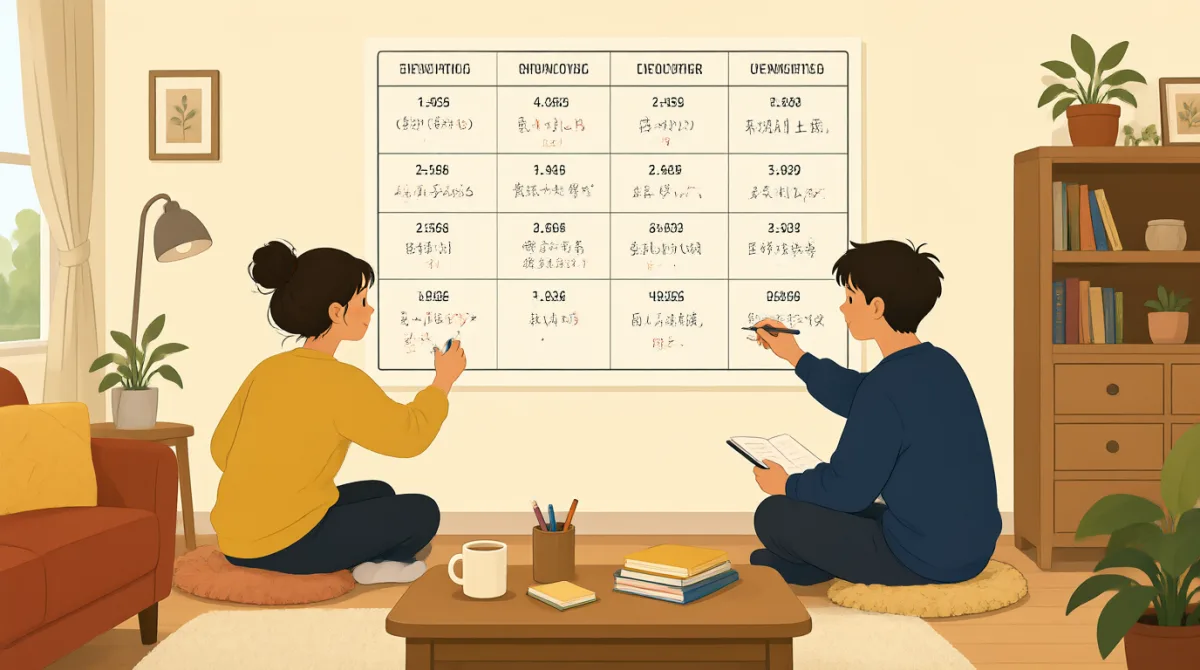
Roommates work together to create a tangible chore chart or schedule, assigning specific tasks to individuals on a weekly or bi-weekly basis.
เพื่อนร่วมห้องช่วยกันทำตารางงานบ้านที่เห็นได้ชัด โดยแบ่งงานเฉพาะให้แต่ละคนรับผิดชอบเป็นรายสัปดาห์หรือทุกสองสัปดาห์
บทสนทนา10

Hey everyone, so about keeping the apartment tidy, I was thinking we should finally set up that chore chart we talked about. What do you guys think?
ทุกคน เรื่องช่วยกันรักษาความสะอาดในอพาร์ตเมนต์น่ะ ฉันคิดว่าเราน่าจะทำตารางงานบ้านที่เคยคุยกันไว้สักที ทุกคนว่าไงบ้าง?

Sounds good to me. It definitely feels like some things are getting missed. A clear schedule would be helpful.
ฉันเห็นด้วยนะ รู้สึกเลยว่ามีบางอย่างที่เราลืมทำอยู่บ่อย ๆ ถ้ามีตารางชัดเจนก็คงช่วยได้

Yeah, I'm on board. Sometimes I'm not sure whose turn it is to do what. We should probably list out all the main tasks first.
ใช่ ฉันเห็นด้วย บางทีก็ไม่แน่ใจว่าใครต้องทำอะไรเมื่อไหร่ เราน่าจะลิสต์งานหลัก ๆ ทั้งหมดก่อนนะ

Good idea, Mia. So, things like cleaning the bathroom, vacuuming the living room, taking out the trash... What else is there?
ดีเลย มีอา อย่างเช่น ทำความสะอาดห้องน้ำ ดูดฝุ่นห้องนั่งเล่น เอาขยะไปทิ้ง... ยังมีอะไรอีกนะ?
Don't forget kitchen duties: wiping down counters, doing dishes, and probably a weekly fridge clean-out. And maybe wiping down the dining table too.
อย่าลืมงานในครัวด้วยนะ ทั้งเช็ดเคาน์เตอร์ ล้างจาน แล้วก็น่าจะมีเคลียร์ตู้เย็นกันทุกสัปดาห์ด้วย อาจรวมถึงเช็ดโต๊ะกินข้าวด้วยก็ได้
Okay, that's a good list to start with. Should we assign tasks weekly or bi-weekly? Or split some daily and some weekly?
โอเค เริ่มจากรายการนี้ก็ดีนะ เราจะแบ่งงานกันทุกสัปดาห์หรือทุกสองสัปดาห์ดี? หรือบางอย่างทำทุกวัน บางอย่างทำทุกสัปดาห์?
I think daily for dishes is crucial, and then maybe bi-weekly for bathroom and vacuuming to spread out the bigger chores. What about a rotating schedule for those?
ฉันว่าล้างจานทุกวันสำคัญมาก ส่วนห้องน้ำกับดูดฝุ่นอาจทำทุกสองสัปดาห์ จะได้ไม่ต้องทำงานชิ้นใหญ่ถี่เกินไป แล้วให้ผลัดเวรกันดีไหม?
A rotating schedule sounds fair. We can set it up on a whiteboard in the kitchen. Make it clear and visible.
ตารางผลัดเวรก็ดูยุติธรรมดีนะ เราทำไว้บนไวต์บอร์ดในครัวก็ได้ เขียนให้ชัด ๆ แล้วติดไว้ในที่ที่มองเห็นง่าย
Perfect! I'll grab a whiteboard and markers tomorrow. Let's meet briefly after dinner to finalize the rotation and put it up.
เยี่ยมเลย! พรุ่งนี้ฉันจะไปซื้อไวต์บอร์ดกับปากกาเมจิกนะ หลังมื้อเย็นมาเจอกันแป๊บหนึ่งเพื่อสรุปการผลัดเวรแล้วเอาไปติดกัน
Sounds like a plan. This should definitely help us keep things much cleaner.
ตกลงตามนี้เลย น่าจะช่วยให้บ้านเราสะอาดขึ้นเยอะ
คำศัพท์8
- choreงานบ้าน
A chore is a regular task, like cleaning or washing, that needs to be done around the house. It's useful for talking about household responsibilities.
“chore” หมายถึงงานที่ต้องทำเป็นประจำ เช่น ทำความสะอาดหรือซักล้างในบ้าน คำนี้ใช้พูดถึงหน้าที่รับผิดชอบงานบ้านได้
- chartตาราง
A chart is a visual list or diagram that shows information, like a schedule of tasks. In this context, it's a chore chart to organize duties.
“chart” คือตารางหรือแผนภาพที่แสดงข้อมูล เช่น ตารางกำหนดงาน ในบริบทนี้หมายถึงตารางงานบ้านที่ช่วยจัดระเบียบหน้าที่ต่าง ๆ
- tidyเป็นระเบียบ
Tidy means clean and organized. Use it when describing a neat living space, like 'Keep the apartment tidy.'
“tidy” หมายถึงสะอาดและเป็นระเบียบ ใช้บรรยายพื้นที่อยู่อาศัยที่เรียบร้อยได้ เช่น 'Keep the apartment tidy.' (รักษาอพาร์ตเมนต์ให้สะอาดเป็นระเบียบ)
- assignมอบหมาย
To assign means to give a task or responsibility to someone. It's common in group settings, like 'assign tasks to roommates.'
“assign” หมายถึงมอบหมายงานหรือความรับผิดชอบให้ใครสักคน มักใช้เมื่อพูดถึงการทำงานเป็นกลุ่ม เช่น 'assign tasks to roommates.' (มอบหมายงานให้เพื่อนร่วมห้อง)
- rotatingผลัดเวรกัน
Rotating means taking turns in a cycle. A rotating schedule ensures fairness by changing who does what over time.
“rotating” หมายถึงการผลัดกันทำเป็นรอบ ๆ ตารางผลัดเวรช่วยให้เกิดความยุติธรรม เพราะเปลี่ยนคนรับผิดชอบงานไปเรื่อย ๆ
- vacuumingการดูดฝุ่น
Vacuuming is the act of using a vacuum cleaner to clean floors and remove dust. It's a common household chore.
“vacuuming” คือการใช้เครื่องดูดฝุ่นทำความสะอาดพื้นและกำจัดฝุ่น เป็นงานบ้านที่ทำกันทั่วไป
- bi-weeklyทุกสองสัปดาห์
Bi-weekly means every two weeks. Use it for schedules, like 'bi-weekly cleaning' to space out tasks.
“bi-weekly” หมายถึงทุกสองสัปดาห์ ใช้พูดถึงตารางงานได้ เช่น 'bi-weekly cleaning' (การทำความสะอาดทุกสองสัปดาห์) เพื่อเว้นระยะระหว่างการทำงานแต่ละครั้ง
- crucialสำคัญมาก
Crucial means very important or essential. Say 'It's crucial to do dishes daily' to emphasize necessity.
“crucial” หมายถึงสำคัญมากหรือจำเป็นอย่างยิ่ง ใช้ประโยค 'It's crucial to do dishes daily' (การล้างจานทุกวันเป็นเรื่องสำคัญมาก) เพื่อเน้นว่าจำเป็นต้องทำ
ประโยคสำคัญ8
- 1
Hey everyone, so about keeping the apartment tidy, I was thinking we should finally set up that chore chart we talked about. What do you guys think?
ทุกคน เรื่องช่วยกันรักษาความสะอาดในอพาร์ตเมนต์น่ะ ฉันคิดว่าเราน่าจะทำตารางงานบ้านที่เคยคุยกันไว้สักที ทุกคนว่าไงบ้าง?
This sentence introduces a topic and suggests an idea while asking for opinions. It's useful for starting group discussions. Notice 'What do you guys think?' is a casual way to seek agreement.
ประโยคนี้ใช้เกริ่นหัวข้อ เสนอความคิด และถามความเห็น เหมาะสำหรับเริ่มการพูดคุยเป็นกลุ่ม สังเกตว่า 'What do you guys think?' เป็นวิธีถามความเห็นเพื่อดูว่าคนอื่นเห็นด้วยไหมแบบเป็นกันเอง
- 2
Sounds good to me. It definitely feels like some things are getting missed.
ฉันเห็นด้วยนะ รู้สึกเลยว่ามีบางอย่างที่เราลืมทำอยู่บ่อย ๆ
This shows agreement and explains a problem. 'Sounds good to me' is a common phrase for approval. 'Definitely' adds emphasis, useful in conversations about improvements.
ประโยคนี้แสดงความเห็นด้วยและอธิบายปัญหา 'Sounds good to me' เป็นวลีที่ใช้บ่อยเพื่อบอกว่าเห็นด้วยหรือว่าเป็นความคิดที่ดี ส่วน 'Definitely' ช่วยเน้นความรู้สึก เหมาะกับการคุยเรื่องการปรับปรุงอะไรบางอย่าง
- 3
Yeah, I'm on board. Sometimes I'm not sure whose turn it is to do what.
ใช่ ฉันเห็นด้วย บางทีก็ไม่แน่ใจว่าใครต้องทำอะไรเมื่อไหร่
'I'm on board' means I agree and support the idea. The second part expresses confusion about responsibilities, helpful for clarifying roles in shared situations.
'I'm on board' หมายถึงฉันเห็นด้วยและสนับสนุนความคิดนี้ ส่วนประโยคหลังบอกว่าผู้พูดสับสนเรื่องหน้าที่ ซึ่งช่วยเปิดโอกาสให้ตกลงกันว่าใครรับผิดชอบอะไรในสถานการณ์ที่ต้องแบ่งปันหน้าที่กัน
- 4
We should probably list out all the main tasks first.
เราน่าจะลิสต์งานหลัก ๆ ทั้งหมดก่อนนะ
This suggests a logical next step using 'should' for advice. 'List out' means to write down in detail, practical for planning meetings.
ประโยคนี้เสนอขั้นตอนถัดไปอย่างเป็นเหตุเป็นผล โดยใช้ 'should' เพื่อให้คำแนะนำ 'List out' หมายถึงเขียนรายการแจกแจงอย่างละเอียด ซึ่งมีประโยชน์เวลาวางแผนประชุม
- 5
Don't forget kitchen duties: wiping down counters, doing dishes, and probably a weekly fridge clean-out.
อย่าลืมงานในครัวด้วยนะ ทั้งเช็ดเคาน์เตอร์ ล้างจาน แล้วก็น่าจะมีเคลียร์ตู้เย็นกันทุกสัปดาห์ด้วย
This reminds others of tasks and lists them with examples. Colons introduce lists, and 'don't forget' is a polite way to ensure nothing is overlooked.
ประโยคนี้เตือนคนอื่นถึงงานที่ต้องทำพร้อมยกตัวอย่าง เครื่องหมายทวิภาคใช้ขึ้นต้นรายการ และ 'don't forget' เป็นวิธีเตือนอย่างสุภาพเพื่อให้แน่ใจว่าไม่มีอะไรตกหล่น
- 6
Should we assign tasks weekly or bi-weekly? Or split some daily and some weekly?
เราจะแบ่งงานกันทุกสัปดาห์หรือทุกสองสัปดาห์ดี? หรือบางอย่างทำทุกวัน บางอย่างทำทุกสัปดาห์?
This asks for preferences on scheduling using questions. 'Or' offers options, and words like 'weekly' and 'bi-weekly' help discuss time frames.
ประโยคนี้ถามความเห็นเกี่ยวกับการจัดตารางโดยใช้คำถาม 'Or' ใช้เสนอทางเลือก ส่วนคำอย่าง 'weekly' และ 'bi-weekly' ช่วยพูดถึงช่วงเวลาในการทำงาน
- 7
I think daily for dishes is crucial, and then maybe bi-weekly for bathroom and vacuuming to spread out the bigger chores.
ฉันว่าล้างจานทุกวันสำคัญมาก ส่วนห้องน้ำกับดูดฝุ่นอาจทำทุกสองสัปดาห์ จะได้ไม่ต้องทำงานชิ้นใหญ่ถี่เกินไป
This proposes a plan with reasons. 'Crucial' shows importance, and 'to spread out' explains the benefit, useful for negotiating fair divisions.
ประโยคนี้เสนอแผนพร้อมเหตุผล 'Crucial' ใช้เน้นความสำคัญ ส่วน 'to spread out' อธิบายข้อดีของการเว้นระยะระหว่างงาน มีประโยชน์เวลาคุยหาวิธีแบ่งงานให้ยุติธรรม
- 8
Sounds like a plan. This should definitely help us keep things much cleaner.
ตกลงตามนี้เลย น่าจะช่วยให้บ้านเราสะอาดขึ้นเยอะ
This confirms agreement and predicts a positive outcome. 'Sounds like a plan' is idiomatic for finalizing ideas, common in casual planning.
ประโยคนี้ยืนยันความเห็นด้วยและคาดการณ์ผลลัพธ์ที่ดี 'Sounds like a plan' เป็นสำนวนที่ใช้บอกว่าตกลงตามแผนนี้ เหมาะกับการคุยวางแผนแบบเป็นกันเอง