Addressing an Unassigned Chore
التعامل مع مهمة منزلية غير مُسندة
A chore that wasn't initially assigned or discussed becomes apparent (e.g., cleaning the microwave, taking out recycling), leading to a conversation about who should take responsibility.
تظهر مهمة منزلية لم تُسند أو تُناقش في البداية، مثل تنظيف الميكروويف أو إخراج المواد القابلة لإعادة التدوير، مما يؤدي إلى محادثة حول مَن ينبغي أن يتولى مسؤوليتها.
حوار9
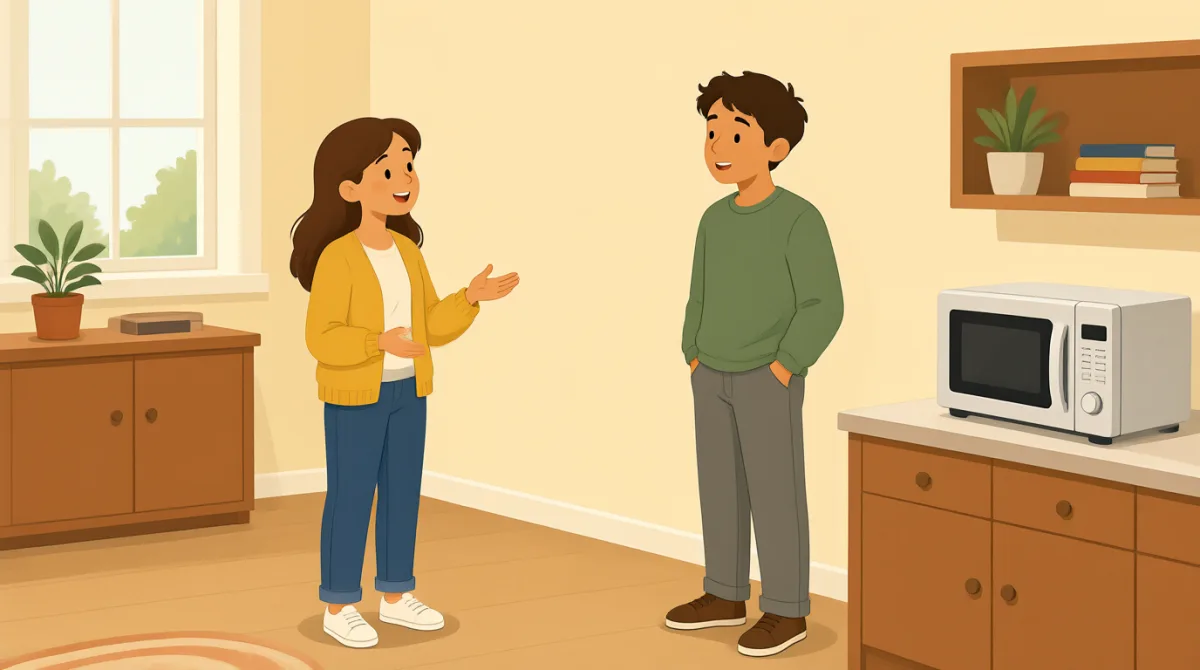

Hey Leo, have you noticed the recycling bin is overflowing? It really needs to be taken out.
مرحبًا يا ليو، هل لاحظت أن حاوية إعادة التدوير ممتلئة حتى فاضت؟ إنها تحتاج فعلًا إلى إخراجها.

Oh, wow, I hadn't even looked. You're right, it's pretty full. Who usually takes it out?
أوه، يا للعجب! لم ألقِ نظرة عليها حتى. معك حق، إنها ممتلئة جدًا. مَن يخرجها عادةً؟
That's the thing, I don't think we ever explicitly assigned it. It just kind of… happens. But it's been building up for a while now.
هذه هي المشكلة؛ لا أعتقد أننا أسندنا هذه المهمة إلى أحد بشكل واضح من قبل. لقد كانت تحدث بطريقة ما فحسب... لكنها تتراكم منذ فترة الآن.
You're right, it's one of those unassigned chores. Well, I can grab it this time if you want. It's on my way out anyway.
معك حق، إنها واحدة من تلك المهام المنزلية غير المُسندة. حسنًا، يمكنني إخراجها هذه المرة إذا أردت. فهي في طريقي إلى الخارج على أي حال.
Oh, really? That would be awesome, thanks! And maybe we should add it to our chore chart or rotation so we don't forget it again?
حقًا؟ سيكون ذلك رائعًا، شكرًا! وربما ينبغي أن نضيفها إلى جدول مهامنا المنزلية أو نظام التناوب حتى لا ننساها مجددًا؟
Good idea. We can rotate it weekly with the regular trash, or just assign it to whoever's turn it is with the kitchen cleaning. What do you think?
فكرة جيدة. يمكننا أن نتناوب عليها أسبوعيًا مع القمامة العادية، أو نسندها إلى مَن يأتي دوره في تنظيف المطبخ. ما رأيك؟
Assigning it to whoever cleans the kitchen sounds more logical. That way, it’s always getting done when the kitchen is tidied up. How about that for next week?
يبدو إسنادها إلى مَن ينظف المطبخ أكثر منطقية. بهذه الطريقة، ستُنجز دائمًا عند ترتيب المطبخ. ما رأيك أن نبدأ بذلك الأسبوع المقبل؟
Sounds good to me. I'll take it out now, and we'll officially add it to the kitchen chore moving forward. Thanks for pointing it out!
هذا مناسب لي. سأخرجها الآن، وسنضيفها رسميًا إلى مهام المطبخ من الآن فصاعدًا. شكرًا لأنك نبهتني إليها!
No problem! And thanks again for taking care of it this time.
لا مشكلة! وشكرًا لك مجددًا على توليها هذه المرة.
المفردات8
- overflowingممتلئ حتى يفيض
When a container is so full that things start spilling over the edges, like a trash bin that's too full.
يُستخدم هذا الوصف عندما تكون الحاوية ممتلئة جدًا بحيث تبدأ الأشياء في الانسكاب من حوافها، مثل حاوية قمامة ممتلئة أكثر من اللازم.
- recycling binحاوية إعادة التدوير
A container used to collect items like paper, plastic, or glass that can be recycled instead of thrown away as regular trash.
حاوية تُستخدم لجمع أشياء مثل الورق أو البلاستيك أو الزجاج التي يمكن إعادة تدويرها بدلًا من التخلص منها مع القمامة العادية.
- unassignedغير مُسند
Something that hasn't been given to a specific person to do, like a task no one is responsible for yet.
شيء لم يُسند إلى شخص محدد للقيام به، مثل مهمة لم يصبح أي شخص مسؤولًا عنها بعد.
- explicitlyبشكل واضح
Done in a clear and direct way, without any confusion, often used when talking about instructions or assignments.
يُنجز بطريقة واضحة ومباشرة ومن دون التباس، ويُستخدم غالبًا عند الحديث عن التعليمات أو إسناد المهام.
- rotationالتناوب
A system where people take turns doing a task, like sharing chores equally over time.
نظام يتناوب فيه الأشخاص على أداء مهمة ما، مثل تقاسم الأعمال المنزلية بالتساوي مع مرور الوقت.
- chore chartجدول المهام المنزلية
A list or schedule that shows who is responsible for different household tasks and when.
قائمة أو جدول يوضح مَن المسؤول عن مختلف المهام المنزلية ومتى يؤديها.
- tidied upرُتّب ونُظّف
Cleaned and organized a space to make it neat and orderly, often used for rooms or areas like the kitchen.
نُظّف المكان ونُظّم ليصبح مرتبًا ومنظمًا، ويُستخدم هذا التعبير غالبًا للغرف أو المساحات مثل المطبخ.
- moving forwardمن الآن فصاعدًا
From now on or in the future, used to talk about changes that will happen starting now.
ابتداءً من الآن أو في المستقبل، ويُستخدم للحديث عن تغييرات ستبدأ في الحاضر.
الجمل الأساسية8
- 1
Hey Leo, have you noticed the recycling bin is overflowing? It really needs to be taken out.
مرحبًا يا ليو، هل لاحظت أن حاوية إعادة التدوير ممتلئة حتى فاضت؟ إنها تحتاج فعلًا إلى إخراجها.
This is a polite way to point out a problem and suggest action. Use it to start a conversation about shared responsibilities. Notice the present continuous 'is overflowing' for current situations.
هذه طريقة مهذبة للإشارة إلى مشكلة واقتراح اتخاذ إجراء. استخدمها لبدء محادثة حول المسؤوليات المشتركة. لاحظ استخدام المضارع المستمر في 'is overflowing' للتعبير عن موقف يحدث حاليًا.
- 2
Who usually takes it out?
مَن يخرجها عادةً؟
A simple question to ask about normal routines or responsibilities. 'Usually' shows habitual actions, helpful for clarifying roles in group settings like roommates.
سؤال بسيط للاستفسار عن العادات أو المسؤوليات المعتادة. توضح كلمة 'Usually' الأفعال المتكررة، وهذا مفيد لتوضيح الأدوار في مواقف جماعية مثل السكن مع زملاء.
- 3
That's the thing, I don't think we ever explicitly assigned it.
هذه هي المشكلة؛ لا أعتقد أننا أسندنا هذه المهمة إلى أحد بشكل واضح من قبل.
This expresses the main issue casually. 'That's the thing' is an idiom to highlight a point, and 'ever' with present perfect 'have assigned' talks about past experiences up to now.
تعبّر هذه الجملة عن المشكلة الرئيسية بطريقة غير رسمية. تُستخدم عبارة 'That's the thing' لتسليط الضوء على نقطة معينة، بينما تتحدث كلمة 'ever' مع المضارع التام 'have assigned' عن الخبرات الماضية حتى الوقت الحاضر.
- 4
Well, I can grab it this time if you want.
حسنًا، يمكنني إخراجها هذه المرة إذا أردت.
An offer to help voluntarily. 'Grab' means to take quickly here, and 'if you want' makes it polite and optional. Use this to show willingness in everyday offers.
هذا عرض للمساعدة طوعًا. تعني كلمة 'Grab' هنا أن يأخذ الشخص الشيء بسرعة، وتجعل عبارة 'if you want' العرض مهذبًا واختياريًا. استخدم هذه الجملة لإظهار الاستعداد للمساعدة في العروض اليومية.
- 5
And maybe we should add it to our chore chart or rotation so we don't forget it again?
وربما ينبغي أن نضيفها إلى جدول مهامنا المنزلية أو نظام التناوب حتى لا ننساها مجددًا؟
A suggestion for improvement with a reason. 'Maybe we should' softens the idea, and 'so' connects cause and effect. Great for proposing solutions in discussions.
هذا اقتراح لتحسين الوضع مع ذكر السبب. تخفف عبارة 'Maybe we should' من حدة الفكرة، وتربط كلمة 'so' بين السبب والنتيجة. وهي مناسبة جدًا لاقتراح حلول أثناء النقاشات.
- 6
What do you think?
ما رأيك؟
A common way to ask for someone's opinion after sharing an idea. It's short and direct, useful in conversations to keep dialogue going and show respect.
طريقة شائعة لطلب رأي شخص ما بعد مشاركة فكرة معه. إنها قصيرة ومباشرة، ومفيدة في المحادثات لمواصلة الحوار وإظهار الاحترام.
- 7
Assigning it to whoever cleans the kitchen sounds more logical.
يبدو إسنادها إلى مَن ينظف المطبخ أكثر منطقية.
This agrees and suggests a better way. 'Whoever' means any person who does the task, and 'sounds more logical' explains why it's a good choice. Use for logical reasoning.
توافق هذه الجملة على فكرة وتقترح طريقة أفضل. تعني كلمة 'Whoever' أي شخص يؤدي المهمة، وتوضح عبارة 'sounds more logical' سبب كون هذا الاختيار جيدًا. استخدمها عند شرح منطق اقتراح ما.
- 8
Sounds good to me. I'll take it out now, and we'll officially add it to the kitchen chore moving forward.
هذا مناسب لي. سأخرجها الآن، وسنضيفها رسميًا إلى مهام المطبخ من الآن فصاعدًا.
Agreement plus a plan for the future. 'Sounds good to me' is casual approval, and 'moving forward' indicates from now on. Combines present and future actions.
تجمع هذه الجملة بين الموافقة ووضع خطة للمستقبل. تُستخدم عبارة 'Sounds good to me' للتعبير عن موافقة غير رسمية، وتشير عبارة 'moving forward' إلى معنى «من الآن فصاعدًا». وهي تجمع بين أفعال الحاضر والمستقبل.