Dealing with a Large Spill
التعامل مع انسكاب كمية كبيرة
A large amount of coffee is spilled on the floor, posing a slip hazard. You need to quickly alert staff and perhaps help cordon off the area.
انسكبت كمية كبيرة من القهوة على الأرض، مما يجعلها زلقة وخطيرة. عليك تنبيه العاملين بسرعة، وربما المساعدة في تطويق المنطقة.
حوار7
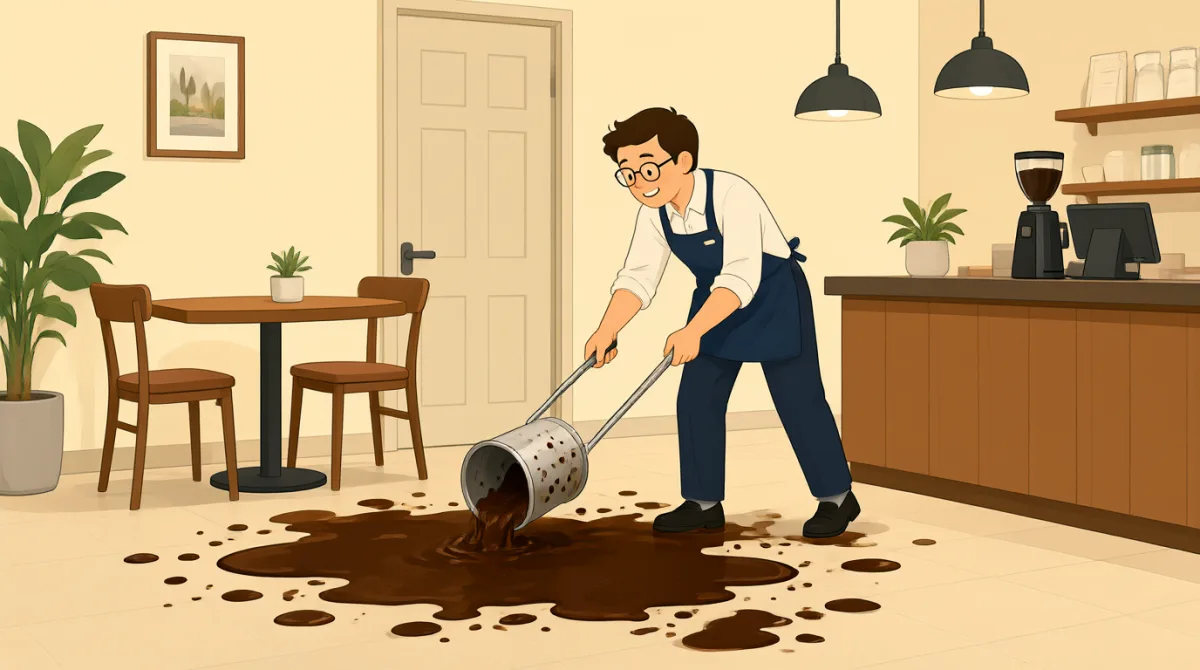

Oh no! I've spilled my whole coffee. It's everywhere!
يا إلهي! لقد سكبت قهوتي كلها. لقد انتشرت في كل مكان!

Whoa, that's a big one. Are you okay, Emma?
يا للهول، هذه كمية كبيرة. هل أنت بخير يا إيما؟
Yeah, I'm fine, just a bit startled. But this is a huge mess, and it's really slippery.
نعم، أنا بخير، لكنني فزعت قليلًا. هذه فوضى كبيرة، والأرض زلقة جدًا.
You're right. We should probably get someone from staff to help clean this up immediately. It's a slip hazard.
معك حق. من الأفضل أن نطلب من أحد العاملين المساعدة في تنظيف هذا فورًا. فالأرض زلقة وقد يتعرض أحدهم للانزلاق.
I’ll go find someone. Can you stand here for a moment and maybe guard it so no one slips?
سأذهب للعثور على أحدهم. هل يمكنك الوقوف هنا قليلًا ومراقبة المكان حتى لا ينزلق أحد؟
No problem. I'll make sure no one walks into it. Hurry back!
لا مشكلة. سأحرص على ألا يدخل أحد إلى هذه المنطقة. عودي بسرعة!
Will do! Thanks for your help, David.
سأفعل! شكرًا على مساعدتك يا ديفيد.
المفردات8
- spilledانسكب
Past tense of 'spill', meaning to accidentally pour liquid out of a container, like coffee on the floor. Use it when describing an accident with drinks.
الفعل الماضي من 'spill'، ويعني سكب سائل من وعاء عن طريق الخطأ، مثل انسكاب القهوة على الأرض. يُستخدم لوصف حادث يتعلق بمشروب.
- startledمفزوع
Feeling suddenly surprised or shocked, often by an unexpected event. It's useful for expressing emotions after a small accident.
تعني الشعور بالمفاجأة أو الصدمة فجأة، غالبًا بسبب حدث غير متوقع. تفيد في التعبير عن المشاعر بعد حادث بسيط.
- slipperyزَلِق
Describes a surface that is wet or smooth, making it easy to slip and fall. Common in situations involving spills to warn others.
تصف سطحًا مبتلًا أو أملس يسهل الانزلاق عليه والسقوط. وتشيع في مواقف الانسكاب لتحذير الآخرين.
- messفوضى
A dirty or disordered situation, like spilled coffee creating a big mess. Use it to describe chaos from accidents.
حالة من الاتساخ أو عدم الترتيب، مثل الفوضى الكبيرة التي تسببها القهوة المنسكبة. تُستخدم لوصف ما ينجم عن الحوادث من فوضى.
- slip hazardخطر الانزلاق
A danger where someone might slip and fall, often due to wet floors. It's a practical term for safety warnings in public places.
خطر احتمال انزلاق شخص وسقوطه، وغالبًا ما يكون سببه أرضية مبللة. وهو تعبير عملي للتحذير من مخاطر السلامة في الأماكن العامة.
- staffالعاملون
The employees or workers in a place like a cafe. Use it when you need to ask for help from workers.
الموظفون أو العاملون في مكان مثل المقهى. تُستخدم الكلمة عند طلب المساعدة من العاملين.
- guardيراقب
To watch or protect something to prevent accidents. In this context, it means standing by the spill to keep people away.
يتابع شيئًا أو يحرسه لمنع وقوع الحوادث. في هذا السياق، تعني الوقوف بجانب ما انسكب لإبعاد الناس عنه.
- hurry backعُد بسرعة
A phrase meaning to return quickly. It's polite and urgent, used when asking someone to come back soon after leaving.
عبارة تعني الرجوع بسرعة. تُستخدم لحث شخص على العودة قريبًا بعد مغادرته، بنبرة ودية ومستعجلة.
الجمل الأساسية8
- 1
Oh no! I've spilled my whole coffee. It's everywhere!
يا إلهي! لقد سكبت قهوتي كلها. لقد انتشرت في كل مكان!
This expresses surprise and regret after an accident. 'Oh no!' is an exclamation for bad situations, and 'I've spilled' uses present perfect for recent actions. Useful for apologizing or reacting to spills.
تعبّر هذه الجملة عن المفاجأة والأسف بعد وقوع حادث. تُستخدم 'Oh no!' للتعبير عن الاستياء من موقف سيئ، أما 'I've spilled' فتستخدم زمن المضارع التام للحديث عن فعل وقع مؤخرًا. تفيد هذه العبارة عند الاعتذار عن انسكاب شيء أو التفاعل معه.
- 2
Whoa, that's a big one. Are you okay?
يا للهول، هذه كمية كبيرة. هل أنت بخير؟
'Whoa' shows surprise, and 'that's a big one' means a large amount spilled. 'Are you okay?' checks if someone is hurt. Use this to show concern kindly after someone else's accident.
تعبّر 'Whoa' عن المفاجأة، وتعني 'that's a big one' أن كمية كبيرة قد انسكبت. أما 'Are you okay?' فتسأل إن كان الشخص قد أُصيب. استخدم هذه العبارة لإظهار الاهتمام بلطف بعد وقوع حادث لشخص آخر.
- 3
Yeah, I'm fine, just a bit startled.
نعم، أنا بخير، لكنني فزعت قليلًا.
This reassures others you're not hurt but surprised. 'Just a bit' softens the emotion. It's a natural response to show you're okay in minor incidents.
تطمئن هذه العبارة الآخرين إلى أنك لم تُصب، لكنك تفاجأت. وتخفف 'Just a bit' من حدة الشعور. إنها إجابة طبيعية لتوضيح أنك بخير بعد حادث بسيط.
- 4
We should probably get someone from staff to help clean this up immediately.
من الأفضل أن نطلب من أحد العاملين المساعدة في تنظيف هذا فورًا.
Suggests action using 'should probably' for polite advice, and 'immediately' adds urgency. Useful for handling hazards by involving help quickly.
تقترح هذه العبارة اتخاذ إجراء باستخدام 'should probably' لتقديم نصيحة بلطف، وتضيف 'immediately' معنى الاستعجال. وهي مفيدة للتعامل بسرعة مع المخاطر وطلب المساعدة.
- 5
It's a slip hazard.
إنه خطر انزلاق.
A short warning about danger. 'Slip hazard' is a key safety term. Use it to explain why a spill is problematic and needs attention.
هذا تحذير موجز من خطر. و' slip hazard' مصطلح أساسي متعلق بالسلامة. استخدمه لتوضيح سبب خطورة ما انسكب وضرورة التعامل معه.
- 6
Can you stand here for a moment and maybe guard it so no one slips?
هل يمكنك الوقوف هنا قليلًا ومراقبة المكان حتى لا ينزلق أحد؟
This politely asks for help with 'can you' and 'maybe' to soften the request. 'So no one slips' explains the purpose. Great for coordinating help in accidents.
يطلب هذا التعبير المساعدة بلطف باستخدام 'can you'، وتخفف 'maybe' من حدة الطلب. وتوضح 'So no one slips' الغرض من الطلب. إنه مفيد لتنسيق المساعدة عند وقوع الحوادث.
- 7
No problem. I'll make sure no one walks into it. Hurry back!
لا مشكلة. سأحرص على ألا يدخل أحد إلى هذه المنطقة. عُد بسرعة!
'No problem' agrees to help casually. 'I'll make sure' promises action, and 'hurry back' urges quick return. Use this to respond positively and supportively.
توافق 'No problem' على تقديم المساعدة بأسلوب ودي. وتعد 'I'll make sure' بالقيام بشيء، بينما تحث 'hurry back' الشخص على العودة بسرعة. استخدم هذه العبارة للرد بإيجابية ودعم.
- 8
Will do! Thanks for your help.
سأفعل! شكرًا على مساعدتك.
'Will do' means 'okay, I will' informally. It's a quick way to agree and thank someone. Useful for ending conversations politely after receiving assistance.
تعني 'Will do' «حسنًا، سأفعل» بأسلوب غير رسمي. وهي طريقة سريعة للموافقة وشكر شخص ما، وتفيد في إنهاء الحديث بلطف بعد تلقي المساعدة.