Paying with a Parking Attendant
ชำระเงินกับพนักงานเก็บค่าจอดรถ
The user pays a parking attendant directly, typically at an exit booth. This involves handing over a ticket or stating the parking duration, inquiring about the fee, and making a payment.
ผู้ใช้ชำระเงินกับพนักงานเก็บค่าจอดรถโดยตรง ซึ่งมักอยู่ที่บูธทางออก โดยยื่นบัตรจอดรถหรือแจ้งระยะเวลาที่จอด สอบถามค่าจอด และชำระเงิน
บทสนทนา8
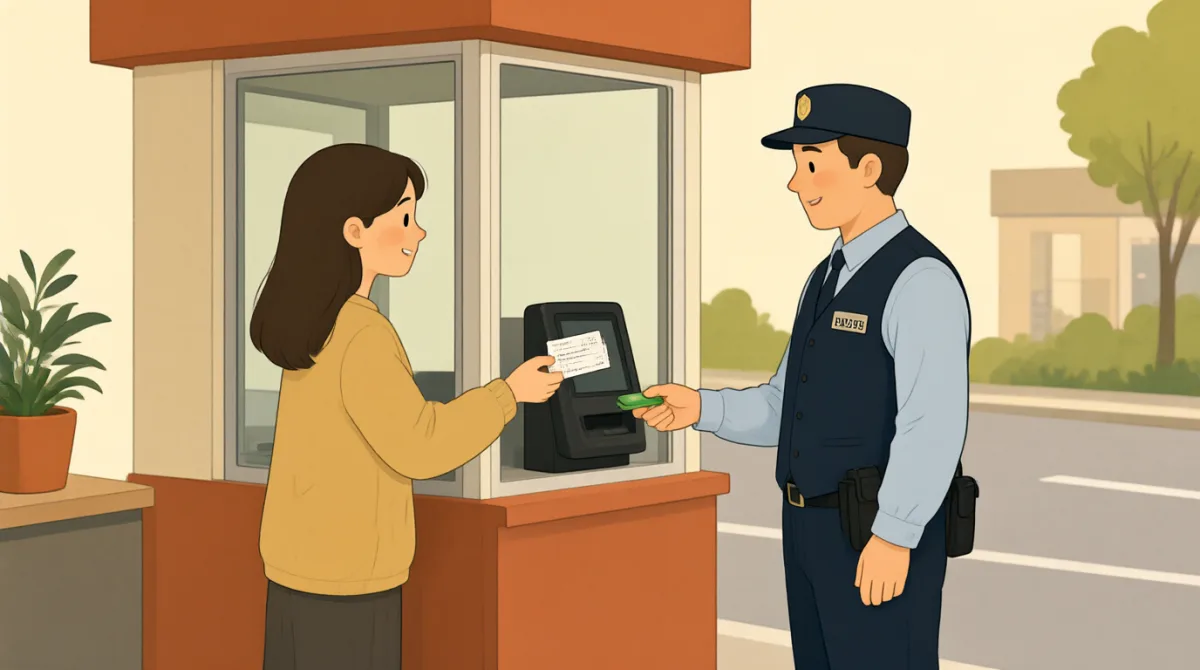

Hi, I'm ready to pay. Here's my ticket.
สวัสดีครับ ผมพร้อมจ่ายเงินแล้ว นี่ครับบัตรจอดรถ

Okay, let me scan that for you. So, you parked for two hours and forty-five minutes. That'll be twelve dollars.
ได้ค่ะ ขอเอาบัตรไปสแกนให้นะคะ คุณจอดไว้สองชั่วโมงสี่สิบห้านาที ทั้งหมดสิบสองดอลลาร์ค่ะ
Twelve dollars, got it. Do you take card or is it cash only?
สิบสองดอลลาร์ เข้าใจแล้วครับ รับบัตรไหมครับ หรือรับเฉพาะเงินสด
We accept both cash and card, whichever you prefer.
รับทั้งเงินสดและบัตรค่ะ แล้วแต่คุณสะดวกเลยค่ะ
Great, I'll pay with my card then. Here you go.
ดีเลยครับ งั้นผมจ่ายด้วยบัตรนะครับ นี่ครับ
Thank you. Just insert your card here. And would you like a receipt?
ขอบคุณค่ะ เสียบบัตรตรงนี้ได้เลยนะคะ แล้วรับใบเสร็จไหมคะ
No, thanks, no receipt needed. Have a good day!
ไม่เป็นไรครับ ไม่ต้องรับใบเสร็จ ขอบคุณครับ ขอให้วันนี้เป็นวันที่ดีนะครับ
You too! Your payment is complete. The gate will open now. Drive safely.
เช่นกันค่ะ ชำระเงินเรียบร้อยแล้วค่ะ ไม้กั้นจะเปิดเดี๋ยวนี้นะคะ ขับรถปลอดภัยค่ะ
คำศัพท์7
- ticketบัตรจอดรถ
A small piece of paper or card given when you enter a parking lot; you show it to pay when leaving.
กระดาษหรือบัตรใบเล็กที่ได้รับตอนนำรถเข้าลานจอดรถ เมื่อตอนออกก็นำมาแสดงเพื่อชำระเงิน
- scanสแกน
To quickly read or check something electronically, like passing a ticket under a light to get information from it.
อ่านหรือตรวจสอบข้อมูลของบางอย่างด้วยอุปกรณ์อิเล็กทรอนิกส์อย่างรวดเร็ว เช่น นำบัตรผ่านเครื่องสแกนเพื่ออ่านข้อมูล
- parkedจอดรถแล้ว
The past tense of 'park,' meaning you left your car in a specific spot for some time.
เป็นรูปอดีตของ 'park' หมายถึงนำรถไปจอดไว้ในที่ใดที่หนึ่งเป็นเวลาหนึ่งช่วง
- cashเงินสด
Physical money in the form of bills and coins, as opposed to digital payment.
เงินที่จับต้องได้ในรูปธนบัตรและเหรียญ ต่างจากการชำระเงินแบบดิจิทัล
- cardบัตร
Short for credit or debit card, a plastic card used to pay without using cash.
คำย่อที่หมายถึงบัตรเครดิตหรือบัตรเดบิต เป็นบัตรพลาสติกที่ใช้ชำระเงินโดยไม่ต้องใช้เงินสด
- receiptใบเสร็จ
A printed or digital document that proves you have paid for something; useful for records.
เอกสารกระดาษหรือเอกสารดิจิทัลที่ยืนยันว่าคุณชำระเงินแล้ว มีประโยชน์สำหรับเก็บไว้เป็นหลักฐาน
- insertเสียบ
To put something into a slot or opening, like sliding a card into a machine to pay.
ใส่สิ่งของเข้าไปในช่องหรือรูเปิด เช่น สอดบัตรเข้าเครื่องเพื่อชำระเงิน
ประโยคสำคัญ6
- 1
Hi, I'm ready to pay. Here's my ticket.
สวัสดีครับ ผมพร้อมจ่ายเงินแล้ว นี่ครับบัตรจอดรถ
This is a polite way to start a payment conversation. 'I'm ready to pay' shows you're prepared, and 'Here's my ticket' means 'This is the ticket for my car.' Use this when approaching someone to pay for services like parking.
ประโยคนี้เป็นวิธีสุภาพในการเริ่มคุยเรื่องการชำระเงิน 'I'm ready to pay' บอกว่าคุณพร้อมชำระเงิน ส่วน 'Here's my ticket' หมายถึง 'นี่คือบัตรจอดรถของรถผม' ใช้ประโยคนี้เมื่อเข้าไปติดต่อเพื่อจ่ายค่าบริการ เช่น ค่าจอดรถ
- 2
So, you parked for two hours and forty-five minutes. That'll be twelve dollars.
คุณจอดไว้สองชั่วโมงสี่สิบห้านาที ทั้งหมดสิบสองดอลลาร์ค่ะ
This sentence explains the parking time and total cost. 'That'll be' is a contraction of 'That will be,' commonly used in service situations to state the amount due. It's useful for confirming fees in transactions.
ประโยคนี้แจ้งระยะเวลาที่จอดรถและค่าใช้จ่ายทั้งหมด 'That'll be' เป็นรูปย่อของ 'That will be' ซึ่งมักใช้ในการให้บริการเพื่อแจ้งยอดที่ต้องชำระ เหมาะสำหรับใช้ยืนยันค่าบริการในการทำธุรกรรม
- 3
Do you take card or is it cash only?
รับบัตรไหมครับ หรือรับเฉพาะเงินสด
This is a question to check payment options. 'Do you take' means 'Do you accept,' and 'cash only' means no cards allowed. Use this when you're unsure how to pay, like at stores or parking lots.
ใช้ถามว่ามีช่องทางชำระเงินแบบใดบ้าง 'Do you take' หมายถึง 'Do you accept' หรือรับชำระไหม ส่วน 'cash only' หมายถึงรับเฉพาะเงินสด ไม่รับบัตร ใช้ถามเมื่อไม่แน่ใจว่าจะจ่ายเงินอย่างไร เช่น ในร้านค้าหรือลานจอดรถ
- 4
We accept both cash and card, whichever you prefer.
รับทั้งเงินสดและบัตรค่ะ แล้วแต่คุณสะดวกเลยค่ะ
This offers choices for payment. 'Whichever you prefer' means 'any one you like best.' It's a customer-friendly response in service roles, showing flexibility.
ประโยคนี้เสนอทางเลือกในการชำระเงิน 'Whichever you prefer' หมายถึง 'แบบไหนก็ได้ที่คุณชอบมากกว่า' เป็นคำตอบที่เป็นมิตรกับลูกค้าและแสดงถึงความยืดหยุ่นในการให้บริการ
- 5
Just insert your card here.
เสียบบัตรตรงนี้ได้เลยนะคะ
This gives simple instructions for payment. 'Just' makes it sound easy and reassuring. Use imperative sentences like this to guide someone on how to do something step by step.
ประโยคนี้เป็นคำแนะนำสั้น ๆ สำหรับการชำระเงิน 'Just' ทำให้ฟังดูง่ายและช่วยให้สบายใจ ใช้ประโยคคำสั่งอย่างประโยคนี้เพื่อบอกขั้นตอนว่าควรทำอย่างไร
- 6
No, thanks, no receipt needed. Have a good day!
ไม่เป็นไรครับ ไม่ต้องรับใบเสร็จ ขอบคุณครับ ขอให้วันนี้เป็นวันที่ดีนะครับ
This politely declines something and ends the conversation positively. 'No receipt needed' is a common phrase to say you don't want proof of payment. 'Have a good day' is a friendly goodbye used in American English.
ประโยคนี้ปฏิเสธอย่างสุภาพและจบบทสนทนาด้วยบรรยากาศที่ดี 'No receipt needed' เป็นวลีที่ใช้บ่อยเพื่อบอกว่าไม่ต้องการหลักฐานการชำระเงิน ส่วน 'Have a good day' เป็นคำกล่าวลาอย่างเป็นมิตรที่ใช้ในภาษาอังกฤษแบบอเมริกัน