Paying at an Automated Machine
จ่ายเงินที่เครื่องอัตโนมัติ
The user interacts with an automated parking machine to pay for their parking. This involves inserting a ticket, checking the amount due, and selecting a payment method (card or cash).
ผู้ใช้จ่ายค่าจอดรถผ่านเครื่องอัตโนมัติ โดยใส่ตั๋ว ตรวจสอบยอดที่ต้องจ่าย แล้วเลือกวิธีชำระเงินว่าจะใช้บัตรหรือเงินสด
บทสนทนา7
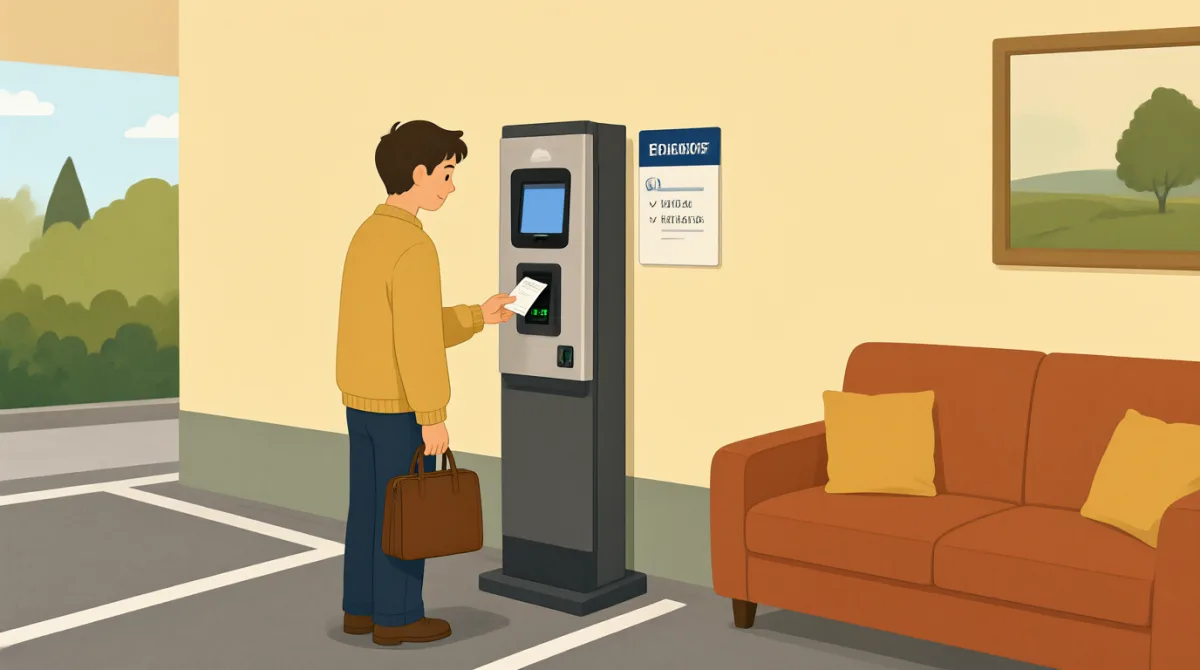

Alright, let's see. I need to pay for parking.
เอาล่ะ มาดูกัน ฉันต้องจ่ายค่าจอดรถ
Okay, the machine says 'Insert Ticket'. Here we go.
โอเค เครื่องขึ้นว่า 'Insert Ticket' ใส่เลยนะ
Hmm, it shows five dollars. That's not too bad for two hours.
อืม ขึ้นว่าห้าดอลลาร์ สองชั่วโมงก็ไม่แพงเท่าไร
Payment options: card or cash. I'll use my card.
วิธีชำระเงิน: บัตรหรือเงินสด ฉันใช้บัตรดีกว่า
Credit card inserted. 'Processing transaction...'
ใส่บัตรเครดิตแล้ว 'Processing transaction...'
Great, 'Transaction Approved'. And here's my ticket back.
เยี่ยมเลย 'Transaction Approved' แล้วก็ตั๋วของฉันคืนมาแล้ว
And the receipt... Perfect. Done.
แล้วก็ใบเสร็จ... เรียบร้อย
คำศัพท์8
- insertใส่
To put something inside a machine or slot, like a ticket or card. In parking machines, you insert your ticket to start the payment process.
หมายถึงนำสิ่งของใส่เข้าไปในเครื่องหรือช่อง เช่น ตั๋วหรือบัตร เวลาใช้เครื่องจ่ายค่าจอดรถ เราต้องใส่ตั๋วเพื่อเริ่มขั้นตอนชำระเงิน
- ticketตั๋ว
A small piece of paper or card that shows you have paid for something, like parking. You get it when you enter a parking lot and insert it to pay when leaving.
กระดาษหรือบัตรใบเล็ก ๆ ที่แสดงว่าคุณได้ชำระเงินสำหรับบางอย่างแล้ว เช่น ค่าจอดรถ คุณจะได้รับตั๋วตอนขับรถเข้าลานจอดรถ และใส่ตั๋วเพื่อจ่ายเงินตอนขับออก
- paymentการชำระเงิน
The act of giving money for something. In this context, it's about paying for parking time using cash or card.
การจ่ายเงินเพื่อแลกกับสิ่งของหรือบริการ ในที่นี้หมายถึงการจ่ายค่าจอดรถด้วยเงินสดหรือบัตร
- optionsตัวเลือก
Choices available. Here, it refers to the different ways to pay, like card or cash, which you select at a machine.
สิ่งที่เลือกได้ ในที่นี้หมายถึงวิธีชำระเงินแบบต่าง ๆ เช่น บัตรหรือเงินสด ซึ่งคุณเลือกได้ที่เครื่อง
- cardบัตร
A plastic payment card, like a credit or debit card. It's a common way to pay without using cash in modern machines.
บัตรพลาสติกสำหรับชำระเงิน เช่น บัตรเครดิตหรือบัตรเดบิต เป็นวิธีจ่ายเงินที่ใช้กันทั่วไปกับเครื่องสมัยใหม่ โดยไม่ต้องใช้เงินสด
- cashเงินสด
Physical money, like bills and coins. Some parking machines accept cash, but it's less common now due to errors.
เงินที่จับต้องได้ เช่น ธนบัตรและเหรียญ เครื่องจ่ายค่าจอดรถบางเครื่องรับเงินสด แต่ปัจจุบันพบได้น้อยลงเพราะอาจเกิดข้อผิดพลาดได้
- receiptใบเสร็จ
A printed record of your payment, showing the amount and time. Keep it as proof if there's a problem later.
เอกสารที่พิมพ์เพื่อบันทึกการชำระเงิน โดยระบุยอดเงินและเวลา ควรเก็บไว้เป็นหลักฐานเผื่อเกิดปัญหาภายหลัง
- transactionธุรกรรม
The process of paying or exchanging money. In machines, it means the payment is being checked and approved.
กระบวนการจ่ายเงินหรือแลกเปลี่ยนเงิน เมื่อใช้กับเครื่อง หมายถึงระบบกำลังตรวจสอบและอนุมัติการชำระเงิน
ประโยคสำคัญ7
- 1
I need to pay for parking.
ฉันต้องจ่ายค่าจอดรถ
This is a simple statement expressing the need to make a payment. Use it when approaching a parking machine or attendant. It's useful for starting a conversation about fees; grammar is present tense for current needs.
ประโยคง่าย ๆ ที่บอกว่าคุณจำเป็นต้องจ่ายเงิน ใช้พูดเมื่อเดินไปที่เครื่องจ่ายค่าจอดรถหรือคุยกับพนักงาน เหมาะสำหรับเริ่มพูดคุยเรื่องค่าบริการ โดยใช้รูปปัจจุบันเพื่อบอกความต้องการในตอนนี้
- 2
The machine says 'Insert Ticket'.
เครื่องขึ้นว่า 'Insert Ticket'
This reports what a machine displays. 'Says' is used for machines or signs showing instructions. Useful for describing steps in automated processes; practice reading and following machine prompts.
ใช้บอกสิ่งที่เครื่องแสดงบนหน้าจอ คำว่า 'Says' ใช้พูดถึงเครื่องหรือป้ายที่แสดงคำแนะนำได้ เหมาะสำหรับอธิบายขั้นตอนที่ทำโดยอัตโนมัติ ลองฝึกอ่านและทำตามคำแนะนำบนเครื่องดูนะ
- 3
It shows five dollars.
มันขึ้นว่าห้าดอลลาร์
This describes what appears on a screen, like the amount due. 'Shows' is common for digital displays. Helpful for checking costs; note the structure: subject + shows + amount.
ใช้บอกสิ่งที่ปรากฏบนหน้าจอ เช่น ยอดเงินที่ต้องจ่าย คำว่า 'Shows' มักใช้กับหน้าจอดิจิทัล มีประโยชน์เวลาตรวจสอบราคา โดยมีโครงสร้าง ประธาน + shows + จำนวนเงิน
- 4
Payment options: card or cash.
วิธีชำระเงิน: บัตรหรือเงินสด
This lists choices for paying. Use it to identify available methods. It's practical for any payment situation; the colon introduces the list, making it clear and direct.
ใช้บอกตัวเลือกในการชำระเงิน เหมาะสำหรับระบุวิธีจ่ายเงินที่มีให้เลือก ใช้ได้จริงกับสถานการณ์จ่ายเงินทั่วไป โดยเครื่องหมายทวิภาคใช้ขึ้นต้นรายการ ทำให้ข้อความชัดเจนและตรงประเด็น
- 5
I'll use my card.
ฉันใช้บัตรดีกว่า
This expresses a decision to choose one option. 'I'll' is short for 'I will,' showing future intention. Use it when selecting how to pay; it's polite and decisive in transactions.
ใช้บอกว่าตัดสินใจเลือกตัวเลือกหนึ่ง 'I'll' เป็นรูปย่อของ 'I will' ซึ่งแสดงความตั้งใจที่จะทำในอนาคต ใช้เมื่อเลือกวิธีชำระเงิน เป็นคำพูดที่สุภาพและชัดเจนในการทำธุรกรรม
- 6
Transaction Approved.
อนุมัติธุรกรรมแล้ว
This confirms successful payment. Common on screens or receipts. Useful to recognize when your payment works; it's a passive voice phrase, often seen in formal confirmations.
ข้อความนี้ยืนยันว่าชำระเงินสำเร็จ มักพบได้บนหน้าจอหรือใบเสร็จ มีประโยชน์สำหรับสังเกตว่าการจ่ายเงินผ่านแล้ว เป็นวลีรูปประโยคกรรมวาจกที่มักใช้ในการยืนยันอย่างเป็นทางการ
- 7
Perfect. Done.
เยี่ยมเลย เรียบร้อยแล้ว
Short expressions of satisfaction and completion. 'Perfect' means everything went well, 'Done' means finished. Use them casually after tasks like paying; great for everyday positive feedback.
เป็นคำสั้น ๆ ที่แสดงความพอใจและบอกว่าทำเสร็จแล้ว 'Perfect' หมายถึงทุกอย่างเป็นไปด้วยดี ส่วน 'Done' หมายถึงเสร็จแล้ว ใช้พูดสบาย ๆ หลังทำอะไรเสร็จ เช่น จ่ายเงิน เหมาะกับการแสดงความรู้สึกเชิงบวกในชีวิตประจำวัน