Paying with a Parking Attendant
पार्किंग अटेंडेंट को भुगतान करना
The user pays a parking attendant directly, typically at an exit booth. This involves handing over a ticket or stating the parking duration, inquiring about the fee, and making a payment.
ग्राहक आम तौर पर निकास बूथ पर पार्किंग अटेंडेंट को सीधे भुगतान करता है। इसके लिए टिकट देना या पार्किंग की अवधि बताना, शुल्क पूछना और भुगतान करना शामिल है।
संवाद8
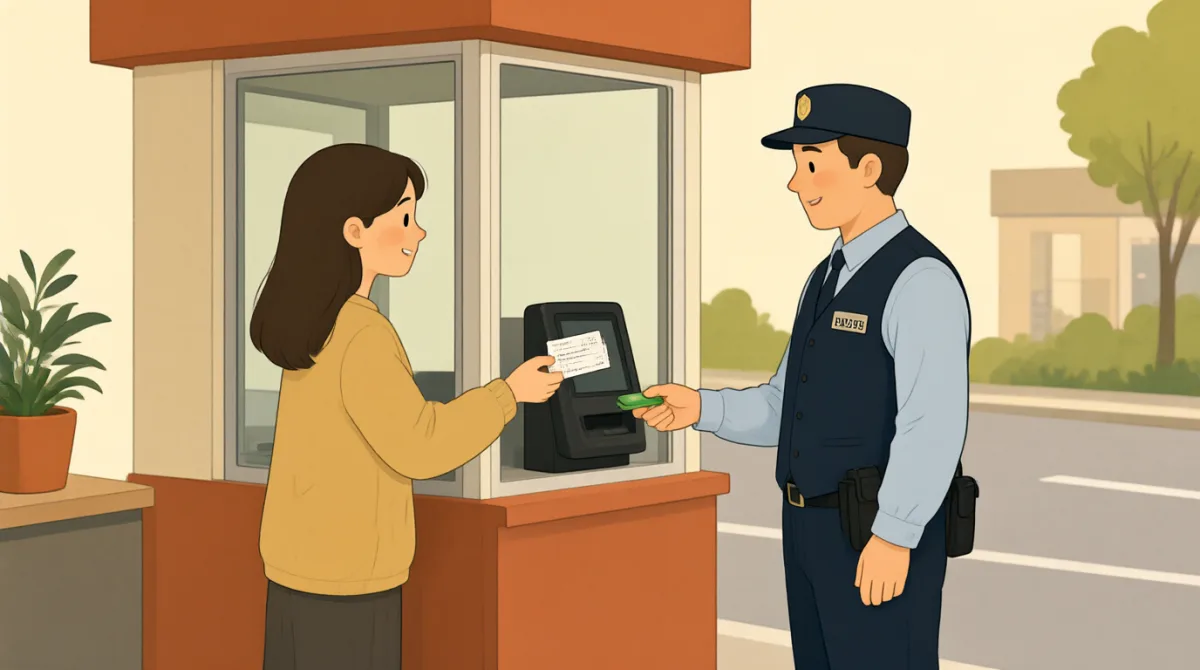

Hi, I'm ready to pay. Here's my ticket.
नमस्ते, मैं भुगतान करने के लिए तैयार हूँ। यह रहा मेरा टिकट।

Okay, let me scan that for you. So, you parked for two hours and forty-five minutes. That'll be twelve dollars.
ठीक है, मैं इसे स्कैन कर देती हूँ। तो आपने दो घंटे और पैंतालीस मिनट तक गाड़ी पार्क की थी। कुल बारह डॉलर हुए।
Twelve dollars, got it. Do you take card or is it cash only?
बारह डॉलर, समझ गया। क्या आप कार्ड लेते हैं या सिर्फ़ नकद?
We accept both cash and card, whichever you prefer.
हम नकद और कार्ड, दोनों लेते हैं। आप जो चाहें उससे भुगतान कर सकते हैं।
Great, I'll pay with my card then. Here you go.
बढ़िया, तो मैं कार्ड से भुगतान करूँगा। लीजिए।
Thank you. Just insert your card here. And would you like a receipt?
धन्यवाद। बस अपना कार्ड यहाँ डाल दीजिए। और क्या आपको रसीद चाहिए?
No, thanks, no receipt needed. Have a good day!
नहीं, धन्यवाद। रसीद की ज़रूरत नहीं है। आपका दिन अच्छा रहे!
You too! Your payment is complete. The gate will open now. Drive safely.
आपका भी! आपका भुगतान हो गया है। गेट अब खुल जाएगा। सुरक्षित गाड़ी चलाइए।
शब्दावली7
- ticketटिकट
A small piece of paper or card given when you enter a parking lot; you show it to pay when leaving.
पार्किंग लॉट में प्रवेश करते समय मिलने वाला कागज़ या कार्ड, जिसे बाहर निकलते समय भुगतान करने के लिए दिखाते हैं।
- scanस्कैन करना
To quickly read or check something electronically, like passing a ticket under a light to get information from it.
किसी चीज़ को इलेक्ट्रॉनिक तरीके से जल्दी पढ़ना या जाँचना; जैसे टिकट को मशीन के सामने रखकर उससे जानकारी लेना।
- parkedपार्क किया था
The past tense of 'park,' meaning you left your car in a specific spot for some time.
'park' का भूतकाल, जिसका अर्थ है कुछ समय के लिए अपनी गाड़ी को किसी खास जगह पर खड़ा करना।
- cashनकद
Physical money in the form of bills and coins, as opposed to digital payment.
नोटों और सिक्कों के रूप में मौजूद असली पैसा, डिजिटल भुगतान के विपरीत।
- cardकार्ड
Short for credit or debit card, a plastic card used to pay without using cash.
क्रेडिट या डेबिट कार्ड का छोटा रूप; प्लास्टिक का ऐसा कार्ड जिससे नकद दिए बिना भुगतान किया जाता है।
- receiptरसीद
A printed or digital document that proves you have paid for something; useful for records.
कागज़ पर छपा या डिजिटल दस्तावेज़, जो साबित करता है कि आपने किसी चीज़ का भुगतान किया है; हिसाब-किताब के लिए उपयोगी।
- insertडालना
To put something into a slot or opening, like sliding a card into a machine to pay.
किसी चीज़ को किसी खाँचे या खुले हिस्से के भीतर रखना; जैसे भुगतान करने के लिए कार्ड को मशीन में डालना।
मुख्य वाक्य6
- 1
Hi, I'm ready to pay. Here's my ticket.
नमस्ते, मैं भुगतान करने के लिए तैयार हूँ। यह रहा मेरा टिकट।
This is a polite way to start a payment conversation. 'I'm ready to pay' shows you're prepared, and 'Here's my ticket' means 'This is the ticket for my car.' Use this when approaching someone to pay for services like parking.
भुगतान के बारे में बातचीत शुरू करने का यह एक विनम्र तरीका है। 'I'm ready to pay' से पता चलता है कि आप भुगतान करने के लिए तैयार हैं, और 'Here's my ticket' का मतलब है 'यह मेरी गाड़ी का टिकट है।' पार्किंग जैसी सेवाओं का भुगतान करने के लिए किसी के पास जाते समय इसका इस्तेमाल करें।
- 2
So, you parked for two hours and forty-five minutes. That'll be twelve dollars.
तो आपने दो घंटे और पैंतालीस मिनट तक गाड़ी पार्क की थी। कुल बारह डॉलर हुए।
This sentence explains the parking time and total cost. 'That'll be' is a contraction of 'That will be,' commonly used in service situations to state the amount due. It's useful for confirming fees in transactions.
इस वाक्य में पार्किंग का समय और कुल शुल्क बताया गया है। 'That'll be' दरअसल 'That will be' का संक्षिप्त रूप है। सेवा-संबंधी बातचीत में देय रकम बताने के लिए इसका आम तौर पर इस्तेमाल होता है। लेन-देन के समय शुल्क की पुष्टि करने के लिए यह वाक्यांश उपयोगी है।
- 3
Do you take card or is it cash only?
क्या आप कार्ड लेते हैं या सिर्फ़ नकद?
This is a question to check payment options. 'Do you take' means 'Do you accept,' and 'cash only' means no cards allowed. Use this when you're unsure how to pay, like at stores or parking lots.
भुगतान के तरीकों के बारे में पूछने के लिए यह सवाल है। 'Do you take' का मतलब है 'क्या आप स्वीकार करते हैं', और 'cash only' का मतलब है कि कार्ड से भुगतान नहीं किया जा सकता। भुगतान कैसे करना है, यह पता न होने पर दुकानों या पार्किंग लॉट में इसका इस्तेमाल करें।
- 4
We accept both cash and card, whichever you prefer.
हम नकद और कार्ड, दोनों लेते हैं। आप जो चाहें उससे भुगतान कर सकते हैं।
This offers choices for payment. 'Whichever you prefer' means 'any one you like best.' It's a customer-friendly response in service roles, showing flexibility.
इसमें भुगतान के विकल्प दिए जा रहे हैं। 'Whichever you prefer' का मतलब है 'इनमें से जो आपको सबसे अच्छा लगे।' सेवा देने वाले लोग ग्राहकों से यह विनम्र जवाब देते हैं, जिससे पता चलता है कि वे उनकी पसंद के अनुसार भुगतान स्वीकार करेंगे।
- 5
Just insert your card here.
बस अपना कार्ड यहाँ डाल दीजिए।
This gives simple instructions for payment. 'Just' makes it sound easy and reassuring. Use imperative sentences like this to guide someone on how to do something step by step.
यह भुगतान करने का आसान निर्देश है। 'Just' से निर्देश सरल और आश्वस्त करने वाला लगता है। किसी को कोई काम चरण-दर-चरण बताने के लिए ऐसे आज्ञार्थक वाक्यों का इस्तेमाल करें।
- 6
No, thanks, no receipt needed. Have a good day!
नहीं, धन्यवाद। रसीद की ज़रूरत नहीं है। आपका दिन अच्छा रहे!
This politely declines something and ends the conversation positively. 'No receipt needed' is a common phrase to say you don't want proof of payment. 'Have a good day' is a friendly goodbye used in American English.
इस वाक्य से आप विनम्रता से कोई चीज़ लेने से मना करते हैं और बातचीत का अंत अच्छे ढंग से करते हैं। 'No receipt needed' यह कहने का आम तरीका है कि आपको भुगतान का सबूत नहीं चाहिए। 'Have a good day' अमेरिकी अंग्रेज़ी में इस्तेमाल होने वाला दोस्ताना विदाई-वाक्य है।