Unpacking With a Friend
Desfazendo as caixas com um amigo
Emma's friend Leo helps her unpack in the new apartment. They sort the boxes and decide where to put a few things.
O amigo de Emma, Leo, ajuda a desfazer as caixas no apartamento novo. Eles separam as caixas e decidem onde colocar algumas coisas.
Diálogo8
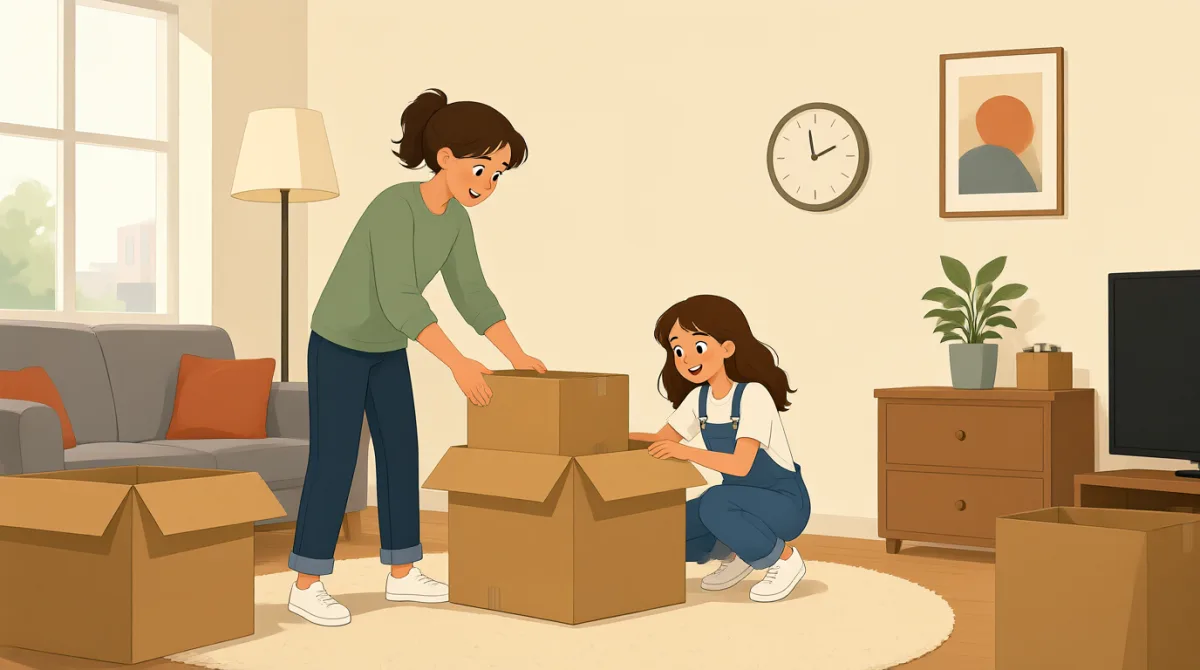

Thanks for helping me unpack, Leo. Let’s put the boxes in the living room.
Obrigada por me ajudar a desfazer as caixas, Leo. Vamos colocar as caixas na sala.

Sure! This one says “kitchen.” Should I take it over there?
Claro! Esta aqui diz “cozinha”. Quer que eu leve para lá?
Yes, please. The plates and cups are in that box.
Sim, por favor. Os pratos e os copos estão naquela caixa.
Where do you want the small table? By the window or near the sofa?
Onde você quer colocar a mesinha? Perto da janela ou perto do sofá?
By the window, please. I can put a plant on it later.
Perto da janela, por favor. Depois posso colocar uma planta em cima dela.
Good idea. This lamp can go next to the sofa. Is there an outlet there?
Boa ideia. Este abajur pode ficar ao lado do sofá. Tem uma tomada ali?
Yes, there is. Let’s open the big box and find the blankets.
Tem, sim. Vamos abrir a caixa grande e procurar os cobertores.
Here they are! We can make the bed after we finish these boxes.
Aqui estão! Podemos arrumar a cama depois de terminarmos essas caixas.
Vocabulário8
- unpackdesfazer as caixas
To take things out of boxes after you move. You can unpack your kitchen things first.
Tirar as coisas das caixas depois de se mudar. Você pode começar desfazendo as caixas com as coisas da cozinha.
- put the boxescolocar as caixas
To place the boxes somewhere. You can say, “Let’s put the boxes in the living room.”
Pôr as caixas em algum lugar. Você pode dizer: “Let’s put the boxes in the living room.” (Vamos colocar as caixas na sala.)
- take it over therelevar para lá
To carry something to another place. Use “take it” to refer to one thing you have already mentioned.
Carregar alguma coisa para outro lugar. Use “take it” para se referir a uma coisa que você já mencionou.
- by the windowperto da janela
Next to the window. Use “by” to say where you want to put furniture or other things.
Ao lado da janela. Use “by” para dizer onde você quer colocar móveis ou outras coisas.
- next to the sofaao lado do sofá
Beside the sofa. This phrase helps you describe where something should go.
Junto ao sofá. Essa expressão ajuda você a dizer onde algo deve ficar.
- outlettomada
A place in the wall where you plug in a lamp or another electrical item.
Um ponto na parede onde você liga um abajur ou outro aparelho elétrico.
- open the big boxabrir a caixa grande
To remove or lift the top of the large box. You can use this phrase when you are ready to look inside.
Tirar ou levantar a tampa da caixa grande. Você pode usar essa expressão quando quiser olhar o que tem dentro.
- make the bedarrumar a cama
To arrange the blankets and sheets on the bed. People often make the bed after they finish unpacking.
Arrumar os lençóis e as cobertas na cama. As pessoas costumam arrumar a cama depois de terminar de desfazer as caixas.
Frases-chave8
- 1
Thanks for helping me unpack, Leo.
Obrigada por me ajudar a desfazer as caixas, Leo.
Use this sentence to thank someone for helping you. You can replace “unpack” with another activity, such as “move” or “clean.”
Use essa frase para agradecer a alguém por ajudar você. Você pode trocar “unpack” por outra atividade, como “move” ou “clean”.
- 2
Let’s put the boxes in the living room.
Vamos colocar as caixas na sala.
Use “Let’s” to suggest doing something together. You can change the place to give a different direction.
Use “Let’s” para sugerir que vocês façam algo juntos. Você pode mudar o lugar para indicar outro destino.
- 3
Should I take it over there?
Quer que eu leve para lá?
Ask this when you want to check whether someone wants you to carry something to a place. Replace “it” with the item you mean.
Faça essa pergunta quando quiser saber se alguém quer que você leve alguma coisa para determinado lugar. Troque “it” pelo nome do objeto a que você se refere.
- 4
Where do you want the small table?
Onde você quer colocar a mesinha?
Use this question to ask where someone wants an item placed. You can replace “the small table” with another object.
Use essa pergunta para saber onde alguém quer que um objeto fique. Você pode trocar “the small table” por outro objeto.
- 5
By the window, please.
Perto da janela, por favor.
This is a polite, simple way to say where you want something. Replace “by the window” with another place.
Essa é uma forma simples e educada de dizer onde você quer que algo fique. Troque “by the window” por outro lugar.
- 6
Is there an outlet there?
Tem uma tomada ali?
Use this question to check if a place has an electrical outlet. You can replace “an outlet” with another thing you need.
Use essa pergunta para saber se há uma tomada em determinado lugar. Você pode trocar “an outlet” por outra coisa de que precisa.
- 7
Let’s open the big box and find the blankets.
Vamos abrir a caixa grande e procurar os cobertores.
Use “Let’s” to suggest doing two things together. You can name other items or boxes in the same way.
Use “Let’s” para sugerir que vocês façam duas coisas juntos. Você pode mencionar outros objetos ou caixas do mesmo jeito.
- 8
We can make the bed after we finish these boxes.
Podemos arrumar a cama depois de terminarmos essas caixas.
This sentence explains what you can do after another task is finished. Use “after we finish” to talk about a later activity.
Essa frase explica o que vocês podem fazer depois que outra tarefa terminar. Use “after we finish” para falar de uma atividade que virá depois.