Unpacking With a Friend
Rozpakowywanie z przyjacielem
Emma's friend Leo helps her unpack in the new apartment. They sort the boxes and decide where to put a few things.
Przyjaciel Emmy, Leo, pomaga jej rozpakować rzeczy w nowym mieszkaniu. Segregują pudła i decydują, gdzie postawić kilka rzeczy.
Dialog8
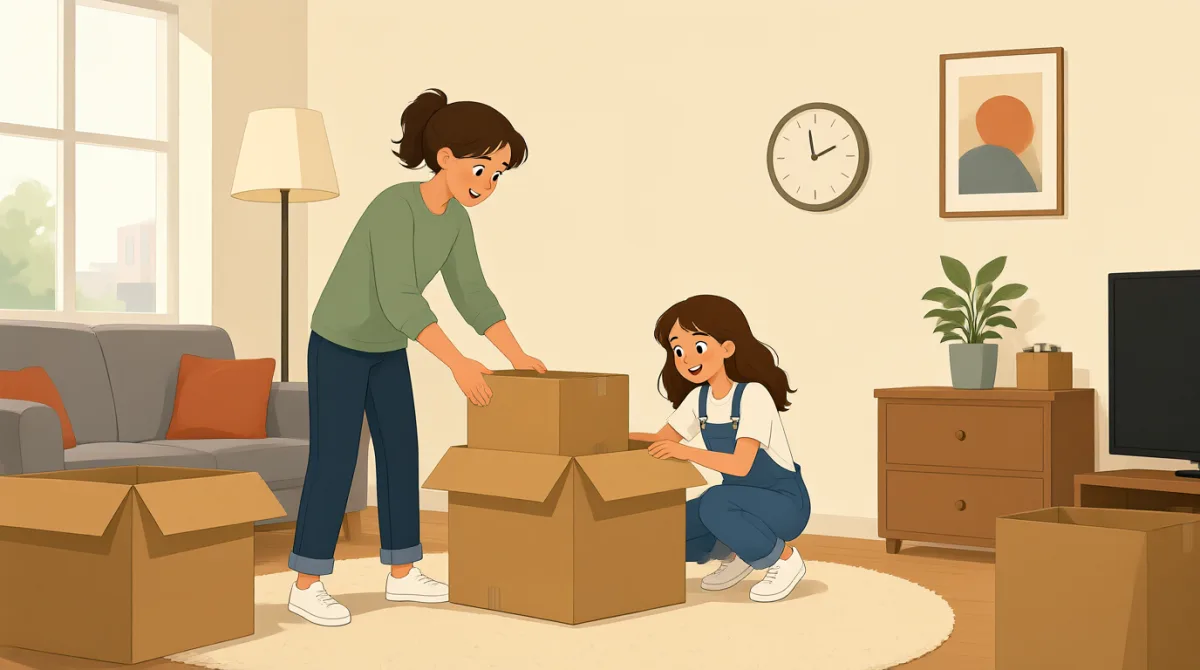

Thanks for helping me unpack, Leo. Let’s put the boxes in the living room.
Dzięki, że pomagasz mi się rozpakować, Leo. Wstawmy pudła do salonu.

Sure! This one says “kitchen.” Should I take it over there?
Jasne! Na tym jest napisane „kuchnia”. Zanieść je tam?
Yes, please. The plates and cups are in that box.
Tak, proszę. W tym pudle są talerze i kubki.
Where do you want the small table? By the window or near the sofa?
Gdzie chcesz postawić mały stolik? Przy oknie czy obok kanapy?
By the window, please. I can put a plant on it later.
Przy oknie, proszę. Później postawię na nim roślinę.
Good idea. This lamp can go next to the sofa. Is there an outlet there?
Dobry pomysł. Tę lampę możemy postawić obok kanapy. Jest tam gniazdko?
Yes, there is. Let’s open the big box and find the blankets.
Tak, jest. Otwórzmy duże pudło i znajdźmy koce.
Here they are! We can make the bed after we finish these boxes.
O, są! Po rozpakowaniu tych pudeł możemy pościelić łóżko.
Słownictwo8
- unpackrozpakować
To take things out of boxes after you move. You can unpack your kitchen things first.
Wyjmować rzeczy z pudeł po przeprowadzce. Możesz najpierw rozpakować rzeczy do kuchni.
- put the boxeswstawić pudła
To place the boxes somewhere. You can say, “Let’s put the boxes in the living room.”
Umieścić pudła w jakimś miejscu. Możesz powiedzieć: „Wstawmy pudła do salonu”.
- take it over therezanieść to tam
To carry something to another place. Use “take it” to refer to one thing you have already mentioned.
Przenieść coś w inne miejsce. Użyj “take it”, gdy mówisz o jednej rzeczy, o której była już mowa.
- by the windowprzy oknie
Next to the window. Use “by” to say where you want to put furniture or other things.
Obok okna. Użyj “by”, żeby powiedzieć, gdzie chcesz postawić meble lub inne rzeczy.
- next to the sofaobok kanapy
Beside the sofa. This phrase helps you describe where something should go.
Przy kanapie. To wyrażenie pomaga opisać, gdzie coś powinno się znaleźć.
- outletgniazdko
A place in the wall where you plug in a lamp or another electrical item.
Miejsce w ścianie, do którego podłącza się lampę lub inne urządzenie elektryczne.
- open the big boxotworzyć duże pudło
To remove or lift the top of the large box. You can use this phrase when you are ready to look inside.
Zdjąć lub unieść pokrywę dużego pudła. Możesz użyć tego wyrażenia, gdy chcesz zajrzeć do środka.
- make the bedpościelić łóżko
To arrange the blankets and sheets on the bed. People often make the bed after they finish unpacking.
Ułożyć koce i prześcieradła na łóżku. Ludzie często ścielą łóżko po rozpakowaniu rzeczy.
Kluczowe zdania8
- 1
Thanks for helping me unpack, Leo.
Dzięki, że pomagasz mi się rozpakować, Leo.
Use this sentence to thank someone for helping you. You can replace “unpack” with another activity, such as “move” or “clean.”
Użyj tego zdania, żeby podziękować komuś za pomoc. Zamiast “unpack” możesz wstawić inną czynność, na przykład “move” lub “clean”.
- 2
Let’s put the boxes in the living room.
Wstawmy pudła do salonu.
Use “Let’s” to suggest doing something together. You can change the place to give a different direction.
Użyj “Let’s”, żeby zaproponować wspólne zrobienie czegoś. Możesz zmienić miejsce, żeby wskazać inny kierunek.
- 3
Should I take it over there?
Zanieść to tam?
Ask this when you want to check whether someone wants you to carry something to a place. Replace “it” with the item you mean.
Zadaj to pytanie, gdy chcesz się upewnić, czy ktoś chce, żebyś coś gdzieś zaniósł. Zamiast “it” wstaw nazwę danej rzeczy.
- 4
Where do you want the small table?
Gdzie chcesz postawić mały stolik?
Use this question to ask where someone wants an item placed. You can replace “the small table” with another object.
Użyj tego pytania, żeby dowiedzieć się, gdzie ktoś chce umieścić daną rzecz. Zamiast “the small table” możesz wstawić nazwę innego przedmiotu.
- 5
By the window, please.
Przy oknie, proszę.
This is a polite, simple way to say where you want something. Replace “by the window” with another place.
To uprzejmy i prosty sposób, żeby powiedzieć, gdzie chcesz coś postawić. Zamiast “by the window” możesz podać inne miejsce.
- 6
Is there an outlet there?
Jest tam gniazdko?
Use this question to check if a place has an electrical outlet. You can replace “an outlet” with another thing you need.
Użyj tego pytania, żeby sprawdzić, czy w danym miejscu jest gniazdko elektryczne. Zamiast “an outlet” możesz wstawić nazwę innej potrzebnej rzeczy.
- 7
Let’s open the big box and find the blankets.
Otwórzmy duże pudło i znajdźmy koce.
Use “Let’s” to suggest doing two things together. You can name other items or boxes in the same way.
Użyj “Let’s”, żeby zaproponować wspólne wykonanie dwóch czynności. W ten sam sposób możesz wymienić inne rzeczy lub pudła.
- 8
We can make the bed after we finish these boxes.
Możemy pościelić łóżko, kiedy skończymy rozpakowywać te pudła.
This sentence explains what you can do after another task is finished. Use “after we finish” to talk about a later activity.
To zdanie mówi, co można zrobić po zakończeniu innego zadania. Użyj “after we finish”, żeby opowiedzieć o czynności, którą wykonasz później.