Buying a Bus Ticket
Kupowanie biletu autobusowego
Emma asks Jack at the ticket counter about bus times and buys a ticket for the next morning. They check the price and where she needs to board.
Emma pyta Jacka przy kasie o godziny odjazdu autobusów i kupuje bilet na następny poranek. Sprawdzają cenę i miejsce, z którego ma wsiąść.
Dialog8
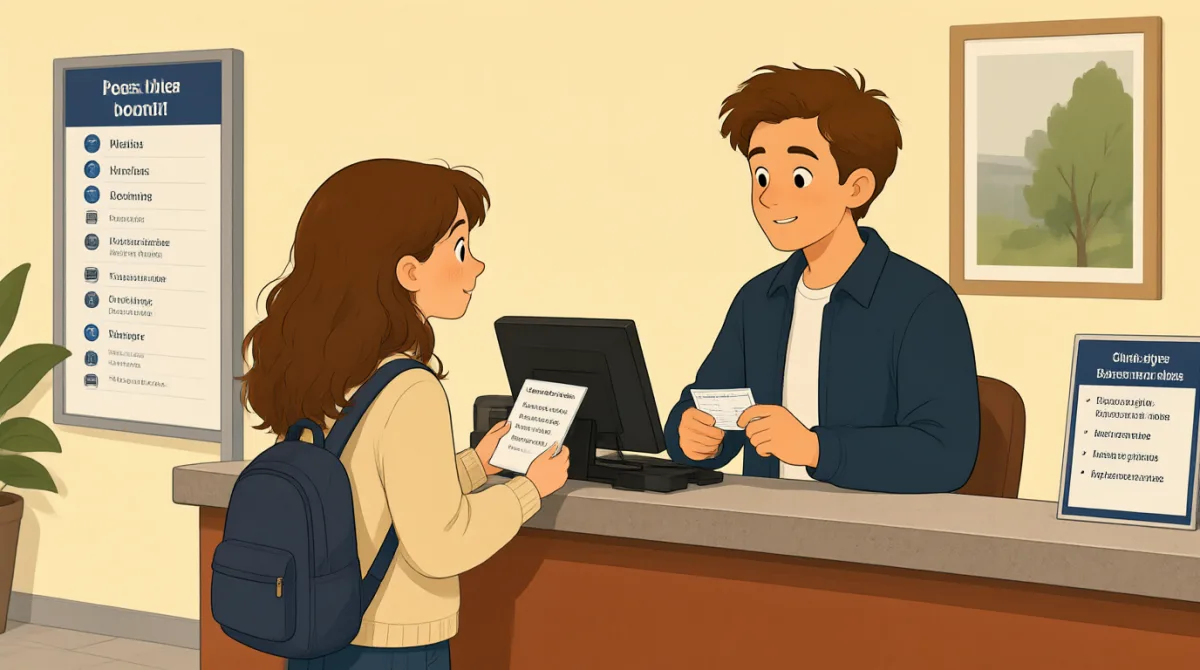

Hi, what time does the bus to Chicago leave tomorrow morning?
Cześć, o której jutro rano odjeżdża autobus do Chicago?

The next one leaves at eight thirty. There’s another bus at ten.
Najbliższy odjeżdża o wpół do dziewiątej. Następny jest o dziesiątej.
Great. Can I buy a ticket for the eight thirty bus, please?
Świetnie. Czy mogę prosić o bilet na autobus o wpół do dziewiątej?
Sure. A one-way ticket is forty dollars. Do you need a return ticket?
Oczywiście. Bilet w jedną stronę kosztuje czterdzieści dolarów. Potrzebuje pani biletu powrotnego?
No, just one way. Where do I get on the bus?
Nie, tylko w jedną stronę. Skąd odjeżdża autobus?
It leaves from Gate 6. Please be there fifteen minutes early.
Odjeżdża z peronu 6. Proszę być tam piętnaście minut wcześniej.
Okay. Is this my ticket? Does it show the gate number?
Dobrze. Czy to mój bilet? Czy jest na nim numer peronu?
Yes, Gate 6 is printed here. Have a good trip!
Tak, tutaj jest wydrukowany peron 6. Życzę miłej podróży!
Słownictwo7
- leaveodjeżdżać
Here, “leave” means to start a journey. You can ask, “What time does the bus leave?”
Tutaj „leave” oznacza rozpocząć podróż. Możesz zapytać: „What time does the bus leave?” (O której odjeżdża autobus?).
- one-way ticketbilet w jedną stronę
A one-way ticket lets you travel to a place without including a return trip. Use it when you only need to go in one direction.
Bilet w jedną stronę pozwala dojechać do jakiegoś miejsca, ale nie obejmuje podróży powrotnej. Użyj tego określenia, gdy chcesz jechać tylko w jedną stronę.
- return ticketbilet powrotny
A return ticket includes travel back to where you started. You can ask, “Do you need a return ticket?”
Bilet powrotny obejmuje podróż z powrotem do miejsca, z którego wyruszyłeś. Możesz zapytać: „Do you need a return ticket?” (Czy potrzebuje pani biletu powrotnego?).
- get on the buswsiąść do autobusu
This means to enter the bus. You can ask, “Where do I get on the bus?”
To znaczy wejść do autobusu. Możesz zapytać: „Where do I get on the bus?” (Skąd odjeżdża autobus?).
- Gate 6peron 6
A gate is a place where passengers wait to board a bus. Replace “6” with the gate number you need.
„Gate” to miejsce, w którym pasażerowie czekają na wejście do autobusu. Zamiast „6” podaj numer swojego peronu.
- fifteen minutes earlypiętnaście minut wcześniej
This means arriving 15 minutes before the bus leaves. It gives you time to find your bus and get ready.
To znaczy przyjść 15 minut przed odjazdem autobusu. Dzięki temu zdążysz znaleźć autobus i przygotować się do podróży.
- printed herewydrukowany tutaj
This means written or shown on this ticket. You can ask if important details are printed on a ticket.
To znaczy napisany lub widoczny na tym bilecie. Możesz zapytać, czy ważne informacje są wydrukowane na bilecie.
Kluczowe zdania7
- 1
What time does the bus to Chicago leave tomorrow morning?
O której jutro rano odjeżdża autobus do Chicago?
Use this to ask when a bus or other form of transport departs. Replace “Chicago” with your destination.
Użyj tego pytania, by dowiedzieć się, kiedy odjeżdża autobus lub inny środek transportu. Zamiast „Chicago” podaj swój cel podróży.
- 2
Can I buy a ticket for the eight thirty bus, please?
Czy mogę prosić o bilet na autobus o wpół do dziewiątej?
This is a polite way to buy a ticket for a specific bus. Replace “eight thirty” with the time you want.
To uprzejmy sposób, by kupić bilet na konkretny autobus. Zamiast „eight thirty” podaj wybraną godzinę.
- 3
A one-way ticket is forty dollars.
Bilet w jedną stronę kosztuje czterdzieści dolarów.
This sentence gives the price of a ticket for a single journey. You can use the pattern “A [type of ticket] is [price]” to talk about costs.
To zdanie podaje cenę biletu na przejazd w jedną stronę. Możesz użyć wzoru „A [type of ticket] is [price]”, mówiąc o kosztach.
- 4
Do you need a return ticket?
Potrzebuje pani biletu powrotnego?
Use this question to check if someone also needs a ticket for the journey back. You can ask it when helping someone buy travel tickets.
Użyj tego pytania, by sprawdzić, czy ktoś potrzebuje również biletu na drogę powrotną. Możesz tak zapytać, pomagając komuś kupić bilety.
- 5
Where do I get on the bus?
Skąd odjeżdża autobus?
Use this to ask where to board the bus. You can replace “bus” with another type of transport.
Użyj tego pytania, by dowiedzieć się, gdzie wsiąść do autobusu. Zamiast „bus” możesz podać inny środek transportu.
- 6
Please be there fifteen minutes early.
Proszę być tam piętnaście minut wcześniej.
This is a polite instruction to arrive before a planned time. Replace “fifteen minutes” with the amount of time needed.
To uprzejma prośba, by przyjść przed ustaloną godziną. Zamiast „fifteen minutes” podaj wymagany czas.
- 7
Does it show the gate number?
Czy jest na nim numer peronu?
Use this to ask whether a ticket or document includes a particular detail. Replace “the gate number” with the information you want to check.
Użyj tego pytania, by sprawdzić, czy bilet lub dokument zawiera konkretną informację. Zamiast „the gate number” podaj informację, którą chcesz sprawdzić.