Trying On Shoes
Przymierzanie butów
Mia helps her child try on a pair of shoes. Grace checks that they fit well and feel comfortable.
Mia pomaga dziecku przymierzyć buty. Grace sprawdza, czy dobrze leżą i są wygodne.
Dialog8
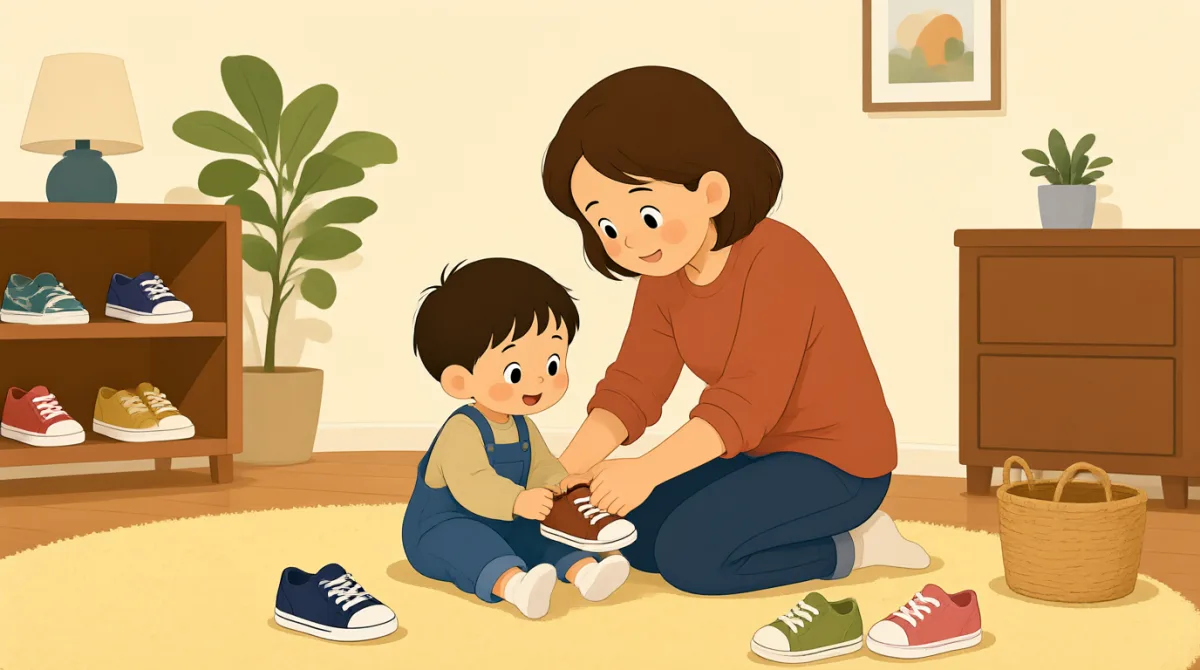

Could my child try on these shoes? They look just right.
Czy moje dziecko może przymierzyć te buty? Wyglądają idealnie.

Of course. Have them sit here, and I’ll bring a few sizes.
Oczywiście. Niech usiądzie tutaj, a ja przyniosę kilka rozmiarów.
Thanks. This is the size they usually wear.
Dzięki. Zwykle nosi taki rozmiar.
Let’s try them on. Are the toes touching the front?
Przymierzmy je. Czy palce dotykają przodu buta?
No, there’s a little room. They say the shoes feel comfortable.
Nie, jest trochę luzu. Mówi, że buty są wygodne.
Good. Can they walk around in them for a moment?
Dobrze. Może chwilę się w nich przejść?
Sure. They’re walking now, and the shoes stay on well.
Jasne. Właśnie chodzi i buty dobrze trzymają się na nogach.
Great! They fit well and don’t seem too tight.
Świetnie! Dobrze leżą i nie wydają się za ciasne.
Słownictwo8
- try onprzymierzyć
To put on clothes or shoes to see if they fit. You can say, “Can I try on these shoes?”
Założyć ubranie lub buty, żeby sprawdzić, czy pasują. Możesz powiedzieć: „Can I try on these shoes?”
- a few sizeskilka rozmiarów
More than one size. A shop assistant may bring a few sizes so you can find the best fit.
Więcej niż jeden rozmiar. Sprzedawca może przynieść kilka rozmiarów, żeby łatwiej było znaleźć te najlepiej pasujące.
- usually wearzwykle nosić
The size someone wears most of the time. You can use this phrase when telling a shop assistant your usual size.
Rozmiar, który ktoś nosi najczęściej. Możesz użyć tego wyrażenia, mówiąc sprzedawcy, jaki rozmiar zwykle nosisz.
- toespalce u stóp
The parts at the ends of your feet. When trying on shoes, check that your toes have enough room.
Części znajdujące się na końcach stóp. Przymierzając buty, sprawdź, czy palce mają wystarczająco dużo miejsca.
- a little roomtrochę luzu
A small amount of extra space. Use this phrase to say the shoes are not too small.
Niewielka ilość wolnego miejsca. Użyj tego wyrażenia, żeby powiedzieć, że buty nie są za małe.
- walk aroundprzejść się
To walk in an area for a short time. You can walk around in new shoes to see how they feel.
Chodzić przez krótki czas po jakimś miejscu. Możesz przejść się w nowych butach, żeby sprawdzić, jak się w nich czujesz.
- stay ontrzymać się na nodze
To remain in place without coming off. Shoes should stay on when you walk.
Pozostawać na swoim miejscu i nie zsuwać się. Buty powinny dobrze trzymać się na nogach podczas chodzenia.
- too tightza ciasny
So close or small that it feels uncomfortable. You can use this phrase to describe shoes that do not fit well.
Tak ciasny lub mały, że jest niewygodny. Możesz użyć tego wyrażenia, mówiąc o butach, które źle leżą.
Kluczowe zdania7
- 1
Could my child try on these shoes?
Czy moje dziecko może przymierzyć te buty?
Use this polite question to ask if someone can try on shoes or clothes. Replace “my child” with the person’s name or “I” to fit your situation.
Użyj tego uprzejmego pytania, żeby zapytać, czy ktoś może przymierzyć buty lub ubrania. Zależnie od sytuacji zastąp „my child” imieniem tej osoby albo słowem „I”.
- 2
Have them sit here, and I’ll bring a few sizes.
Niech usiądzie tutaj, a ja przyniosę kilka rozmiarów.
This gives someone a simple instruction and explains what you will do next. “I’ll bring…” is useful when offering to get something.
W ten sposób wydajesz komuś prostą instrukcję i mówisz, co zrobisz za chwilę. „I’ll bring…” przydaje się, gdy oferujesz, że coś przyniesiesz.
- 3
This is the size they usually wear.
Zwykle nosi taki rozmiar.
Use this sentence to tell a shop assistant someone’s usual size. You can replace “they” with “I,” “he,” or “she.”
Użyj tego zdania, żeby powiedzieć sprzedawcy, jaki rozmiar ktoś zwykle nosi. Możesz zastąpić „they” słowem „I”, „he” lub „she”.
- 4
Are the toes touching the front?
Czy palce dotykają przodu buta?
This question checks whether shoes are too small. You can ask it when helping someone try on shoes.
To pytanie pozwala sprawdzić, czy buty nie są za małe. Możesz je zadać, pomagając komuś przymierzyć buty.
- 5
They say the shoes feel comfortable.
Mówi, że buty są wygodne.
Use this sentence to report how someone feels about a pair of shoes. You can replace “comfortable” with another feeling, such as “tight.”
Użyj tego zdania, żeby powiedzieć, co ktoś sądzi o wygodzie butów. Zamiast „comfortable” możesz wstawić inne określenie, na przykład „tight”.
- 6
Can they walk around in them for a moment?
Czy może się w nich chwilę przejść?
This is a polite way to ask someone to test shoes by walking. “For a moment” means for a short time.
To uprzejmy sposób, żeby poprosić kogoś o sprawdzenie butów podczas chodzenia. „For a moment” oznacza „przez krótką chwilę”.
- 7
They fit well and don’t seem too tight.
Dobrze leżą i nie wydają się za ciasne.
Use this sentence to describe shoes that fit comfortably. You can replace “They” with another item, such as “These shoes.”
Użyj tego zdania, żeby opisać buty, które są wygodne i dobrze leżą. Zamiast „They” możesz podać inny przedmiot, na przykład „These shoes”.