Choosing a Bowling Ball
Wybór kuli do kręgli
Jack helps Emma and Leo find balls that are comfortable to hold. They compare the weights before heading to their lane.
Jack pomaga Emmie i Leo znaleźć kule, które wygodnie się trzyma. Porównują ich wagę, zanim pójdą na swój tor.
Dialog8
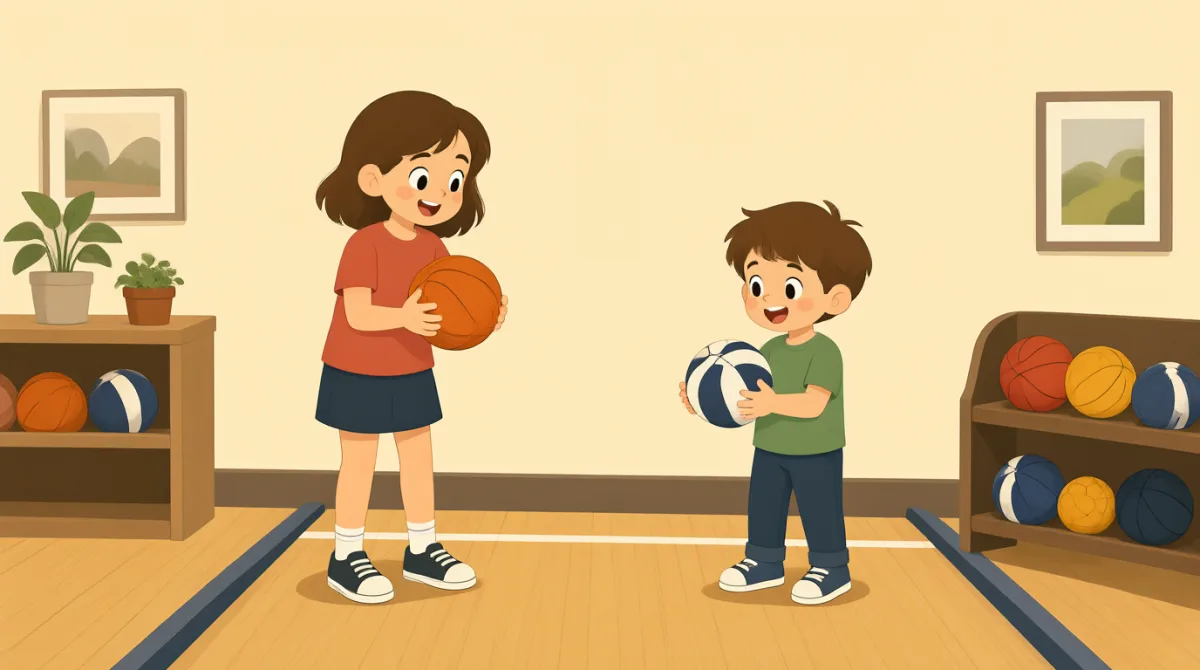

Here are a few bowling balls. Try holding one and see how it feels.
Proszę, oto kilka kul do kręgli. Spróbuj którąś potrzymać i zobacz, jak leży w dłoni.

This one feels a little heavy. Do you have a lighter ball?
Ta jest trochę za ciężka. Masz lżejszą kulę?
Sure. Try this blue one. It weighs eight pounds.
Jasne. Spróbuj tej niebieskiej. Waży osiem funtów.

I like this one. It's heavier, but I can hold it comfortably.
Podoba mi się ta. Jest cięższa, ale wygodnie ją trzymam.
Good. Make sure your fingers fit into the holes without getting stuck.
Dobrze. Upewnijcie się, że wasze palce mieszczą się w otworach i nie utkną.
These holes fit my fingers. I'll take this lighter ball.
Te otwory pasują na moje palce. Wezmę tę lżejszą kulę.
I'll take the blue one. Are we ready to head to our lane?
Wezmę tę niebieską. Możemy już iść na nasz tor?
Yes, let's go. Carry the balls carefully, and I'll show you our lane.
Tak, chodźmy. Ostrożnie nieście kule, a pokażę wam nasz tor.
Słownictwo8
- a little heavytrochę za ciężki
This means something feels slightly too heavy to hold. Use “a little” before an adjective to describe a small amount or degree.
To znaczy, że coś wydaje się nieco za ciężkie do trzymania. „A little” stawiamy przed przymiotnikiem, żeby opisać niewielki stopień danej cechy.
- a lighter balllżejsza kula
A lighter ball weighs less than another ball. Use “lighter” to compare the weight of two things.
Lżejsza kula waży mniej niż inna kula. Użyj „lighter”, żeby porównać wagę dwóch rzeczy.
- weighs eight poundsważy osiem funtów
This tells us how heavy the ball is. You can say “It weighs…” followed by a number and a unit.
To informacja o tym, ile waży kula. Możesz powiedzieć „It weighs…”, a potem podać liczbę i jednostkę.
- hold it comfortablywygodnie ją trzymać
This means you can hold something easily without feeling uncomfortable. You can use “comfortably” to describe how you do an action.
To znaczy, że możesz coś trzymać bez wysiłku i dyskomfortu. „Comfortably” możesz użyć, by opisać, jak wykonujesz jakąś czynność.
- fit into the holesmieścić się w otworach
This means your fingers are the right size to go into the holes. Use “fit into” when something can go inside a space correctly.
To znaczy, że twoje palce są odpowiedniej wielkości, by wsunąć je w otwory. Użyj „fit into”, gdy coś pasuje do wnętrza jakiejś przestrzeni.
- getting stuckutknąć
This means being unable to move something out of a tight space. Use “get stuck” to describe something that cannot move freely.
To znaczy, że nie możesz wyciągnąć czegoś z ciasnego miejsca. „Get stuck” opisuje sytuację, w której coś nie może się swobodnie poruszać.
- head to our laneiść na nasz tor
This means go to the bowling lane where you will play. Use “head to” as a casual way to say “go to” a place.
To znaczy pójść na tor do kręgli, na którym będziecie grać. „Head to” to potoczny sposób na powiedzenie „iść do” jakiegoś miejsca.
- carry the balls carefullyostrożnie nieść kule
This means hold and move the balls with care. Use an adverb like “carefully” to explain how someone should do an action.
To znaczy trzymać i przenosić kule ostrożnie. Przysłówek taki jak „carefully” opisuje, jak należy wykonać daną czynność.
Kluczowe zdania7
- 1
Try holding one and see how it feels.
Spróbuj którąś potrzymać i zobacz, jak leży w dłoni.
Use this to suggest trying something before choosing it. You can reuse “Try [verb]-ing and see how it feels” when someone is testing an item.
Użyj tego zdania, gdy chcesz zasugerować wypróbowanie czegoś przed dokonaniem wyboru. Gdy ktoś testuje jakiś przedmiot, możesz użyć konstrukcji „Try [verb]-ing and see how it feels”.
- 2
Do you have a lighter ball?
Masz lżejszą kulę?
This is a polite way to ask for an option that weighs less. You can replace “ball” with another item, such as “a smaller size” or “a cheaper one.”
To uprzejmy sposób, by poprosić o coś, co waży mniej. Zamiast „ball” możesz użyć nazwy innej rzeczy, na przykład „a smaller size” albo „a cheaper one”.
- 3
It weighs eight pounds.
Waży osiem funtów.
This sentence gives the weight of an object. Reuse “It weighs…” with a number and a unit to compare or describe items.
To zdanie podaje wagę przedmiotu. Możesz użyć „It weighs…”, a następnie liczby i jednostki, żeby opisać lub porównać rzeczy.
- 4
Make sure your fingers fit into the holes without getting stuck.
Upewnijcie się, że wasze palce mieszczą się w otworach i nie utkną.
Use “Make sure” to give someone a helpful instruction or reminder. The sentence also shows how to explain what to check and what problem to avoid.
Użyj „Make sure”, żeby przekazać komuś przydatne polecenie lub przypomnienie. To zdanie pokazuje też, jak powiedzieć, co trzeba sprawdzić i jakiego problemu uniknąć.
- 5
I'll take this lighter ball.
Wezmę tę lżejszą kulę.
This is a simple way to say which item you choose. You can replace “this lighter ball” with the item you want to buy or use.
To prosty sposób, by powiedzieć, którą rzecz wybierasz. Zamiast „this lighter ball” możesz wstawić nazwę przedmiotu, który chcesz kupić lub wykorzystać.
- 6
Are we ready to head to our lane?
Możemy już iść na nasz tor?
This question checks whether everyone is ready to go somewhere. Reuse “Are we ready to head to…?” before leaving for a place or activity.
To pytanie sprawdza, czy wszyscy są gotowi gdzieś iść. Przed wyjściem do jakiegoś miejsca lub na jakąś aktywność możesz użyć „Are we ready to head to…?”.
- 7
Carry the balls carefully, and I'll show you our lane.
Ostrożnie nieście kule, a pokażę wam nasz tor.
This combines an instruction with an offer to help. You can use “Carry [thing] carefully” when reminding someone to move something safely.
To zdanie łączy polecenie z propozycją pomocy. Możesz powiedzieć „Carry [thing] carefully”, przypominając komuś, by bezpiecznie przenosił jakiś przedmiot.