Playing a Game
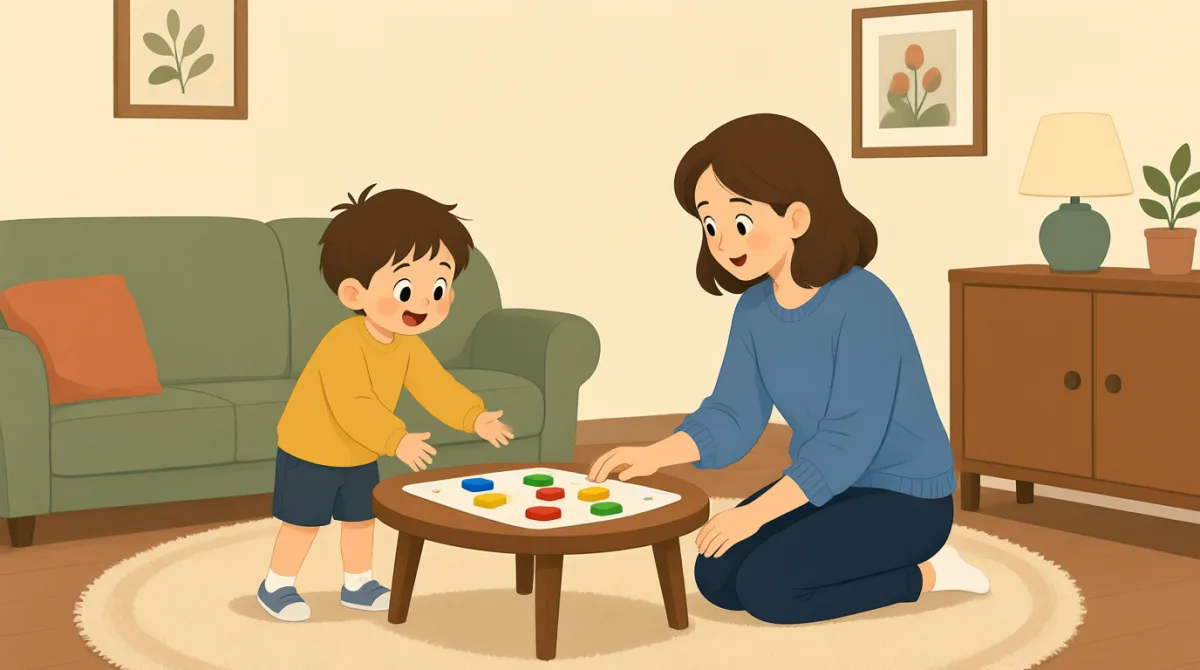
After dinner, Emma and the child play a simple game at home. The child gets excited, and Emma gently reminds them to take turns.
Dialogue8

What should we play after dinner? I found a picture game.

That sounds fun. Let’s take turns picking a card.
Great! I’ll go first. Oh, I got a picture of a dog.
I know that one! It says, “Find something red.”
You found the red ball! Now it’s my turn to pick a card.
Wait, I want another turn! This game is so exciting.
I’m glad you like it. Let’s take turns, so we both get to play.
Okay, your turn. Then I can pick the next card.
Vocabulary8
- take turns
To take turns means to do something one at a time. Use it when people share an activity.
- pick a card
To pick a card means to choose one from a group. You can use this phrase in card games.
- go first
To go first means to do something before the other person. Use it to say who starts a game or activity.
- I got a picture of a dog.
This tells someone what picture you found on a card. You can use “I got a picture of…” to describe a game card.
- I know that one!
This means you recognize or understand something. Say it when you know the answer or have seen something before.
- another turn
Another turn means one more chance to do something in a game. You can ask for another turn when you want to play again.
- I’m glad you like it.
Use this to show that you feel happy someone enjoys something. It works well when sharing a game, food, or activity.
- your turn
This tells someone it is their time to play or do something. You can use it to pass an activity to another person.
Key Sentences8
- 1
What should we play after dinner?
This is a friendly way to ask what activity someone wants to do. You can replace “play” with another activity, such as “watch” or “do.”
- 2
Let’s take turns picking a card.
This suggests sharing a game fairly. You can use “Let’s take turns…” for other activities, such as choosing a song or using a toy.
- 3
I’ll go first.
This is a simple way to say you want to start. Use “I’ll” plus an action to say what you will do first.
- 4
You found the red ball!
This praises someone for finding the right thing. You can replace “the red ball” with the item they found.
- 5
Now it’s my turn to pick a card.
This tells someone that you are ready to take your turn. Use “It’s my turn to…” before an action in a game or shared activity.
- 6
I’m glad you like it.
This is a warm response when someone enjoys something you chose. You can use it for games, meals, or other activities.
- 7
Let’s take turns, so we both get to play.
This gently reminds someone to share the game. “So we both get to…” explains how taking turns helps everyone.
- 8
Okay, your turn.
This is a short, natural way to let someone know they can play next. Use it when passing a turn in a game.