My Keys Are Inside
열쇠가 안에 있어
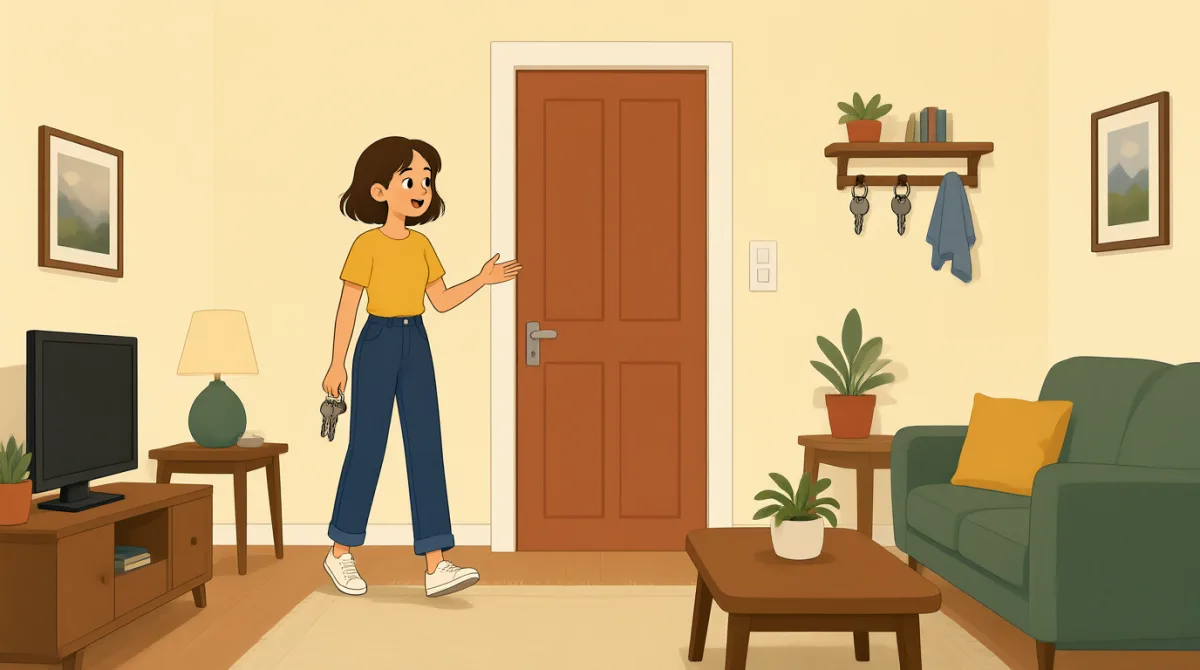
Emma calls her roommate and says she is locked out. Her keys are inside the apartment.
에마가 룸메이트에게 전화해 집에 들어가지 못하고 있다고 말해요. 열쇠는 아파트 안에 있어요.
대화8

Hi, Mia. Are you at home?
안녕, 미아. 집에 있어?

Yes. What’s wrong, Emma?
응. 무슨 일이야, 에마?
I’m locked out. My keys are inside.
나 집에 못 들어가. 열쇠가 안에 있어.
Oh no. Are you outside our apartment?
아이고. 우리 아파트 밖에 있어?
Yes. I can’t get in. The door is locked.
응. 못 들어가겠어. 문이 잠겼어.
I’m sorry. Can you wait there?
저런. 거기서 기다릴 수 있어?
Yes, I can wait by the door.
응, 문 옆에서 기다릴게.
Okay. I’ll come home soon.
알았어. 곧 집에 갈게.
어휘8
- at home집에
This means in your house or apartment. You can ask, “Are you at home?” to check if someone is there.
집이나 아파트에 있다는 뜻이에요. 누군가 있는지 확인하고 싶을 때 “Are you at home?”(집에 있어?)이라고 물어볼 수 있어요.
- What’s wrong?무슨 일이야?
This asks if there is a problem. You can use it when someone sounds worried.
문제가 있는지 묻는 표현이에요. 상대가 걱정스러운 목소리로 말할 때 쓸 수 있어요.
- locked out집에 들어가지 못하는
This means you cannot get inside because the door is locked. You can say, “I’m locked out,” when you cannot enter your home.
문이 잠겨 안으로 들어갈 수 없다는 뜻이에요. 집에 들어갈 수 없을 때 “I’m locked out,”(나 집에 못 들어가)이라고 말할 수 있어요.
- inside안에
Here, “inside” means in the apartment, not outside. You can say where your keys or other things are.
여기서 “inside”는 밖이 아니라 아파트 안을 뜻해요. 열쇠나 다른 물건이 어디 있는지 말할 때 쓸 수 있어요.
- get in들어가다
This means enter a place. You can say, “I can’t get in,” when you cannot open the door.
어떤 장소에 들어간다는 뜻이에요. 문을 열 수 없어 들어가지 못할 때 “I can’t get in,”(들어갈 수가 없어)이라고 말할 수 있어요.
- wait there거기서 기다리다
This means stay in that place until someone comes. You can use it to ask someone to stay where they are.
누군가 올 때까지 그 자리에 있으라는 뜻이에요. 상대에게 지금 있는 곳에서 기다려 달라고 할 때 쓸 수 있어요.
- by the door문 옆에
This means next to the door. You can use it to say where you are waiting.
문 바로 옆이라는 뜻이에요. 어디에서 기다리고 있는지 말할 때 쓸 수 있어요.
- come home집에 오다
This means return to your home. You can say, “I’ll come home soon,” to tell someone you will return soon.
집으로 돌아온다는 뜻이에요. 곧 돌아가겠다고 말할 때 “I’ll come home soon,”(곧 집에 갈게)이라고 할 수 있어요.
핵심 문장8
- 1
Are you at home?
집에 있어?
Use this to ask if someone is in their home now. You can change “at home” to another place, such as “at work.”
상대가 지금 집에 있는지 물을 때 써요. “at home”을 “at work”처럼 다른 장소로 바꿔 쓸 수 있어요.
- 2
What’s wrong, Emma?
무슨 일이야, 에마?
Use this to ask someone what the problem is. You can replace “Emma” with the person’s name.
상대에게 무슨 문제가 있는지 물을 때 써요. “Emma” 대신 상대의 이름을 넣으면 돼요.
- 3
I’m locked out.
나 집에 못 들어가.
This is a simple way to say you cannot get into your home. You can use it when you are outside and the door is locked.
집 안으로 들어갈 수 없다고 간단히 말하는 표현이에요. 밖에 있는데 문이 잠겨 있을 때 쓸 수 있어요.
- 4
My keys are inside.
내 열쇠가 안에 있어.
Use this to explain that your keys are in the place you cannot enter. You can replace “keys” with another item.
들어갈 수 없는 장소 안에 열쇠가 있다고 설명할 때 써요. “keys” 대신 다른 물건을 넣어도 돼요.
- 5
I can’t get in.
들어갈 수가 없어.
Use this when you cannot enter a place. You can replace “in” with “out” to talk about leaving.
어떤 장소에 들어갈 수 없을 때 써요. 나가는 상황을 말하려면 “in”을 “out”으로 바꾸면 돼요.
- 6
Can you wait there?
거기서 기다릴 수 있어?
Use this to ask someone to stay where they are. You can replace “there” with a specific place.
상대에게 지금 있는 곳에서 기다려 달라고 할 때 써요. “there” 대신 구체적인 장소를 넣을 수 있어요.
- 7
I can wait by the door.
문 옆에서 기다릴 수 있어.
Use this to say that you can stay next to the door. You can replace “by the door” with another place.
문 옆에서 기다릴 수 있다고 말할 때 써요. “by the door” 대신 다른 장소를 넣을 수 있어요.
- 8
I’ll come home soon.
곧 집에 갈게.
Use this to tell someone you will return home in a short time. “I’ll” is a short form of “I will.”
곧 집으로 돌아가겠다고 상대에게 말할 때 써요. “I’ll”은 “I will”을 줄인 형태예요.