My Keys Are Inside
鍵が中にある
Emma calls her roommate and says she is locked out. Her keys are inside the apartment.
エマはルームメイトに電話して、家に入れなくなったと伝えます。鍵はアパートの中にあります。
会話8
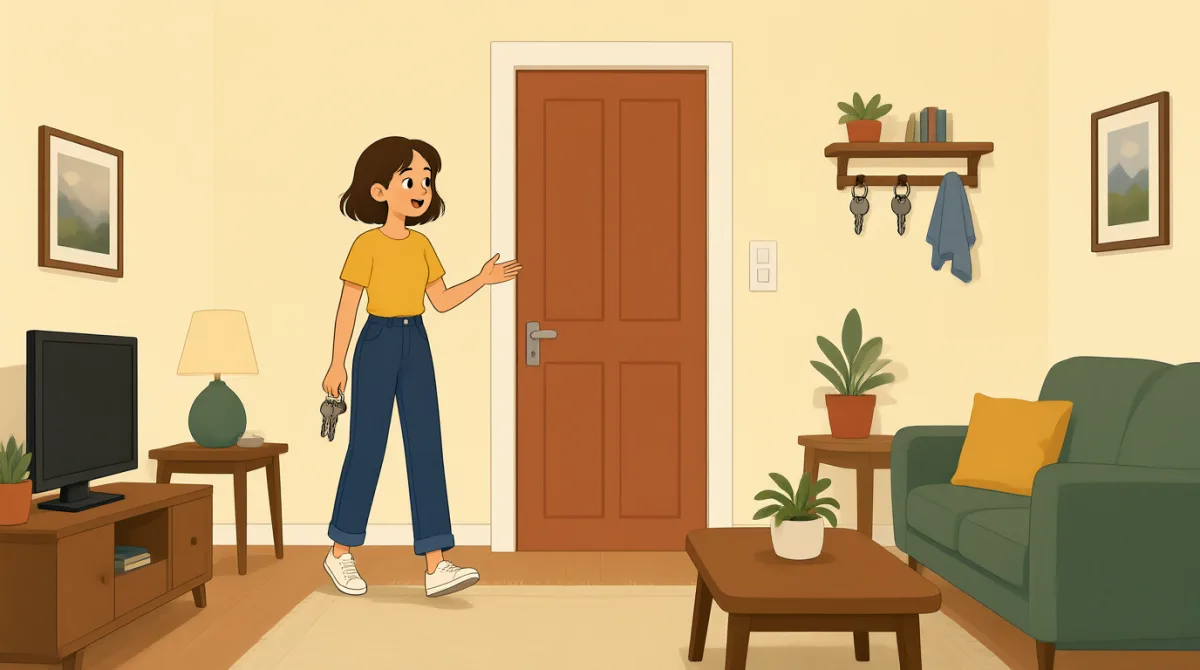

Hi, Mia. Are you at home?
やあ、ミア。家にいる?

Yes. What’s wrong, Emma?
うん。どうしたの、エマ?
I’m locked out. My keys are inside.
家に入れなくなっちゃった。鍵が中にあるの。
Oh no. Are you outside our apartment?
あら大変。アパートの外にいるの?
Yes. I can’t get in. The door is locked.
うん。中に入れないの。ドアに鍵がかかってる。
I’m sorry. Can you wait there?
ごめんね。そこで待っててくれる?
Yes, I can wait by the door.
うん、ドアのそばで待ってるよ。
Okay. I’ll come home soon.
わかった。すぐ帰るね。
語彙8
- at home家にいる
This means in your house or apartment. You can ask, “Are you at home?” to check if someone is there.
自分の家やアパートにいる、という意味です。誰かがそこにいるか確認したいときは、“Are you at home?”(家にいる?)と聞けます。
- What’s wrong?どうしたの?
This asks if there is a problem. You can use it when someone sounds worried.
問題があるかどうかを尋ねる表現です。相手が心配そうなときに使えます。
- locked out家に入れない
This means you cannot get inside because the door is locked. You can say, “I’m locked out,” when you cannot enter your home.
ドアに鍵がかかっていて、中に入れないという意味です。自宅に入れないときは、“I’m locked out,”(家に入れないんだ)と言えます。
- inside中に
Here, “inside” means in the apartment, not outside. You can say where your keys or other things are.
ここでは、外ではなくアパートの中という意味です。鍵などがどこにあるかを伝えるときに使えます。
- get in中に入る
This means enter a place. You can say, “I can’t get in,” when you cannot open the door.
場所に入るという意味です。ドアを開けられないときは、“I can’t get in,”(中に入れない)と言えます。
- wait thereそこで待つ
This means stay in that place until someone comes. You can use it to ask someone to stay where they are.
誰かが来るまでその場所にいる、という意味です。相手にその場で待っていてほしいときに使えます。
- by the doorドアのそばで
This means next to the door. You can use it to say where you are waiting.
ドアの隣で、という意味です。どこで待っているかを伝えるときに使えます。
- come home家に帰る
This means return to your home. You can say, “I’ll come home soon,” to tell someone you will return soon.
自分の家に戻る、という意味です。すぐに帰ると伝えるときは、“I’ll come home soon,”(すぐ帰るね)と言えます。
重要な文8
- 1
Are you at home?
家にいる?
Use this to ask if someone is in their home now. You can change “at home” to another place, such as “at work.”
相手が今、自宅にいるか尋ねる表現です。“at home”を“at work”(職場に)など別の場所に変えて使えます。
- 2
What’s wrong, Emma?
どうしたの、エマ?
Use this to ask someone what the problem is. You can replace “Emma” with the person’s name.
何があったのか、相手に尋ねる表現です。“Emma”を相手の名前に変えて使えます。
- 3
I’m locked out.
家に入れないんだ。
This is a simple way to say you cannot get into your home. You can use it when you are outside and the door is locked.
自宅に入れないことを簡単に伝える表現です。外にいてドアに鍵がかかっているときに使えます。
- 4
My keys are inside.
鍵が中にあるの。
Use this to explain that your keys are in the place you cannot enter. You can replace “keys” with another item.
入れない場所の中に鍵があることを伝える表現です。“keys”を別の持ち物に変えて使えます。
- 5
I can’t get in.
中に入れないの。
Use this when you cannot enter a place. You can replace “in” with “out” to talk about leaving.
場所に入れないときに使います。出ることについて話す場合は、“in”を“out”に変えられます。
- 6
Can you wait there?
そこで待っててくれる?
Use this to ask someone to stay where they are. You can replace “there” with a specific place.
相手にその場にとどまってほしいと頼む表現です。“there”を具体的な場所に変えて使えます。
- 7
I can wait by the door.
ドアのそばで待てるよ。
Use this to say that you can stay next to the door. You can replace “by the door” with another place.
ドアのそばで待っていられると伝える表現です。“by the door”を別の場所に変えて使えます。
- 8
I’ll come home soon.
すぐ帰るね。
Use this to tell someone you will return home in a short time. “I’ll” is a short form of “I will.”
もうすぐ家に帰ると相手に伝える表現です。“I’ll”は“I will”の短縮形です。