Preparing With the Risk Manager
リスクマネージャーとの事前準備
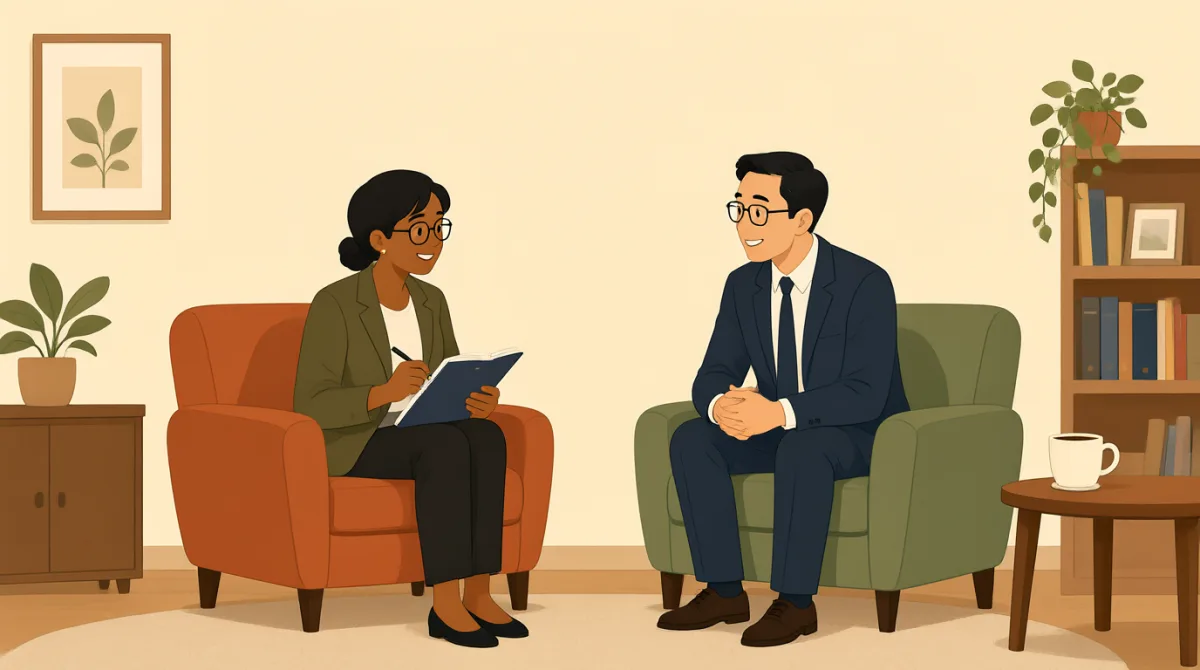
Dr. Mia Patel meets with risk manager David Chen before speaking with the family. They review the confirmed facts, consider what remains uncertain, and plan how to disclose the error clearly without speculating.
ミア・パテル医師は、ご家族と話す前にリスクマネージャーのデイビッド・チェンと面談します。確認できている事実を整理し、何がまだ不確かなのかを検討したうえで、憶測を交えずにミスを明確に伝える方法を話し合います。
会話12

Before we meet with the family, I want to make sure I can explain the confirmed facts plainly and distinguish them from what we’re still investigating.
ご家族と会う前に、確認できている事実を分かりやすく説明し、まだ調査中のことと区別できるようにしておきたいんです。

That’s the right approach. The medication record confirms that the patient received a dose intended for a different schedule. We should not infer how the error occurred until the review establishes that.
その進め方が適切です。投薬記録から、患者さんに別の投薬スケジュール用の量が投与されたことが確認できます。調査で明らかになるまでは、どうしてミスが起きたのか推測すべきではありません。
We also know his condition worsened afterward, and the care team treated him. But we can’t yet say with confidence that the incorrect dose caused the change in his condition.
その後、患者さんの容体が悪化し、医療チームが治療したことも分かっています。でも、誤った量の薬が容体の変化を引き起こしたと、まだ確信を持って言うことはできません。
Exactly. Be transparent about the sequence, but don’t present timing as proof of causation. If his daughter asks whether the medication caused harm, tell her what’s known and what remains unresolved.
そのとおりです。経過は率直に伝えつつ、時間的に前後していることを因果関係の証拠として示してはいけません。娘さんから薬が害を与えたのかと尋ねられたら、分かっていることと、まだ結論が出ていないことを伝えてください。
I’m concerned that saying “we’re still investigating” may sound evasive. I want to be honest about the uncertainty without making it seem as though we’re withholding information.
「まだ調査中です」と言うと、質問をはぐらかしているように聞こえるのではないかと心配です。不確かな点について正直に話しながら、情報を隠していると思われないようにしたいんです。
Then pair the uncertainty with specifics: say what the record confirms, what the team has done, and what the review is examining. Avoid vague reassurance or promises about the outcome.
それなら、不確かな点と具体的な情報をあわせて伝えましょう。記録で確認できること、チームが行ったこと、調査で確認していることを説明してください。曖昧な安心させ方や、結果についての約束は避けましょう。
Should I explain that the dose was given incorrectly, even though we don’t yet know whether it affected his condition? I don’t want the family to hear a softened version of what happened.
容体への影響がまだ分からなくても、誤った量を投与したと説明すべきでしょうか? ご家族に、実際に起きたことをぼかして伝えたくありません。
Yes. Name the error directly. You can say the patient received medication in a way that did not match the prescribed schedule, then explain that the clinical impact is still being assessed.
はい。ミスの内容をはっきり伝えてください。患者さんに、処方されたスケジュールどおりではない形で薬が投与されたと説明し、その後、臨床的な影響についてはまだ評価中だと伝えればいいです。
And if I don’t know the answer to something, I should say so, rather than fill the silence. I can tell her we’ll follow up when we have reliable information.
それから、分からないことを聞かれたら、沈黙を埋めようとせず、分からないと言うべきですね。確かな情報が得られたら、あらためてご連絡すると伝えられます。
Right. Don’t speculate about who was responsible or why it happened. We can explain that the review will examine the circumstances and share its findings with the family as they become available.
そのとおりです。誰に責任があったのか、なぜ起きたのかについて憶測で話してはいけません。調査で状況を確認し、分かったことが明らかになり次第、ご家族にお伝えすると説明できます。
I’ll keep the conversation direct and leave room for their questions. I can’t undo the error, but I can make sure they hear an accurate account and know what we’re doing next.
率直に話し、ご家族が質問できる時間も取ります。ミスをなかったことにはできませんが、正確な説明を聞いていただき、今後の対応を知っていただけるようにします。
That’s what they need from us: candor, not certainty we don’t have. If the conversation becomes difficult, pause, listen, and answer only what we can support with facts.
ご家族が私たちに求めているのは、確証のないことを断言することではなく、率直に話すことです。話し合いが難しくなったら、いったん間を置いて、よく聞き、事実で裏付けられることだけに答えましょう。
語彙8
- confirmed facts確認できている事実
Information that has been verified and is supported by evidence. Use this phrase to distinguish established details from assumptions.
検証され、証拠によって裏付けられている情報のことです。確定している内容と推測を区別するときに使います。
- infer推測する
To form a conclusion from available information, even when it has not been directly confirmed. Here, the speaker cautions against guessing how the error happened.
直接確認されていなくても、入手できる情報から結論を導き出すことです。ここでは、話し手はミスがどのように起きたのかを推測しないよう注意を促しています。
- with confidence確信を持って
In a way that is sufficiently certain or well-supported. Use this phrase when explaining what can or cannot yet be stated as fact.
十分な確かさや裏付けがある状態で、という意味です。何を事実として言えるか、まだ言えないかを説明するときに使います。
- causation因果関係
A relationship in which one event or action directly produces another. The dialogue distinguishes a sequence of events from proof that one caused the other.
ある出来事や行動が、別の出来事を直接引き起こす関係のことです。この会話では、出来事の順序と、一方が他方を引き起こした証拠とを区別しています。
- evasiveはぐらかすような
Seeming to avoid answering directly. This is useful when discussing how an honest but incomplete answer might be perceived.
質問に正面から答えるのを避けているように見えることです。正直ではあっても情報が十分でない回答が、どう受け取られるかを話すときに役立ちます。
- pair the uncertainty with specifics不確かな点を具体的な情報とあわせて伝える
Explain what is not yet known while also giving concrete information that is known. This helps make an uncertain answer transparent rather than vague.
まだ分かっていないことを説明しつつ、分かっていることも具体的に伝えることです。こうすることで、不確かな回答を曖昧にせず、率直に伝えられます。
- speculate憶測する
To make a guess without enough reliable evidence. In this context, it means avoiding unsupported claims about responsibility or causes.
信頼できる証拠が十分にないまま、推測で話すことです。この場面では、責任の所在や原因について、裏付けのないことを言わないという意味です。
- candor率直さ
Honest, direct communication. The dialogue presents candor as more important than pretending to have certainty.
正直で、率直なコミュニケーションのことです。この会話では、確かなことを装うよりも、率直に伝えることが大切だとされています。
重要な文8
- 1
Before we meet with the family, I want to make sure I can explain the confirmed facts plainly and distinguish them from what we’re still investigating.
ご家族と会う前に、確認できている事実を分かりやすく説明し、まだ調査中のことと区別できるようにしておきたいんです。
This sentence sets a careful, transparent goal for a difficult conversation. Reuse the structure “distinguish [known information] from [what remains uncertain]” when clarifying complex issues.
難しい話し合いに向けて、慎重かつ率直な姿勢を示す文です。「distinguish [known information] from [what remains uncertain]」という形は、複雑な問題について、分かっていることと不確かなことを整理するときに使えます。
- 2
We should not infer how the error occurred until the review establishes that.
調査で明らかになるまでは、どうしてミスが起きたのか推測すべきではありません。
This is a concise way to avoid presenting an unverified explanation as fact. Reuse “We should not infer [claim] until [evidence or process] establishes that” in professional discussions.
確認されていない説明を事実として伝えないための、簡潔な表現です。職場での話し合いでは、「We should not infer [claim] until [evidence or process] establishes that」という形を使えます。
- 3
But we can’t yet say with confidence that the incorrect dose caused the change in his condition.
でも、誤った量の薬が容体の変化を引き起こしたと、まだ確信を持って言うことはできません。
This sentence communicates uncertainty about causation without denying the known sequence of events. Reuse “We can’t yet say with confidence that…” when evidence is incomplete.
分かっている出来事の順序を否定せずに、因果関係が不確かなことを伝える文です。証拠が不十分なときは、「We can’t yet say with confidence that…」を使うと、断定を避けられます。
- 4
Be transparent about the sequence, but don’t present timing as proof of causation.
経過は率直に伝えつつ、時間的に前後していることを因果関係の証拠として示してはいけません。
This sentence gives practical guidance for describing events accurately without overstating what they prove. The contrastive pattern “Be [quality], but don’t [risk]” is useful for setting clear limits.
出来事を正確に説明しながら、証拠が示す範囲を超えて断定しないための実践的な助言です。「Be [quality], but don’t [risk]」という対比の形は、明確な線引きを伝えるときに役立ちます。
- 5
Then pair the uncertainty with specifics: say what the record confirms, what the team has done, and what the review is examining.
それなら、不確かな点と具体的な情報をあわせて伝えましょう。記録で確認できること、チームが行ったこと、調査で確認していることを説明してください。
This provides a concrete method for making an uncertain response informative rather than evasive. Reuse “pair [uncertainty or concern] with specifics” when explaining how to communicate clearly.
不確かな回答を、はぐらかすようなものではなく、情報のある回答にするための具体的な方法です。伝え方を明確にする方法を説明するときは、「pair [uncertainty or concern] with specifics」という形を使えます。
- 6
Name the error directly.
ミスの内容をはっきり伝えてください。
This short sentence emphasizes the importance of using plain, direct language instead of softening difficult facts. It can be reused as advice when accurate disclosure matters.
難しい事実をぼかさず、分かりやすく率直な言葉で伝える大切さを強調する短い文です。正確な情報開示が必要なときの助言として使えます。
- 7
I can tell her we’ll follow up when we have reliable information.
確かな情報が得られたら、あらためてご連絡すると伝えられます。
This offers a clear next step without promising an answer before the facts are known. Reuse “We’ll follow up when we have reliable information” to set a realistic expectation.
事実が分かる前に答えを約束せず、次に何をするかを明確に伝える表現です。「We’ll follow up when we have reliable information」は、現実的な見通しを伝えるときに使えます。
- 8
That’s what they need from us: candor, not certainty we don’t have.
ご家族が私たちに求めているのは、確証のないことを断言することではなく、率直に話すことです。
This sentence contrasts honesty with unsupported confidence and summarizes the approach to the conversation. The pattern “They need [quality], not [thing we cannot provide]” is useful for emphasizing priorities.
正直に話すことと、裏付けのない確信を示すことを対比し、この会話での姿勢をまとめています。「They need [quality], not [thing we cannot provide]」という形は、何を優先すべきかを強調するのに役立ちます。