Preparing With the Risk Manager
Preparación con el responsable de gestión de riesgos
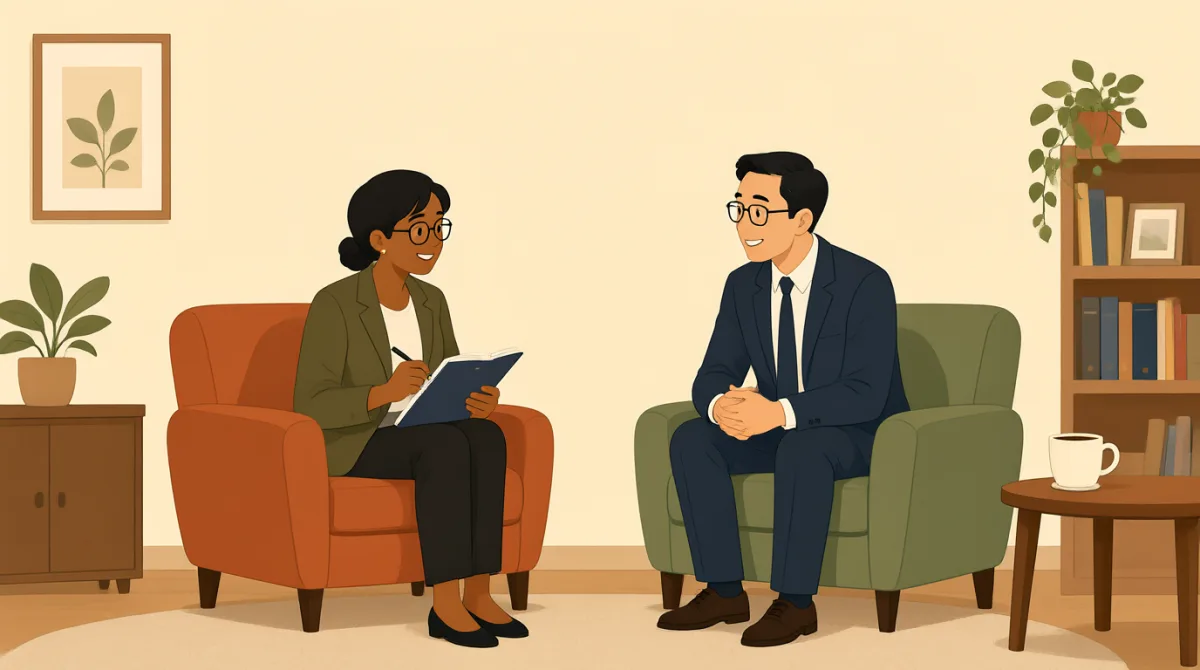
Dr. Mia Patel meets with risk manager David Chen before speaking with the family. They review the confirmed facts, consider what remains uncertain, and plan how to disclose the error clearly without speculating.
La Dra. Mia Patel se reúne con el responsable de gestión de riesgos, David Chen, antes de hablar con la familia. Repasan los hechos confirmados, consideran qué sigue siendo incierto y planean cómo comunicar el error con claridad y sin especular.
Diálogo12

Before we meet with the family, I want to make sure I can explain the confirmed facts plainly and distinguish them from what we’re still investigating.
Antes de reunirnos con la familia, quiero asegurarme de poder explicar con claridad los hechos confirmados y distinguirlos de lo que todavía estamos investigando.

That’s the right approach. The medication record confirms that the patient received a dose intended for a different schedule. We should not infer how the error occurred until the review establishes that.
Ese es el enfoque correcto. El registro de medicación confirma que el paciente recibió una dosis prevista para otro horario. No debemos deducir cómo ocurrió el error hasta que la investigación lo determine.
We also know his condition worsened afterward, and the care team treated him. But we can’t yet say with confidence that the incorrect dose caused the change in his condition.
También sabemos que su estado empeoró después y que el equipo de atención lo trató. Pero todavía no podemos afirmar con seguridad que la dosis incorrecta haya causado ese cambio en su estado.
Exactly. Be transparent about the sequence, but don’t present timing as proof of causation. If his daughter asks whether the medication caused harm, tell her what’s known and what remains unresolved.
Exactamente. Sé transparente sobre la secuencia de los hechos, pero no presentes el orden temporal como prueba de causalidad. Si su hija pregunta si la medicación le hizo daño, cuéntale lo que se sabe y lo que aún no se ha aclarado.
I’m concerned that saying “we’re still investigating” may sound evasive. I want to be honest about the uncertainty without making it seem as though we’re withholding information.
Me preocupa que decir «todavía estamos investigando» pueda sonar evasivo. Quiero ser sincera sobre la incertidumbre sin dar la impresión de que estamos ocultando información.
Then pair the uncertainty with specifics: say what the record confirms, what the team has done, and what the review is examining. Avoid vague reassurance or promises about the outcome.
Entonces acompaña la incertidumbre con datos concretos: di qué confirma el registro, qué ha hecho el equipo y qué está examinando la investigación. Evita las garantías vagas o las promesas sobre el resultado.
Should I explain that the dose was given incorrectly, even though we don’t yet know whether it affected his condition? I don’t want the family to hear a softened version of what happened.
¿Debería explicar que la dosis se administró de forma incorrecta, aunque todavía no sepamos si afectó su estado? No quiero que la familia reciba una versión edulcorada de lo que pasó.
Yes. Name the error directly. You can say the patient received medication in a way that did not match the prescribed schedule, then explain that the clinical impact is still being assessed.
Sí. Menciona el error directamente. Puedes decir que el paciente recibió la medicación de una manera que no correspondía al horario prescrito y luego explicar que todavía se está evaluando el impacto clínico.
And if I don’t know the answer to something, I should say so, rather than fill the silence. I can tell her we’ll follow up when we have reliable information.
Y si no sé la respuesta a algo, debería decirlo en vez de llenar el silencio. Puedo decirle que volveremos a comunicarnos cuando tengamos información fiable.
Right. Don’t speculate about who was responsible or why it happened. We can explain that the review will examine the circumstances and share its findings with the family as they become available.
Así es. No especules sobre quién fue responsable ni por qué ocurrió. Podemos explicar que la investigación examinará las circunstancias y que compartiremos sus conclusiones con la familia a medida que estén disponibles.
I’ll keep the conversation direct and leave room for their questions. I can’t undo the error, but I can make sure they hear an accurate account and know what we’re doing next.
Mantendré la conversación directa y dejaré espacio para sus preguntas. No puedo deshacer el error, pero sí asegurarme de que reciban una explicación precisa y sepan qué haremos a continuación.
That’s what they need from us: candor, not certainty we don’t have. If the conversation becomes difficult, pause, listen, and answer only what we can support with facts.
Eso es lo que necesitan de nosotros: sinceridad, no una certeza que no tenemos. Si la conversación se vuelve difícil, haz una pausa, escucha y responde solo aquello que podamos respaldar con hechos.
Vocabulario8
- confirmed factshechos confirmados
Information that has been verified and is supported by evidence. Use this phrase to distinguish established details from assumptions.
Información que se ha verificado y cuenta con pruebas que la respaldan. Usa esta expresión para distinguir los detalles establecidos de las suposiciones.
- inferdeducir
To form a conclusion from available information, even when it has not been directly confirmed. Here, the speaker cautions against guessing how the error happened.
Llegar a una conclusión a partir de la información disponible, aunque no se haya confirmado directamente. Aquí, la persona advierte que no se debe adivinar cómo ocurrió el error.
- with confidencecon seguridad
In a way that is sufficiently certain or well-supported. Use this phrase when explaining what can or cannot yet be stated as fact.
Con suficiente certeza o respaldo. Usa esta expresión para explicar qué se puede o no se puede afirmar como un hecho por ahora.
- causationcausalidad
A relationship in which one event or action directly produces another. The dialogue distinguishes a sequence of events from proof that one caused the other.
Relación en la que un suceso o una acción produce directamente otro. El diálogo distingue entre una secuencia de hechos y la prueba de que uno causó el otro.
- evasiveevasivo
Seeming to avoid answering directly. This is useful when discussing how an honest but incomplete answer might be perceived.
Que parece evitar responder directamente. Esta palabra sirve para hablar de cómo podría interpretarse una respuesta sincera, pero incompleta.
- pair the uncertainty with specificsacompañar la incertidumbre con datos concretos
Explain what is not yet known while also giving concrete information that is known. This helps make an uncertain answer transparent rather than vague.
Explicar qué todavía no se sabe y, al mismo tiempo, dar información concreta que sí se conoce. Esto ayuda a que una respuesta incierta sea transparente, en lugar de vaga.
- speculateespecular
To make a guess without enough reliable evidence. In this context, it means avoiding unsupported claims about responsibility or causes.
Hacer conjeturas sin pruebas fiables suficientes. En este contexto, significa evitar afirmaciones sin fundamento sobre responsabilidades o causas.
- candorsinceridad
Honest, direct communication. The dialogue presents candor as more important than pretending to have certainty.
Comunicación honesta y directa. El diálogo presenta la sinceridad como algo más importante que fingir tener certeza.
Frases clave8
- 1
Before we meet with the family, I want to make sure I can explain the confirmed facts plainly and distinguish them from what we’re still investigating.
Antes de reunirnos con la familia, quiero asegurarme de poder explicar con claridad los hechos confirmados y distinguirlos de lo que todavía estamos investigando.
This sentence sets a careful, transparent goal for a difficult conversation. Reuse the structure “distinguish [known information] from [what remains uncertain]” when clarifying complex issues.
Esta frase plantea un objetivo cuidadoso y transparente para una conversación difícil. Puedes reutilizar la estructura “distinguish [known information] from [what remains uncertain]” (distinguir [la información conocida] de [lo que sigue siendo incierto]) para aclarar temas complejos.
- 2
We should not infer how the error occurred until the review establishes that.
No debemos deducir cómo ocurrió el error hasta que la investigación lo determine.
This is a concise way to avoid presenting an unverified explanation as fact. Reuse “We should not infer [claim] until [evidence or process] establishes that” in professional discussions.
Esta es una forma concisa de evitar presentar como un hecho una explicación que no se ha verificado. En conversaciones profesionales, puedes reutilizar “We should not infer [claim] until [evidence or process] establishes that” (No debemos deducir [afirmación] hasta que [las pruebas o el proceso] lo determinen).
- 3
But we can’t yet say with confidence that the incorrect dose caused the change in his condition.
Pero todavía no podemos afirmar con seguridad que la dosis incorrecta haya causado ese cambio en su estado.
This sentence communicates uncertainty about causation without denying the known sequence of events. Reuse “We can’t yet say with confidence that…” when evidence is incomplete.
Esta frase comunica incertidumbre sobre la causalidad sin negar la secuencia conocida de los hechos. Reutiliza “We can’t yet say with confidence that…” (Todavía no podemos afirmar con seguridad que…) cuando las pruebas sean incompletas.
- 4
Be transparent about the sequence, but don’t present timing as proof of causation.
Sé transparente sobre la secuencia de los hechos, pero no presentes el orden temporal como prueba de causalidad.
This sentence gives practical guidance for describing events accurately without overstating what they prove. The contrastive pattern “Be [quality], but don’t [risk]” is useful for setting clear limits.
Esta frase ofrece una pauta práctica para describir los hechos con precisión y sin exagerar lo que demuestran. El patrón “Be [quality], but don’t [risk]” (Sé [cualidad], pero no [riesgo]) resulta útil para establecer límites claros.
- 5
Then pair the uncertainty with specifics: say what the record confirms, what the team has done, and what the review is examining.
Entonces acompaña la incertidumbre con datos concretos: di qué confirma el registro, qué ha hecho el equipo y qué está examinando la investigación.
This provides a concrete method for making an uncertain response informative rather than evasive. Reuse “pair [uncertainty or concern] with specifics” when explaining how to communicate clearly.
Esta frase ofrece un método concreto para que una respuesta incierta sea informativa y no evasiva. Reutiliza “pair [uncertainty or concern] with specifics” (acompañar [la incertidumbre o la preocupación] con datos concretos) para explicar cómo comunicarte con claridad.
- 6
Name the error directly.
Menciona el error directamente.
This short sentence emphasizes the importance of using plain, direct language instead of softening difficult facts. It can be reused as advice when accurate disclosure matters.
Esta frase breve destaca la importancia de expresarse con claridad y directamente, en lugar de suavizar hechos difíciles. Puedes usarla como consejo cuando sea importante comunicar la información con precisión.
- 7
I can tell her we’ll follow up when we have reliable information.
Puedo decirle que volveremos a comunicarnos cuando tengamos información fiable.
This offers a clear next step without promising an answer before the facts are known. Reuse “We’ll follow up when we have reliable information” to set a realistic expectation.
Esta frase propone un paso siguiente claro sin prometer una respuesta antes de conocer los hechos. Reutiliza “We’ll follow up when we have reliable information” (Volveremos a comunicarnos cuando tengamos información fiable) para establecer expectativas realistas.
- 8
That’s what they need from us: candor, not certainty we don’t have.
Eso es lo que necesitan de nosotros: sinceridad, no una certeza que no tenemos.
This sentence contrasts honesty with unsupported confidence and summarizes the approach to the conversation. The pattern “They need [quality], not [thing we cannot provide]” is useful for emphasizing priorities.
Esta frase contrapone la honestidad a una seguridad sin fundamento y resume el enfoque de la conversación. El patrón “They need [quality], not [thing we cannot provide]” (Necesitan [cualidad], no [algo que no podemos ofrecer]) sirve para destacar las prioridades.